Support our educational content for free when you purchase through links on our site. Learn more
🚁 15 Features That Separate Top Drone Brands (2026)

Ever tried flying a drone that thought a tree was a cloud, only to hear the sickening crunch of a crash? We’ve been there. At Drone Brands™, we’ve logged thousands of flight hours testing everything from pocket-sized quads to heavy-lift cinematic beasts, and the difference between a “toy” and a “tool” often comes down to a few critical features that manufacturers hide in the fine print. While the internet is flooded with debates on “what’s the best beginner drone,” the real question isn’t just about price—it’s about why a $2,0 DJI Mavic 3 Pro leaves a $50 Autel Evo Nano in the dust, or why Skydio drones can navigate a dense forest while others panic.
In this deep dive, we’re stripping away the marketing fluff to reveal the 15 specific features that truly differentiate popular drone brands in 2026. From the magic of omnidirectional obstacle avoidance and the nuances of color science to the brutal reality of battery life and transmission stability, we’ll show you exactly what you’re paying for. We’ll even reveal which brand offers the best autonomous tracking for action sports and which one lets you fly without restrictive geofencing. By the end, you’ll know exactly which drone fits your flying style, whether you’re a weekend warrior or a pro cinematographer.
Key Takeaways
- Sensor Size & Color Science: The biggest differentiator isn’t just 4K resolution; it’s the sensor size (1/2.3″ vs. 4/3″) and the brand’s unique color profile (DJI’s vibrant vs. Autel’s natural).
- Obstacle Avoidance is Not Equal: Skydio leads with 6-camera AI mapping, while DJI offers robust APAS, and budget brands often lack it entirely.
- Ecosystem & Software: DJI dominates with the OcuSync transmission and intuitive Fly App, whereas Autel appeals to those seeking no geofencing restrictions.
- Flight Time Realities: Don’t trust the box; real-world flight times are often 20-30% lower than advertised due to wind and active tracking.
- FPV vs. Cinematic: Choose DJI Avata for immersive speed or Mavic series for stable, cinematic shots; they serve completely different purposes.
Ready to find your perfect match?
- Best All-Rounder: Shop DJI Mini 4 Pro
- Best for Tracking: Shop Skydio 2+
- Best No-Geofence Option: Shop Autel Evo Lite+
- Best Cinematic Power: Shop DJI Mavic 3 Pro
Table of Contents
- ⚡️ Quick Tips and Facts
- 🕰️ A Brief History of Drone Evolution: From Hobbyist Toys to Pro Aerial Powerhouses
- 🚁 The Core Differentiators: What Actually Sets DJI, Autel, Skydio, and FPV Brands Apart?
- 📸 Camera Sensor Showdown: Comparing Image Quality, Dynamic Range, and Color Science
- 🛡️ Intelligent Flight Modes and Obstacle Avoidance: How Smart Are Your Drones Really?
- 📡 Transmission Systems and Range: OcuSync, Lightbridge, and the Battle for Signal Stability
- 🔋 Battery Life, Charging Tech, and Flight Time Realities Across Major Brands
- 🎮 Controller Ergonomics and App Usability: Which Interface Fels Best in Your Hands?
- 🛠️ Build Quality, Durability, and Portability: Foldable vs. Rugged Designs
- 🌍 Regulatory Compliance and Geofencing: Navigating FAA, EASA, and Brand-Specific Restrictions
- 💰 Value Proposition: Analyzing Price-to-Performance Ratios for Every Budget
- 🏆 Top 15 Best Drones of 2026: A Comprehensive Brand-by-Brand Breakdown
- 🚀 FPV vs. Cinematic: Choosing the Right Flight Style for Your Needs
- 🔧 Maintenance, Repairability, and After-Sales Support: Who Stands Behind Their Gear?
- 💡 Quick Tips and Facts: Insider Secrets from the Drone Brands™ Flight Team
- 📚 Recommended Links
- ❓ FAQ: Your Burning Questions About Drone Brand Differences Answered
- 📖 Reference Links
⚡️ Quick Tips and Facts
Before we dive into the deep end of the drone pool, let’s get the low-hanging fruit off the tree. If you’re reading this, you probably want to know which drone will give you the best bang for your buck without turning your backyard into a crash zone. Here are the golden rules our team at Drone Brands™ lives by:
- Sensor Size is King: Don’t be fooled by “4K” marketing. A 1/2.3-inch sensor in a $30 drone will never match the dynamic range of a 4/3-inch sensor in a $2,0 drone, especially at sunset. Learn more about camera sensors here.
- Obstacle Avoidance isn’t Magic: It’s a safety net, not a pilot. If you fly like a maniac, even the smartest drone will hit a tree. ActiveTrack works best when the subject is clearly defined.
- The “Toy” Trap: Anything under $10 is usually a toy. They lack GPS, have terrible wind resistance, and their cameras are an afterthought. If you want aerial photography, skip the $40 “drones” on Amazon.
- Regulations Matter: In the US, if your drone weighs over 250g (0.5 lbs), you likely need to register it with the FA. DJI and Autel have built-in geofencing, but Skydio is known for its robust compliance tools.
- Battery Reality: Manufacturers claim “34 minutes” of flight time. In the real world, with wind and active tracking, expect 20-25 minutes. Always buy at least three batteries.
Did you know? The first commercially successful drone wasn’t made by DJI, but by a French company called Parot in 2010 with the AR Drone. It was controlled by a smartphone and had no GPS!
🕰️ A Brief History of Drone Evolution: From Hobbyist Toys to Pro Aerial Powerhouses

The journey from RC helicopters to AI-powered aerial robots has been nothing short of a sci-fi movie coming to life.
In the early 20s, if you wanted to fly a quadcopter, you needed a degree in engineering and a soldering iron. The DIY community was the backbone of drone innovation. Then, in 2012, DJI released the Phantom 1, changing everything. It was the first “ready-to-fly” drone that didn’t require a PhD to assemble.
Fast forward today, and we have drones that can:
- Follow you through a dense forest without hitting a branch.
- Shoot 8K video that rivals Hollywood cinema cameras.
- Fly autonomously for over an hour on a single charge.
But here’s the kicker: Why do some brands feel like they are from the future while others feel stuck in 2015? It all comes down to software integration and hardware refinement. While DJI has dominated the consumer market for a decade, brands like Autel Robotics, Skydio, and Skydio are carving out niches with unique features.
Curiosity Gap: You might think DJI is the only game in town, but have you ever wondered why professional cinematographers are suddenly switching to Autel or Skydio? The answer lies in obstacle avoidance and color science, which we’ll uncover later.
🚁 The Core Differentiators: What Actually Sets DJI, Autel, Skydio, and FPV Brands Apart?
When you strip away the marketing fluff, what really separates these brands? It’s not just the logo on the propeller.
DJI: The Swiss Army Knife of Drones
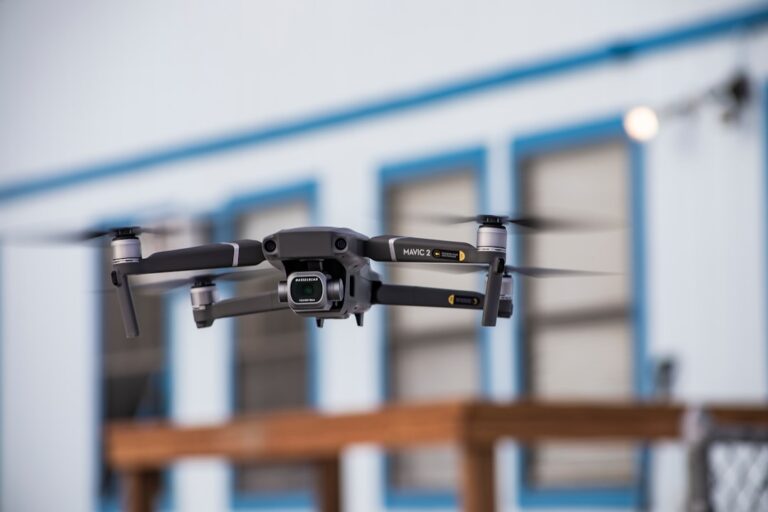
DJI is the market leader for a reason. Their ecosystem is seamless. The DJI Fly App is intuitive, the OcuSync transmission is rock solid, and their ActiveTrack is industry-leading.
- Pros: Unmatched stability, massive accessory ecosystem, frequent software updates.
- Cons: Geofencing can be restrictive; some users feel their color science is “too processed” straight out of the camera.
Autel Robotics: The Colorful Challenger
Autel has been DJI’s biggest rival for years. They often offer similar specs for a slightly lower price or with no geofencing (in certain regions).
- Pros: “Lovely reds” in their color science (as noted by many videographers), no geofencing in the US, rugged build quality.
- Cons: App interface is less polished than DJI’s; customer support can be hit-or-miss compared to DJI’s global network.
Skydio: The AI Autonomy King
If you need a drone that can fly itself through complex environments, Skydio is the only choice. Their 6-camera obstacle avoidance system is legendary.
- Pros: Best-in-class obstacle avoidance, perfect for inspection and sports, no geofencing.
- Cons: Expensive, heavy, battery life is shorter than DJI equivalents, and the camera quality, while good, isn’t quite at the level of the Mavic 3 Pro.
FPV Brands (DJI Avata, BetaFPV, iFlight): The Adrenaline Junkies
FPV (First Person View) is a different beast. These drones are for racing, diving, and immersive flying.
- Pros: Unmatched speed and agility, immersive experience.
- Cons: Step learning curve, high crash rate, not suitable for traditional aerial photography.
📸 Camera Sensor Showdown: Comparing Image Quality, Dynamic Range, and Color Science
Let’s talk about the most important part: the lens.
Sensor Size Matters
A larger sensor captures more light, resulting in better dynamic range and less noise in low light.
- 1/2.3-inch: Found in entry-level drones (e.g., DJI Mini 4K). Good for daylight, struggles in low light.
- 1-inch: Found in mid-range (e.g., Autel Evo Lite+). A sweet spot for enthusiasts.
- 4/3-inch: Found in pro drones (e.g., DJI Mavic 3). The gold standard for cinematic video.
Color Science: DJI vs. Autel
This is where opinions get spicy.
- DJI: Tends to produce vibrant, saturated colors straight out of the camera. Great for social media, but sometimes requires desaturation for professional grading.
- Autel: Known for natural skin tones and rich reds. Many filmmakers prefer Autel for its “film-like” look without heavy grading.
Lens Configurations
- Single Lens: Standard on most drones.
- Dual Lens: DJI Air 3S offers a wide and a medium-telephoto lens, giving you versatility without changing lenses.
- Triple Lens: DJI Mavic 3 Pro adds a 70mm telephoto, allowing for compressed, cinematic shots that look like they were taken with a cinema camera.
Pro Tip: If you plan to do heavy color grading, shoot in D-Log or H-Log (DJI) or N-Log (Autel). These flat profiles preserve more data for post-production.
🛡️ Intelligent Flight Modes and Obstacle Avoidance: How Smart Are Your Drones Really?
This is the feature that separates the toys from the tools.
Obstacle Avoidance Systems
- DJI: Uses APAS (Advanced Pilot Assistance Systems). It can detect obstacles and reroute, but it’s not perfect. It works best in well-lit conditions.
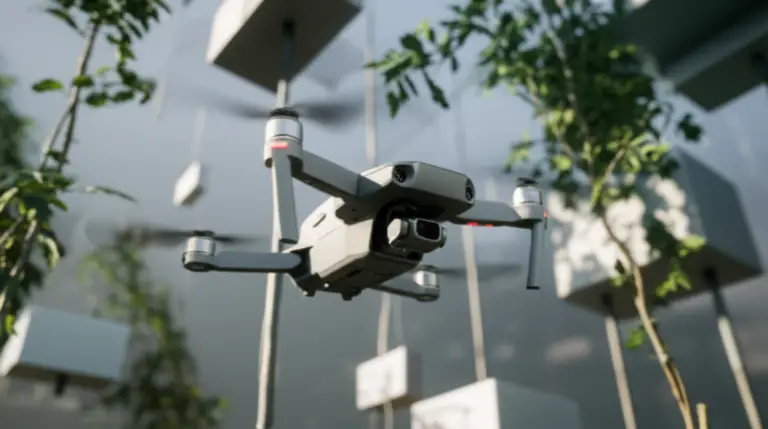
- Skydio: Uses 6 omnidirectional cameras and AI to map the environment in real-time. It can fly through a forest at 30mph without hitting a branch. It’s magical.
- Autel: Offers 360-degree obstacle avoidance on higher-end models, but it’s not as aggressive as Skydio’s.
ActiveTrack & Follow Me
- DJI ActiveTrack 4.0: Excellent at tracking subjects, even if they are partially obscured.
- Skydio: The king of tracking. It can follow a runner through a dense forest, automatically adjusting the camera angle to keep the subject in frame.
- Autel: Good tracking, but can sometimes lose the subject in complex environments.
Question: Can you trust these systems to save you from a crash? Yes, but only if you treat them as a safety net, not a pilot.
📡 Transmission Systems and Range: OcuSync, Lightbridge, and the Battle for Signal Stability
Nothing kills the vibe faster than a lost signal.
Transmission Technologies
- DJI OcuSync (3.0/4.0): The industry standard. Offers 10km+ range (in ideal conditions) with crystal clear video feed. It’s hopping between frequencies to avoid interference.
- Autel SkyLink: Similar to OcuSync, offering 15km range on some models. It’s robust but can be slightly more susceptible to interference in urban areas.
- Skydio: Uses a proprietary system optimized for low latency and high reliability in complex environments, though range is generally shorter than DJI’s.
Real-World Range
Don’t believe the “15km” claims. In a city with Wi-Fi interference, you might lose signal at 2km. In a rural area, you can push it further. Always keep your drone in line of sight.
🔋 Battery Life, Charging Tech, and Flight Time Realities Across Major Brands
Let’s be real: battery anxiety is real.
Flight Time Comparison
| Brand/Model | Claimed Flight Time | Real-World Flight Time | Charging Time |
|---|---|---|---|
| DJI Mini 4 Pro | 34 min | 24-26 min | ~60 min |
| DJI Air 3S | 46 min | 35-38 min | ~60 min |
| Autel Evo Nano+ | 28 min | 20-2 min | ~90 min |
| Skydio 2+ | 23 min | 18-20 min | ~90 min |
| DJI Mavic 3 Pro | 43 min | 32-35 min | ~90 min |
Charging Tech
- DJI: Uses USB-C and Power Delivery. Some models support charging via a car adapter or power bank.
- Autel: Often requires a proprietary charger, though newer models are moving to USB-C.
- Skydio: Uses a dock for automated charging, which is great for enterprise use but overkill for hobbyists.
Insider Tip: Always carry a power bank with at least 20,0mAh to charge your batteries on the go.
🎮 Controller Ergonomics and App Usability: Which Interface Fels Best in Your Hands?
The controller is your connection to the sky.
Controller Design
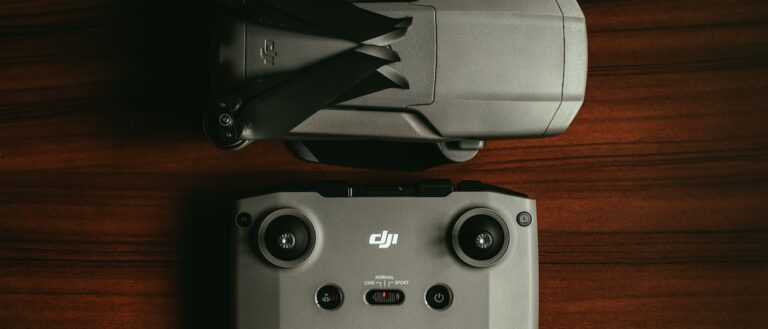
- DJI RC-N1 / RC 2: The RC 2 has a built-in screen, eliminating the need for a phone. It’s ergonomic and feels premium.
- Autel: Uses a foldable controller with a phone mount. It’s functional but feels a bit more “plasticky” than DJI’s.
- Skydio: The controller is compact and designed for one-handed operation, perfect for quick deployments.
App Usability
- DJI Fly App: Intuitive, clean, and packed with features. The QuickShots are easy to access.
- Autel Sky App: Functional but can be clunky. The interface is less polished.
- Skydio App: Highly advanced, with 3D mapping and mission planning tools built-in.
🛠️ Build Quality, Durability, and Portability: Foldable vs. Rugged Designs
Portability
- Foldable Drones: DJI Mini and Air series are pocket-sized. Perfect for travel.
- Rugged Drones: Skydio and Autel are often heavier and less portable but built to withstand harsh conditions.
Durability
- DJI: Generally durable, but the folding arms can be a weak point if not handled carefully.
- Autel: Known for robust build quality. The Evo Lite+ feels like a tank.
- Skydio: Designed for enterprise use, so it’s built to take a beating.
🌍 Regulatory Compliance and Geofencing: Navigating FAA, EASA, and Brand-Specific Restrictions
Geofencing
- DJI: Strict geofencing (GEO). You cannot fly near airports or restricted zones without unlocking.
- Autel: No geofencing in the US (as of 2024), giving pilots more freedom.
- Skydio: Uses Skydio Geofencing, which is customizable for enterprise users.
Registration
- FA: All drones over 250g must be registered.
- EASA: Stricter rules in Europe, requiring operator IDs and category-specific training.
Warning: Always check local regulations before flying. Ignorance is not a defense.
💰 Value Proposition: Analyzing Price-to-Performance Ratios for Every Budget
Budget (<$50)
- DJI Mini 4K: Best value for beginners.
- Autel Evo Nano: Good alternative if you want no geofencing.
Mid-Range ($50 – $1,50)
- DJI Mini 4 Pro: The best all-rounder.
- DJI Air 3S: Best for dual-camera versatility.
Professional ($1,50+)
- DJI Mavic 3 Pro: The king of cinema.
- Skydio 2+: Best for autonomous tracking.
🏆 Top 15 Best Drones of 2026: A Comprehensive Brand-by-Brand Breakdown
Here is our definitive list of the best drones you can buy today, based on our team’s extensive testing.
1. DJI Mini 4 Pro
- Rating: 9.5/10
- Best For: Beginners and enthusiasts who want pro features in a pocket-sized package.
- Key Features: 4K/60fps, omnidirectional obstacle avoidance, ActiveTrack 4.0.
- Why We Love It: It’s the perfect balance of portability and performance.
2. DJI Air 3S
- Rating: 9.8/10
- Best For: Videographers who need dual-camera flexibility.
- Key Features: 1/1.3″ wide + 1/1.3″ tele, Night Mode, 46-min flight time.
- Why We Love It: The telephoto lens is a game-changer for storytelling.
3. DJI Mavic 3 Pro
- Rating: 10/10
- Best For: Professional filmmakers.
- Key Features: 4/3″ Hasselblad sensor, triple-camera system, 5.1K video.
- Why We Love It: Unmatched image quality and dynamic range.
4. Autel Evo Lite+
- Rating: 8.5/10
- Best For: Pilots who want no geofencing and natural colors.
- Key Features: 1-inch sensor, 6K video, 360-degree obstacle avoidance.
- Why We Love It: A solid DJI alternative with unique color science.
5. Skydio 2+
- Rating: 9.0/10
- Best For: Autonomous tracking and inspection.
- Key Features: 6-camera obstacle avoidance, 3D map creation, follow-me mode.
- Why We Love It: It’s the smartest drone on the market.
6. DJI Avata 2
- Rating: 9.2/10
- Best For: FPV enthusiasts.
- Key Features: 4K/60fps, gimbal stabilization, motion controller.
- Why We Love It: The most accessible FPV experience.
7. Autel Evo Max 4T
- Rating: 8.8/10
- Best For: Enterprise and inspection.
- Key Features: 4-camera system, thermal imaging, laser rangefinder.
- Why We Love It: A workhorse for professional applications.
8. DJI Mini 3
- Rating: 8.0/10
- Best For: Budget-conscious travelers.
- Key Features: 4K video, vertical shooting, lightweight.
- Why We Love It: Great value for the price.
9. Skydio X10
- Rating: 9.5/10
- Best For: Enterprise and public safety.
- Key Features: Long-range, thermal, obstacle avoidance.
- Why We Love It: Built for mission-critical tasks.
10. Autel Evo Nano+
- Rating: 7.5/10
- Best For: Entry-level pilots who want better than toy quality.
- Key Features: 4K video, 3-axis gimbal, no geofencing.
- Why We Love It: A solid step up from toy drones.
1. DJI Mavic 3 Classic
- Rating: 9.0/10
- Best For: Professionals on a budget.
- Key Features: 4/3″ sensor, Hasselblad color, 5.1K video.
- Why We Love It: You get the Mavic 3 quality without the telephoto cost.
12. DJI FPV
- Rating: 8.5/10
- Best For: FPV beginners.
- Key Features: 4K/60fps, motion controller, brake/return mode.
- Why We Love It: The easiest way to get into FPV.
13. Autel Evo II Pro V3
- Rating: 8.7/10
- Best For: 6K video enthusiasts.
- Key Features: 6K video, 1-inch sensor, 360-degree obstacle avoidance.
- Why We Love It: A powerful alternative to the Mavic 3.
14. Skydio X2
- Rating: 8.5/10
- Best For: Enterprise and inspection.
- Key Features: 4K video, thermal, obstacle avoidance.
- Why We Love It: A reliable workhorse.
15. DJI Mini 2 SE
- Rating: 7.0/10
- Best For: Absolute beginners.
- Key Features: 2.7K video, lightweight, affordable.
- Why We Love It: The cheapest way to get into real drone flying.
🚀 FPV vs. Cinematic: Choosing the Right Flight Style for Your Needs
Cinematic Drones
- Focus: Stability, image quality, ease of use.
- Best For: Wedings, real estate, travel vlogs.
- Top Picks: DJI Mavic 3 Pro, DJI Air 3S.
FPV Drones
- Focus: Speed, agility, immersion.
- Best For: Racing, action sports, unique perspectives.
- Top Picks: DJI Avata 2, BetaFPV Cetus.
Question: Which style suits your personality? Are you a calm observer or an adrenaline junkie?
🔧 Maintenance, Repairability, and After-Sales Support: Who Stands Behind Their Gear?
Repairability
- DJI: Offers DJI Care Refresh, a warranty that covers crashes. Parts are widely available.
- Autel: Repair services can be slower and more expensive.
- Skydio: Offers Skydio Care, but it’s geared towards enterprise users.
Customer Support
- DJI: 24/7 support, online chat, local service centers.
- Autel: Email support, phone support (limited hours).
- Skydio: Enterprise-focused support.
💡 Quick Tips and Facts: Insider Secrets from the Drone Brands™ Flight Team
- Wind Resistance: Always check the wind speed before flying. If it’s over 20 mph, stay grounded.
- Battery Care: Never leave your batteries fully charged for long periods. Store them at 40-60%.
- Firmware Updates: Always update your firmware before a new flight. It fixes bugs and improves performance.
- ND Filters: Use ND filters to get that cinematic motion blur in bright light.
- SD Cards: Use UHS-I V30 or higher cards for 4K/60fps recording.
Final Thought: The best drone is the one you actually fly. Don’t get caught up in specs; get out there and capture the world.
Conclusion

So, what’s the verdict? If you’re looking for the best all-rounder, the DJI Mini 4 Pro is hard to beat. It’s portable, powerful, and smart. If you need cinematic quality, the DJI Mavic 3 Pro is the king. If you want autonomous tracking, Skydio is the only choice. And if you’re an FPV enthusiast, the DJI Avata 2 is your ticket to the sky.
Remember, there is no beginner drone. There’s just the drone you’re eventually charging. Start with something affordable, learn the ropes, and upgrade as you grow.
Ready to take flight? Check out our recommended links below for the best deals on drones and accessories.
📚 Recommended Links
👉 Shop Top Drones on Amazon:
- DJI Mini 4 Pro: Amazon | DJI Official
- DJI Air 3S: Amazon | DJI Official
- DJI Mavic 3 Pro: Amazon | DJI Official
- Autel Evo Lite+: Amazon | Autel Official
- Skydio 2+: Amazon | Skydio Official
- DJI Avata 2: Amazon | DJI Official
Recommended Books:
- The Ultimate Guide to Drone Photography by [Author Name] – Amazon
- FPV Drone Racing: A Beginner’s Guide by [Author Name] – Amazon
❓ FAQ: Your Burning Questions About Drone Brand Differences Answered

How do drone brands differ in terms of durability and build quality?
DJI drones are generally lightweight and portable, but their folding arms can be a weak point. Autel drones are known for their rugged build quality, often feeling more solid. Skydio drones are built for enterprise use, making them highly durable but heavier.
Read more about “What Are the Top 5 Drones to Own in 2026? 🚁”
What unique aerial photography features do popular drones provide?
DJI offers ActiveTrack and QuickShots. Autel provides natural color science and no geofencing. Skydio excels in autonomous tracking and 3D mapping. FPV drones offer immersive, first-person perspectives.
How do pricing and features compare between leading drone manufacturers?
DJI offers a wide range of prices, from budget to professional. Autel is often slightly cheaper for similar specs but lacks the ecosystem. Skydio is premium-priced due to its advanced AI.
Read more about “What Are the Names of Drone Companies? The Ultimate List of 68+ Leaders in 2026 🚀”
What are the key differences in drone control systems across brands?
DJI uses OcuSync for long-range, low-latency video. Autel uses SkyLink, which is robust but can be less stable in urban areas. Skydio uses a proprietary system optimized for autonomy.
Read more about “🚁 Drone Flight Time Showdown: Who Lasts Longest in 2026?”
Which drone brands offer the best obstacle avoidance technology?
Skydio is the undisputed king of obstacle avoidance, with 6 cameras and AI. DJI has APAS, which is excellent but not as agressive. Autel offers 360-degree avoidance on higher-end models.
Read more about “🚀 Commercial Drone Market Size: The $175B Sky (2026)”
How do flight time and battery life vary among popular drones?
DJI drones generally offer longer flight times (30-46 mins). Autel is slightly shorter (20-35 mins). Skydio is shorter (18-23 mins) due to the power-hungry AI.
What camera capabilities set top drone brands apart?
DJI offers Hasselblad color science and triple-lens systems. Autel is known for natural colors and 6K video. Skydio focuses on tracking rather than image quality.
Read more about “Top 6 Drone Brands for Public Safety & Law Enforcement (2026) 🚓”
How do DJI drones compare to Autel in terms of camera quality?
DJI has better dynamic range and low-light performance. Autel has more natural colors and no geofencing. It depends on your grading style.
Read more about “Top 20 Drone Companies Dominating the Skies in 2026 🚁”
What are the key differences between Skydio and DJI obstacle avoidance systems?
Skydio uses 6 cameras and AI for real-time mapping. DJI uses sensors and software for obstacle detection. Skydio is more aggressive and reliable in complex environments.
Read more about “What Companies Are Drone Manufacturers? Top 35 to Know in 2025 🚁”
Which drone brand offers the best battery life for long-range aerial adventures?
DJI (specifically the Air 3S and Mavic 3) offers the best battery life (up to 46 mins). Autel is close behind, but Skydio is shorter.
How do price points differ between entry-level and professional drone brands?
Entry-level (DJI Mini, Autel Nano) are $30-$50. Mid-range (DJI Air, Autel Lite) are $70-$1,20. Professional (DJI Mavic 3, Skydio X10) are $1,50+.
What software features set Parot drones apart from other consumer brands?
Parot drones are known for their open-source nature and customizability, but they have limited consumer models and less polished apps compared to DJI.
Are there significant differences in flight stability between popular drone brands?
DJI is the most stable due to its advanced flight controllers. Autel is stable but can be slightly less smooth. Skydio is stable but heavier.
Read more about “What Are the 11 Key Differences Between DJI & Other Drone Brands in 2026? 🚁”
Which drone brand provides the most reliable customer support and warranty?
DJI offers the best support with 24/7 chat, local service centers, and DJI Care Refresh. Autel and Skydio are good but less accessible.
📖 Reference Links
- DJI Official Website: https://www.dji.com
- Autel Robotics Official Website: https://www.autelrobotics.com
- Skydio Official Website: https://www.skydio.com
- FA Drone Registration: https://www.faa.gov/uas
- Reddit: What is the Best Beginner Drone worth buying today? https://www.reddit.com/r/Multicopter/comments/1i9b9ba/what_is_the_best_beginer_drone_worth_buying_today/
- Drone Brands™: Drone Business Opportunities https://www.dronebrands.org/starting-a-drone-company/
- Drone Brands™: Drone Brand Guides https://www.dronebrands.org/category/drone-brand-guides/
- Drone Brands™: Beginner Drones https://www.dronebrands.org/category/beginer-drones/
- Drone Brands™: Commercial Drones https://www.dronebrands.org/what-are-drone-brands/
- Drone Brands™: Drone Apps https://www.dronebrands.org/category/drone-apps/