Support our educational content for free when you purchase through links on our site. Learn more
🌍 15 Best Drone Flying Spots for Aerial Photography (2026)

Ever felt the sting of a “No Drone Zone” sign right as the sun was setting over a breathtaking canyon? We have. At Drone Brands™, we’ve watched too many pilots miss the shot of a lifetime because they didn’t know where they could legally and safely fly. The world is filled with hidden gems waiting to be captured from 40 feet up, but finding them requires more than just a map; it demands knowledge of local regulations, terrain scouting, and the golden hour.
In this ultimate guide, we aren’t just listing pretty places; we are revealing the 15 best drone flying spots for aerial photography around the globe, from the turquoise waters of Mahe Island to the rugged cliffs of Big Sur. We’ll share the specific techniques to nail that cinematic “reveal” shot, the exact apps you need to avoid a $10,0 fine, and the gear that will keep your drone flying when the wind picks up. Whether you are a beginner looking for your first safe takeoff or a pro chasing the perfect light, this list covers every angle.
Key Takeaways
- Safety First: Always verify No Fly Zones (NFZ) and local regulations before packing your gear; ignorance is not a valid defense against fines.
- Golden Hour is Critical: The best aerial photography happens during sunrise and sunset when shadows are long and colors are vibrant.
- Scout Digitally First: Use tools like Google Earth and B4UFLY to identify obstacles and legal flight paths before you even leave home.
- Respect the Environment: Many stunning locations, including National Parks, have strict bans to protect wildlife; always seek permits where required.
- Gear Up for Success: Invest in ND filters, extra batteries, and a reliable landing pad to handle diverse weather conditions and terrain.
Table of Contents
- ⚡️ Quick Tips and Facts
- 📜 The Evolution of Aerial Photography: From Kites to 4K Drones
- 🌍 Top 15 Best Drone Flying Spots for Aerial Photography Around the World
- 1. The Golden Hour Glow of Santorini, Greece
- 2. The Rugged Coastlines of Big Sur, California
- 3. The Ethereal Mist of Banff National Park, Canada
- 4. The Urban Jungle of Tokyo, Japan
- 5. The Desert Dunes of Namibia
- 6. The Glacial Lagoon of Jökulsárlón, Iceland
- 7. The Ancient Ruins of Petra, Jordan
- 8. The Tropical Paradises of Mahe Island, Seychelles
- 9. The Snow-Capped Peaks of the Swiss Alps
- 10. The Vibrant Markets of Marrakech, Morocco
- 1. The Great Barrier Reef, Australia
- 12. The Neon Nights of New York City, USA
- 13. The Fjords of Norway
- 14. The Savannahs of the Serengeti, Tanzania
- 15. The Volcanic Landscapes of Hawaii, USA
- 🗺️ How to Scout the Perfect Location for Drone Videography
- 🚫 Navigating No-Fly Zones and Drone Regulations by Country
- 📸 Essential Gear for Capturing Stunning Aerial Footage
- 🎬 Advanced Techniques for Cinematic Drone Shots
- 🛡️ Safety First: Avoiding Crashes and Legal Trouble
- 🌐 Georgia Drone Pilots · Join the Community
- 🏆 Conclusion: Where Will You Fly Next?
- 🔗 Recommended Links
- ❓ FAQ: Common Questions About Drone Flying Spots
- 📚 Reference Links
⚡️ Quick Tips and Facts
Before you unpack your gimbal and head to the nearest cliff edge, let’s hit the pause button. We’ve seen too many talented pilots lose their gear (or their freedom) because they skipped the basics. Here is the Drone Brands™ cheat sheet to getting started without a crash course in legal trouble.
- 🌍 Check Local Laws First: Just because a spot looks amazing doesn’t mean you can fly there. In the US, the FAA requires registration for drones over 250g. In the EU, EASA regulations are strict. Always check your local aviation authority. Learn more about where you can fly your drone.
- 👀 VLOS is Non-Negotiable: Visual Line of Sight is the golden rule. If you can’t see your drone with your naked eye, you’re flying blind. It’s not just a rule; it’s your lifeline.
- 🌤️ Weather Matters More Than You Think: A 15mph wind might feel like a breeze on the ground, but at 40 feet, it can turn your $1,0 camera into a very expensive frisbee.
- 🚫 No Fly Zones (NFZ): Airports, military bases, and national parks are often strict No Fly Zones. Don’t rely on guesswork; use apps like B4UFLY or AirControl.
- 📸 Golden Hour is King: The best aerial photography happens during the Golden Hour (sunrise/sunset). The light is soft, shadows are long, and the colors pop.
Pro Tip: Never assume a location is safe just because you see someone else flying. They might be a local with a permit, or they might be breaking the rules. Don’t be that guy.
📜 The Evolution of Aerial Photography: From Kites to 4K Drones
How did we get from taking photos of the Eiffel Tower with a pigeon to capturing 8K cinematic footage of the Swiss Alps? It’s a wild ride, and understanding the history helps us appreciate the tech we hold in our hands today.
The Early Days: Kites and Balons
Believe it or not, the first aerial photos were taken in 1858 by Gaspard-Félix Tournachon (aka “Nadar”) from a hot air balloon. Before that, people tried attaching cameras to kites. Imagine trying to frame a shot while your kite is being tossed around by a gale! It was the Wild West of aerial photography.
The Military Era and the RC Revolution
During WWII, drones were primarily used for reconnaissance. It wasn’t until the 190s and 20s that Radio Control (RC) hobbyists started adapting these concepts for civilian use. Early models were clunky, hard to stabilize, and required serious piloting skills.
The DJI Revolution
Then came DJI with the Phantom series in 2013. Suddenly, anyone could fly a stable, GPS-equipped drone with a camera. This democratized aerial photography. We went from a niche hobby for the wealthy to a tool used by real estate agents, filmmakers, and Instagram influencers.
Today, we have obstacle avoidance, follow-me modes, and AI tracking. But with great power comes great responsibility. The technology has evolved, but the safety regulations remain the bedrock of our community.
🌍 Top 15 Best Drone Flying Spots for Aerial Photography Around the World
Ready to see the world from a bird’s eye view? We’ve compiled a list of the 15 best drone flying spots that offer breathtaking scenery, unique compositions, and (mostly) manageable regulations.
Note: Always verify local regulations before flying. “Best” implies scenery, but legality is your priority.
1. The Golden Hour Glow of Santorini, Greece
Santorini is the poster child for drone photography. The white-washed buildings against the deep blue Aegean Sea are iconic.
- Why Fly Here: The contrast of colors is unmatched. Flying over the caldera at sunset offers a view you can’t get from the ground.
- The Challenge: It’s incredibly crowded. You must respect the 40ft altitude limit and avoid flying directly over people.
- Pro Tip: Fly early in the morning. The light is softer, and the crowds are thinner.
2. The Rugged Coastlines of Big Sur, California
Big Sur offers dramatic cliffs dropping into the Pacific Ocean.
- Why Fly Here: The McWay Falls and the winding Highway 1 provide stunning leading lines.
- The Challenge: Strong coastal winds and strict National Park regulations (some areas are off-limits).
- Insight: Check the specific county rules; some beaches are public, but the cliffs might be private property.
3. The Ethereal Mist of Banff National Park, Canada
The turquoise lakes and snow-capped peaks of Banff are a photographer’s dream.
- Why Fly Here: Lake Louise and Moraine Lake look like alien landscapes from above.
- The Challenge: Parks Canada has strict no-fly zones in many areas to protect wildlife. You often need a permit.
- Fact: Wildlife disturbance is a major concern here. Always keep a safe distance from bears and elk.
4. The Urban Jungle of Tokyo, Japan
Tokyo offers a unique mix of neon lights, traditional temples, and futuristic skyscrapers.
- Why Fly Here: The density and verticality create incredible patterns.
- The Challenge: Japan has some of the strictest drone laws in the world. Most of the city is a no-fly zone. You need special permission from the Ministry of Land, Infrastructure, Transport and Tourism (MLIT).
- Recommendation: Stick to designated parks or rural outskirts unless you have a permit.
5. The Desert Dunes of Namibia
The red dunes of Sossusvlei are otherworldly.
- Why Fly Here: The shadows cast by the dunes at sunrise create incredible texture and depth.
- The Challenge: Remote location means you need to be self-sufficient. Sand can be a killer for drone motors.
- Gear Tip: Use a brushless motor drone and clean it frequently.
6. The Glacial Lagoon of Jökulsárlón, Iceland
Floating icebergs in a black sand lagoon.
- Why Fly Here: The contrast of white ice, black sand, and blue water is surreal.
- The Challenge: Extreme weather. Sudden storms and high winds are common.
- Safety: Always have a “Return to Home” (RTH) battery buffer of at least 30%.
7. The Ancient Ruins of Petra, Jordan
The Treasury (Al-Khazneh) is majestic from the ground, but from the air? Unbelievable.
- Why Fly Here: You can see the entire canyon system and the scale of the city.
- The Challenge: Cultural heritage sites often ban drones to prevent damage or disturbance.
- Insight: You may need a special permit from the Jordanian Ministry of Tourism.
8. The Tropical Paradises of Mahe Island, Seychelles
With its granite boulders and turquoise waters, Mahe is a tropical dream.
- Why Fly Here: The unique rock formations and clear water make for stunning compositions.
- The Challenge: Regulations can be tricky. Check with the Civil Aviation Authority of Seychelles.
- Community Insight: For specific local tips, check out discussions like What are good places to shoot drone footage in Mahe Island?.
9. The Snow-Capped Peaks of the Swiss Alps
The Matterhorn and the Jungfrau region offer classic alpine beauty.
- Why Fly Here: The scale of the mountains is humbling.
- The Challenge: Airspace restrictions near airports and military zones are common.
- Tip: Use apps like Droniq to check real-time restrictions in Switzerland.
10. The Vibrant Markets of Marrakech, Morocco
The rooftops of the Medina offer a labyrinth of colors and textures.
- Why Fly Here: The geometric patterns of the rooftops and the souks are fascinating.
- The Challenge: Privacy laws are strict. Flying over people without permission is a big no-no.
- Advice: Fly high and wide, or stick to the outskirts of the city.
1. The Great Barrier Reef, Australia
The world’s largest coral reef system.
- Why Fly Here: The colors of the coral and the clear water are visible from the air.
- The Challenge: Marine Park regulations are strict to protect the ecosystem.
- Fact: You often need a permit to fly over the reef, and there are strict no-fly zones to avoid disturbing marine life.
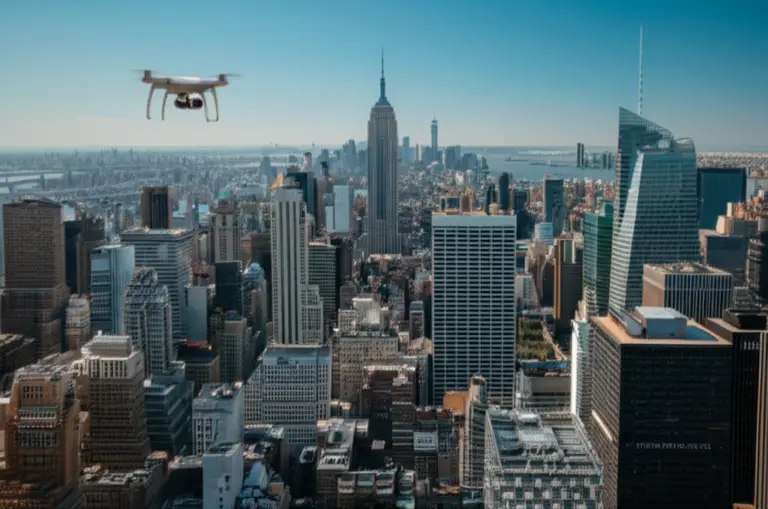
12. The Neon Nights of New York City, USA
Manhattan at night is a sea of lights.
- Why Fly Here: The density of lights and the verticality of the skyline.
- The Challenge: Class B airspace and No Fly Zones cover almost the entire city.
- Reality Check: Unless you have a Part 107 waiver and specific clearance, flying in NYC is nearly impossible for hobbyists. Stick to parks like Flushing Meadows Corona Park (with permission).
13. The Fjords of Norway
Dramatic cliffs, deep water, and waterfalls.
- Why Fly Here: The Geirangerfjord is a UNESCO site with incredible vertical relief.
- The Challenge: Wind tunnels in the fjords can be dangerous.
- Tip: Fly in the summer when the weather is more stable.
14. The Savannahs of the Serengeti, Tanzania
The Great Migration is best seen from above.
- Why Fly Here: Capturing the scale of the herds is impossible from the ground.
- The Challenge: Wildlife protection is paramount. You must not disturb the animals.
- Rule: Keep a safe distance and never fly low over the herds.
15. The Volcanic Landscapes of Hawaii, USA
Black lava fields and lush green valleys.
- Why Fly Here: The contrast of the lava flows against the ocean is dramatic.
- The Challenge: National Park restrictions and Native Hawaiian cultural sites.
- Insight: Always check with the park service before flying in Hawaii.
🗺️ How to Scout the Perfect Location for Drone Videography
You’ve picked a spot on the map, but how do you know if it’s actually flyable? Scouting is an art form.
Step 1: Digital Reconaissance
Before you even pack your bag, use tools like:
- Google Earth: To check terrain and obstacles.
- AirControl / B4UFLY: To check for No Fly Zones.
- PhotoPills: To plan the Golden Hour and sun position.
Step 2: The Ground Game
Arrive early. Walk the perimeter. Look for:
- Takeoff/Landing Zones: Flat, clear of debris.
- Obstacles: Power lines, trees, and buildings.
- People: Are there crowds? If so, can you fly safely?
Step 3: The “What If” Scenario
Ask yourself:
- What if the wind picks up?
- What if the battery dies?
- What if a bird gets too close?
We learned this the hard way: Once, we flew into a valley in Colorado thinking the wind was calm. A sudden updraft caught us, and we had to fight the drone back to the edge. Always have an escape route.
🚫 Navigating No-Fly Zones and Drone Regulations by Country
Regulations are the bane of every pilot’s existence, but they are necessary. Here is a quick guide to navigating the legal maze.
United States (FA)
- Registration: Required for drones over 250g.
- Part 107: Required for commercial use.
- TRUST: Free certification for recreational flyers.
- No Fly Zones: Airports, military bases, and National Parks (mostly).
European Union (EASA)
- Categories: Open, Specific, and Certified.
- Registration: Required for most drones.
- Geo-Zones: Use apps like Droniq or OpenSky to check restrictions.
United Kingdom (CAA)
- Operator ID: Required for all drones with cameras.
- Flyer ID: Required to fly.
- No Fly Zones: Strictly enforced near airports and prisons.
Australia (CASA)
- Registration: Required for drones over 250g.
- No Fly Zones: Strictly enforced near airports and emergency scenes.
Warning: Ignorance is not a defense. Fines can be hefty, and your drone can be confiscated. Always check before you fly.
📸 Essential Gear for Capturing Stunning Aerial Footage
You don’t need the most expensive gear to get great shots, but having the right tools helps.
The Drone
- DJI Mini 4 Pro: Great for beginners, lightweight, and has obstacle avoidance.
- DJI Mavic 3 Pro: The pro choice with a Hasselblad camera and multiple lenses.
- Autel Evo II Pro: A strong competitor with excellent low-light performance.
Accessories
- ND Filters: Essential for controlling shutter speed in bright light.
- Extra Batteries: You can never have enough.
- Carying Case: Protect your gear from the elements.
- Landing Pad: Keeps your drone clean and safe from sand or grass.
👉 CHECK PRICE on:
- DJI Mini 4 Pro: Amazon | DJI Official
- DJI Mavic 3 Pro: Amazon | DJI Official
- Autel Evo II Pro: Amazon | Autel Official
🎬 Advanced Techniques for Cinematic Drone Shots
Want to take your footage from “nice” to “Hollywood”? Here are some advanced techniques.
The Reveal
Start with the drone close to an object (like a tree or rock), then pull back and up to reveal the landscape. This creates a sense of scale.
The Orbit
Circle around a subject while keeping it in the center of the frame. Use the Point of Interest (POI) mode on your drone.
The Dronie
Fly backward and up simultaneously to reveal the subject and the background.
The Follow
Use ActiveTrack to follow a moving subject (like a car or hiker).
Pro Tip: Don’t overuse these techniques. Sometimes a simple, slow pan is more powerful than a complex maneuver.
🛡️ Safety First: Avoiding Crashes and Legal Trouble
We’ve all had that heart-stopping moment when the battery warning flashes. Here is how to avoid it.
Battery Management
- RTH Settings: Set your Return to Home altitude higher than the tallest obstacle in the area.
- Battery Buffer: Never fly below 20% unless you are landing immediately.
- Temperature: Cold weather drains batteries faster. Keep them warm until the moment of takeoff.
Situational Awareness
- VLOS: Keep your eyes on the drone.
- Obstacle Avoidance: Don’t rely solely on sensors. They can fail.
- Weather: Check the wind speed and forecast.
Legal Safety
- Insurance: Get liability insurance. It’s cheap and saves you from bankruptcy.
- Permits: If you are flying in a National Park or near a city, get the permit.
Story Time: A pilot we know once flew over a crowd at a festival. He didn’t realize the drone’s battery was failing. It crashed into a tent. He was lucky no one was hurt, but he lost his drone and faced legal action. Always prioritize safety over the shot.
🌐 Georgia Drone Pilots · Join the Community
If you are in Georgia (or just love the state), you’re in luck! The Georgia Drone Pilots community is active and helpful. Whether you are looking for local flying spots, legal advice, or just want to share your footage, this is the place to be.
- Connect: Join the Georgia Drone Pilots Facebook Group to see what others are flying.
- Share: Post your best shots and get feedback.
- Learn: Ask questions about local regulations and hidden gems.
🏆 Conclusion: Where Will You Fly Next?

We’ve taken you on a journey from the sandy beaches of Santorini to the icy lagons of Iceland. We’ve covered the history, the gear, the techniques, and the legalities. But the most important question remains: Where will you fly next?
The world is full of hidden gems waiting to be discovered from the sky. Whether it’s a local park in your backyard or a remote mountain peak, the key is to fly safely, respect the rules, and capture the beauty.
Remember, the best drone flying spot isn’t always the most famous one. Sometimes, it’s the quiet corner of a forest you stumbled upon while hiking. So, pack your gear, check your battery, and go explore.
Final Thought: Don’t let the fear of regulations stop you from flying. Just be smart, do your homework, and enjoy the view. The sky is the limit!
🔗 Recommended Links
- Drones:
DJI Mini 4 Pro: Amazon | DJI Official
DJI Mavic 3 Pro: Amazon | DJI Official
Autel Evo II Pro: Amazon | Autel Official - Books:
The Ultimate Guide to Drone Photography by [Author Name] – Amazon - Apps:
B4UFLY: App Store | Google Play
AirControl: App Store | Google Play
❓ FAQ: Common Questions About Drone Flying Spots

What are the best drone flying spots for aerial photography near me?
The best spot near you depends on your location, but generally, look for parks, beaches, and open fields that are not near airports or restricted areas. Use apps like B4UFLY or AirControl to check local restrictions.
Read more about “🚁 City Drone Laws 2026: The Ultimate Local Flight Guide”
Are there any legal restrictions for drone photography at popular scenic locations?
Yes. Many popular scenic locations, such as National Parks and historical sites, have strict no-fly zones to protect wildlife and visitors. Always check with the local authorities before flying.
Which national parks allow drone flights for professional aerial shots?
Very few National Parks allow drone flights. In the US, the National Park Service generally prohibits drones. However, some parks may issue special permits for commercial use. Check the specific park’s website for details.
What are the safest drone flying spots for beginners to practice aerial photography?
Beginers should start in open fields away from people, buildings, and power lines. Local parks with designated flying areas are also a good option. Avoid flying near airports or in crowded areas.
Read more about “25 Best Places to Fly a Drone in the USA (2026) 🚁”
How do I find hidden gems for drone photography in urban areas?
To find hidden gems in urban areas, look for roftops, parks, and waterfronts that are not restricted. Use Google Earth to scout locations and check local regulations.
Read more about “🚀 7+ Best Legal Drone Spots (2024)”
What equipment do I need for the best aerial photography at remote locations?
For remote locations, you need extra batteries, a carrying case, ND filters, and a landing pad. Also, bring a portable charger and a first aid kit.
Read more about “15 Best Safe Drone Flying Spots to Explore in 2026 🚁”
Can I fly drones at sunrise or sunset for optimal lighting at these spots?
Yes, sunrise and sunset are the best times for aerial photography. The light is soft and the shadows are long. However, be aware of low visibility and increased bird activity during these times.
Read more about “How Can Drones Enhance Travel and Adventure Experiences? 🚁 (2026)”
📚 Reference Links
- FA: FA Drone Regulations
- EASA: EASA Drone Rules
- CAA (UK): CAA Drone Safety
- CASA (Australia): CASA Drone Safety
- DJI: DJI Official Website
- Autel Robotics: Autel Official Website
- Facebook Group: What are good places to shoot drone footage in Mahe Island?