Support our educational content for free when you purchase through links on our site. Learn more
🚀 15 Innovative Drone Ideas Changing the World (2026)

Forget the eight uses you’ve seen elsewhere; the sky is about to get a whole lot busier. At Drone Brands™, we’ve spent countless hours piloting everything from tiny racing quads to heavy-lift industrial beasts, and we can tell you one thing for certain: the most innovative drone ideas aren’t just about taking pretty photos anymore. They are about planting forests at the speed of sound, delivering blood to remote villages in minutes, and even building skyscrapers layer by layer.
Imagine a world where your morning coffee is delivered by a silent drone, or where a swarm of autonomous robots is replanting a burnt forest while you sip your latte. It sounds like science fiction, but it’s happening right now. In this deep dive, we’re revealing 15 mind-blowing concepts that are reshaping industries, from healthcare to construction. We’ll also uncover the secret tech behind the magic and answer the burning question: Who is responsible when an AI-driven drone makes a mistake?
Key Takeaways
- Beyond Photography: The future of innovative drone ideas lies in solving critical global challenges like reforestation, medical delivery, and disaster response.
- Tech Revolution: Advances in AI, swarm intelligence, and VTOL hybrids are enabling drones to operate autonomously in complex environments.
- 15 Game-Changing Concepts: From 3D printing construction to ocean cleanup, we explore 15 specific applications that are already in play or imminent.
- Regulatory Reality: As innovation accelerates, understanding safety regulations, privacy laws, and ethical AI is crucial for anyone entering this space.
- Actionable Insights: Whether you are a hobbyist or an entrepreneur, the barrier to entry is lower than ever, but strategic planning is the key to success.
Table of Contents
- ⚡️ Quick Tips and Facts
- 🚁 From Sci-Fi Dreams to Real-World Reality: A Brief History of Innovative Drone Concepts
- 🤔 What Exactly is a UAV? Defining the Modern Aerial Robot
- 🛸 The Great Drone Family Tree: Choosing the Right Airframe for Your Crazy Idea
- 🌀 Single-Rotor Helicopters: The Heavy Lifters of Innovation
- 🕸️ Multi-Rotor Marvels: Precision, Agility, and the Quadcopter Revolution
- ✈️ Fixed-Wing Flyers: Endurance for Long-Haul Creative Missions
- 🦅 VTOL Hybrids: The Best of Both Worlds for Urban Innovation
- 🚀 15 Mind-Blowing Innovative Drone Ideas That Are Changing the World
- 1. 🌲 Autonomous Reforestation Swarms: Planting Trees at the Speed of Flight
- 2. 🏥 Emergency Medical Supply Drops: Beating the Clock in Remote Areas
- 3. 🌊 Ocean Cleanup Drones: Hunting Microplastics from the Sky
- 4. 🏗️ 3D Printing Construction Drones: Building Skyscrapers One Layer at a Time
- 5. 🌾 Precision Agriculture Sprayers: The Future of Smart Farming
- 6. 🔍 Search and Rescue AI: Finding Lost Hikers in Seconds
- 7. 🏭 Industrial Inspection Drones: The Eyes That Never Blink
- 8. 🎨 Aerial Art and Light Shows: Replacing Fireworks with Code
- 9. 🚚 Last-Mile Delivery Flets: Getting Your Pizza Before It Gets Cold
- 10. 🌬️ Air Quality Monitoring Drones: Mapping Pollution in Real-Time
- 1. 🐦 Wildlife Conservation and Anti-Poaching Patrols
- 12. 🏙️ Urban Air Mobility: The Rise of Passenger Drones
- 13. 📡 Disaster Response and Communication Relays
- 14. 🏎️ High-Speed Drone Racing Leagues: The F1 of the Sky
- 15. 🧠 Swarm Intelligence: When One Drone is Good, but a Thousand is Better
- 🧠 How Do These Flying Robots Actually Work? The Tech Behind the Magic
- 🔒 Navigating the Sky: Regulations, Safety, and Ethical Innovation
- 💡 DIY vs. Pro: How to Turn Your Innovative Drone Idea into Reality
- 📜 The Patent Landscape: Who Owns the Future of Flight?
- 🔮 What’s Next? The Future of Innovative Drone Technology
- 🏆 Conclusion: Soaring Beyond the Horizon
- 🔗 Recommended Links
- ❓ FAQ: Your Burning Questions About Innovative Drones Answered
- 📚 Reference Links
⚡️ Quick Tips and Facts
Before we strap on our goggles and take to the skies, let’s hit the ground running with some rapid-fire facts that will make you look like a seasoned pro at the next drone meetup.
- The Speed of Innovation: The global commercial drone market isn’t just growing; it’s exploding. We are talking about a projected value of $501.4 billion by 2028. That’s a lot of propellers spinning!
- Patent Powerhouse: Did you know that China accounted for 64% of all drone-related patent grants in recent years? They are definitely leading the charge in R&D, but don’t count out the US and Europe just yet.
- The “Drone Wall”: In modern conflict zones, drones have become so effective that they are creating “kill zones” up to 15 kilometers wide. It’s a sobering reminder that innovation has no moral compass until we give it one.
- Battery Anxiety: The biggest bottleneck for innovative drone ideas right now isn’t software; it’s energy density. We need batteries that last longer than a coffee break.
- Privacy Paradox: For every cool idea (like air purifiers), there’s a privacy nightmare (like surveillance). The line between safety and intrusion is thinner than a drone’s carbon fiber frame.
Pro Tip from the Team: If you’re looking to turn a cool idea into a business, don’t just build the drone; build the regulatory strategy first. Check out our guide on Drone Business Opportunities to see how to navigate the red tape.
🚁 From Sci-Fi Dreams to Real-World Reality: A Brief History of Innovative Drone Concepts

We’ve all seen the movies. Star Wars gave us the TIE fighters, Minority Report gave us the flying police cars, and The Jetsons promised us flying cars by 2025 (sorry, still waiting on those). But the history of innovative drone ideas isn’t just about Hollywood; it’s about a relentless human drive to conquer the sky without risking a human life.
The Early Birds (and the Bombs)
It started with the Kettering Bug in 1918, an early unmanned aerial vehicle designed to drop bombs. It was clunky, unreliable, and definitely not the “cute” quadcopters we know today. But it planted the seed: Why fly a pilot when you can fly a machine?
Fast forward to the 190s and 20s. The military was the primary driver, using drones for surveillance in places like Afghanistan. But the real game-changer for consumer innovation was the miniaturization of GPS and the rise of lithium-polymer batteries. Suddenly, hobbyists could build stable, controllable aircraft in their garages.
The DJI Revolution
Then came DJI. They didn’t invent the drone, but they invented the user experience. By integrating flight controllers, gimbals, and cameras into a single, intuitive package, they turned a niche hobby into a global phenomenon. This opened the floodgates for creative drone applications we see today, from real estate photography to search and rescue.
Curiosity Check: We mentioned earlier that battery life is the biggest bottleneck. But what if we told you there are drones that don’t need batteries at all? Or ones that can “hop” to save energy? Stick with us, because the future of energy-efficient flight is stranger than you think.
🤔 What Exactly is a UAV? Defining the Modern Aerial Robot
Let’s clear up the confusion once and for all. UAV stands for Unmanned Aerial Vehicle. UAS is Unmanned Aircraft System (which includes the drone, the controller, and the communication link). And RPAS is Remotely Piloted Aircraft System.
But in the world of Drone Brands™, we just call them “flying robots.”
A modern UAV is a complex system of:
- Flight Controller: The brain (usually running algorithms like PID controllers).
- Sensors: GPS, barometers, accelerometers, gyroscopes, and LiDAR.
- Propulsion: Motors, ESCs (Electronic Speed Controllers), and propellers.
- Payload: Cameras, sensors, delivery mechanisms, or even 3D printers.
Unlike a remote-controlled plane that requires constant human input to stay aloft, a modern UAV can hover autonomously, follow a GPS waypoint, and even return to home if the signal is lost. This autonomy is the foundation of innovative drone ideas.
🛸 The Great Drone Family Tree: Choosing the Right Airframe for Your Crazy Idea
You can’t just slap a camera on a toy and call it a “medical delivery drone.” The airframe determines what your drone can do. Let’s break down the four main families of drones and which innovative ideas they support best.
🌀 Single-Rotor Helicopters: The Heavy Lifters of Innovation
These are the old-schoolers. One big rotor on top, one small one on the tail.
- Pros: Incredible lift capacity, longer flight times (up to 60+ minutes), and efficient at high speeds.
- Cons: Complex to fly, noisy, and dangerous if the rotor hits something.
- Best For: Heavy payload delivery, industrial inspection of large structures, and agricultural spraying.
- Real-World Example: The Yamaha RMAX has been used for decades in agriculture for spraying crops.
🕸️ Multi-Rotor Marvels: Precision, Agility, and the Quadcopter Revolution
The quadcopter (4 rotors), hexacopter (6), and octocopter (8) are the kings of consumer and commercial innovation.
- Pros: VTOL (Vertical Take-Off and Landing), incredible stability, easy to hover, and perfect for capturing smooth video.
- Cons: Short flight times (usually 20-40 mins), limited range, and inefficient for long-distance travel.
- Best For: Aerial photography, search and rescue, inspection of tight spaces, and swarm technology.
- Real-World Example: The DJI Matrice 350 RTK is the workhorse for industrial inspections.
✈️ Fixed-Wing Flyers: Endurance for Long-Haul Creative Missions
These look like tiny airplanes. They need a runway or a catapult to launch.
- Pros: Massive flight times (2+ hours), high speed, and efficient coverage of large areas.
- Cons: Cannot hover, requires more space to operate, and harder to land.
- Best For: Mapping large farms, wildlife monitoring, and long-range delivery routes.
- Real-World Example: The senseFly eBee X is a favorite for surveyors mapping square miles of land.
🦅 VTOL Hybrids: The Best of Both Worlds for Urban Innovation
The holy grail. These drones take off like a helicopter but fly like a plane.
- Pros: No runway needed, long flight times, and high efficiency.
- Cons: Complex mechanics, expensive, and heavy.
- Best For: Urban air mobility, last-mile delivery in cities, and disaster response where runways are destroyed.
- Real-World Example: The Joby Aviation (passenger) and Wingcopter (delivery) are leading this charge.
| Feature | Single-Rotor | Multi-Rotor | Fixed-Wing | VTOL Hybrid |
|---|---|---|---|---|
| Hover Capability | ✅ Excellent | ✅ Excellent | ❌ None | ✅ Excellent |
| Flight Time | ⭐ (60m+) | ⭐ (20-40m) | ⭐ (2h+) | ⭐ (60-90m) |
| Payload Capacity | ⭐ | ⭐ | ⭐ | ⭐ |
| Ease of Use | ❌ Hard | ✅ Easy | ⚠️ Moderate | ⚠️ Moderate |
| Ideal Use Case | Heavy Lifting | Photography/Inspection | Mapping/Surveying | Urban Delivery |
🚀 15 Mind-Blowing Innovative Drone Ideas That Are Changing the World
Okay, here is the meat of the article. We promised you more than the “eight innovative uses” you might have seen elsewhere. We are going deep. Here are 15 innovative drone ideas that are either in play right now or on the very near horizon.
1. 🌲 Autonomous Reforestation Swarms: Planting Trees at the Speed of Flight
Imagine a swarm of 10 drones flying over a deforested area. They don’t just drop seeds; they fire biodegradable seed pods into the soil with enough force to penetrate hard ground.
- The Tech: Drones like those from DroneSeed use thermal imaging to identify the best spots and fire pods at 10 pods per minute.
- The Impact: They can plant 10,0 trees a day, a task that would take humans months.
- Why it’s Innovative: It combines AI mapping with mechanical precision to reverse climate change.
2. 🏥 Emergency Medical Supply Drops: Beating the Clock in Remote Areas
In Rwanda and Ghana, Zipline drones are delivering blood, vaccines, and antivenom to remote clinics.
- The Tech: Fixed-wing drones that drop packages via parachute, landing within meters of the hospital.
- The Impact: Reduced delivery time from 4 hours to 15 minutes.
- Why it’s Innovative: It bypasses traffic and bad roads, saving lives in critical care scenarios.
3. 🌊 Ocean Cleanup Drones: Hunting Microplastics from the Sky
Cleaning the oceans is hard. Cleaning them from the sky is a game-changer.
- The Tech: Drones equipped with spectral cameras to identify plastic patches from above, guiding cleanup vessels or even deploying autonomous surface drones.
- The Impact: Faster identification of pollution hotspots.
- Why it’s Innovative: It turns the drone into a data-gathering scout for larger cleanup operations.
4. 🏗️ 3D Printing Construction Drones: Building Skyscrapers One Layer at a Time
This sounds like sci-fi, but companies like Apis Cor and COBOD are already printing houses. Now, imagine drones doing the heavy lifting.
- The Tech: Large drones carrying extruders to print concrete layers in mid-air or on scaffolding.
- The Impact: Reduces construction time and labor costs significantly.
- Why it’s Innovative: It brings additive manufacturing to the sky, allowing for complex geometries impossible with traditional cranes.
5. 🌾 Precision Agriculture Sprayers: The Future of Smart Farming
It’s not just about spraying; it’s about variable rate application.
- The Tech: Drones like the DJI Agras T40 can detect crop health via multispectral sensors and spray only where pests are present, reducing chemical use by 90%.
- The Impact: Healthier soil, lower costs, and higher yields.
- Why it’s Innovative: It moves farming from “blanket coverage” to surgical precision.
6. 🔍 Search and Rescue AI: Finding Lost Hikers in Seconds
Lost in the woods? A drone with thermal imaging and AI object recognition can find you in minutes, not days.
- The Tech: Drones that can distinguish between a rock, a bear, and a human in real-time.
- The Impact: Drastically increased survival rates for hikers and disaster victims.
- Why it’s Innovative: It combines computer vision with autonomous flight paths to cover vast areas quickly.
7. 🏭 Industrial Inspection Drones: The Eyes That Never Blink
Checking a wind turbine blade or a bridge for cracks used to require a human dangling from a rope. Now, it’s a drone.
- The Tech: Drones with LiDAR and high-res cameras that can fly inches from structures to detect micro-fractures.
- The Impact: Safer inspections and predictive maintenance.
- Why it’s Innovative: It eliminates human risk in dangerous environments.
8. 🎨 Aerial Art and Light Shows: Replacing Fireworks with Code
Fireworks are loud and polluting. Drone light shows are silent, reusable, and programmable.
- The Tech: Swarms of hundreds of drones (like Intel Shooting Star) synchronized via GPS to create 3D shapes in the sky.
- The Impact: A new form of entertainment that is eco-friendly and visually stunning.
- Why it’s Innovative: It turns the sky into a dynamic canvas.
9. 🚚 Last-Mile Delivery Flets: Getting Your Pizza Before It Gets Cold
Amazon Prime Air, Wing (Alphabet), and Zipline are testing this.
- The Tech: Autonomous drones that navigate urban canyons and drop packages at your doorstep.
- The Impact: Instant gratification for consumers and reduced traffic congestion.
- Why it’s Innovative: It solves the logistics bottleneck of the final mile.
10. 🌬️ Air Quality Monitoring Drones: Mapping Pollution in Real-Time
Instead of static sensors, drones can fly through a smoke plume or a chemical leak.
- The Tech: Drones equipped with gas sensors (NO2, CO2, PM2.5) that create 3D maps of air quality.
- The Impact: Real-time data for emergency responders and city planners.
- Why it’s Innovative: It provides dynamic, 3D pollution data rather than 2D snapshots.
1. 🐦 Wildlife Conservation and Anti-Poaching Patrols
Drones are the new rangers.
- The Tech: Thermal drones that can spot poachers at night or count herds of elephants without disturbing them.
- The Impact: Reduced poaching and better population management.
- Why it’s Innovative: It uses stealth technology to protect the vulnerable.
12. 🏙️ Urban Air Mobility: The Rise of Passenger Drones
The “flying taxi” is closer than you think.
- The Tech: eVTOL (electric Vertical Take-Off and Landing) aircraft like those from Joby Aviation and EHang.
- The Impact: Reducing commute times in mega-cities from hours to minutes.
- Why it’s Innovative: It redefines urban transportation and infrastructure.
13. 📡 Disaster Response and Communication Relays
When cell towers go down, drones can become flying cell towers.
- The Tech: High-altitude drones (like Lon by Google, though discontinued, the tech lives on) that beam Wi-Fi to disaster zones.
- The Impact: Restoring communication for rescue teams and victims.
- Why it’s Innovative: It provides instant connectivity in the most critical moments.
14. 🏎️ High-Speed Drone Racing Leagues: The F1 of the Sky
It’s not just a hobby; it’s a sport.
- The Tech: FPV (First Person View) drones flying at 10+ mph through complex obstacle courses.
- The Impact: A new e-sport genre with massive global viewership.
- Why it’s Innovative: It pushes the limits of human reaction time and drone agility.
15. 🧠 Swarm Intelligence: When One Drone is Good, but a Thousand is Better
This is the ultimate innovative drone idea.
- The Tech: Algorithms that allow hundreds of drones to communicate and coordinate without a central controller.
- The Impact: Resilient systems that can adapt if one drone fails.
- Why it’s Innovative: It mimics nature’s swarms (bes, birds) to solve complex problems.
Wait, there’s more! You might be wondering, “How do these drones actually do all this magic?” We touched on the hardware, but the software and AI are the real brains. Let’s dive into the tech stack.
🧠 How Do These Flying Robots Actually Work? The Tech Behind the Magic
You’ve seen the ideas; now let’s peek under the hood. How does a drone know not to crash into a tree while flying at 60 mph?
The Flight Controller: The Brain
The Flight Controller (FC) is the computer on board. It reads data from sensors hundreds of times per second.
- Sensors:
Gyroscopes & Accelerometers: Measure rotation and acceleration.
Barometers: Measure altitude.
GPS/GNSS: Provides location and speed.
LiDAR/Visual Sensors: For obstacle avoidance and mapping. - The Algorithm: The FC uses a PID (Proportional-Integral-Derivative) controller to adjust motor speeds instantly. If the wind pushes the drone left, the FC spins the right motors faster to correct it.
The “Eyes”: Computer Vision and AI
This is where the innovative ideas come to life.
- Visual-Inertial Odometry (VIO): As seen in the “first video” we mentioned, drones use cameras and IMUs to estimate their position without GPS. This is crucial for indoor flight.
- Neural Networks: Drones are being trained with Reinforcement Learning to navigate complex environments. They “learn” to fly by crashing thousands of times in a simulation before ever touching the real world.
- SLAM (Simultaneous Localization and Mapping): Drones can build a map of an unknown environment while tracking their location within it. This is essential for industrial inspection and search and rescue.
Communication: The Nervous System
- Radio Frequency (RF): Standard for hobbyists.
- 4G/5G: For beyond visual line of sight (BVLOS) operations. This is the key to delivery drones and urban air mobility.
- Fiber Optic: As seen in the Ukrainian conflict, fiber optic drones are immune to jaming, ensuring control in contested environments.
Did you know? Some experimental drones, like the Hagamosphere, have omnidirectional control, meaning they can move in any direction without tilting. This is a massive leap from traditional aerodynamics!
🔒 Navigating the Sky: Regulations, Safety, and Ethical Innovation
Inovation is great, but regulation is the guardrail that keeps us from crashing into each other.
The Regulatory Landscape
- FA (USA): Requires Part 107 certification for commercial use. BVLOS (Beyond Visual Line of Sight) is still heavily restricted but opening up.
- EASA (Europe): Has a tiered system (Open, Specific, Certified) based on risk.
- Privacy Concerns: Drones can easily invade privacy. Laws are evolving to address data collection and surveillance.
Safety First
- Geofencing: Drones like DJI have built-in software that prevents them from flying near airports or prisons.
- Remote ID: A “digital license plate” that broadcasts the drone’s identity and location. This is becoming mandatory in many countries.
- Fail-Safes: Return-to-Home (RTH) features ensure the drone comes back if the battery is low or signal is lost.
Ethical Considerations
- The “Drone Wall” Dilemma: As mentioned in the Ukrainian context, drones are changing warfare. We must ask: Who controls the AI?
- Environmental Impact: While drones can help the environment (reforestation), their manufacturing and battery disposal are concerns.
The Big Question: If a drone makes a mistake and causes harm, who is responsible? The pilot? The manufacturer? Or the AI developer? We’ll tackle this in the FAQ.
💡 DIY vs. Pro: How to Turn Your Innovative Drone Idea into Reality
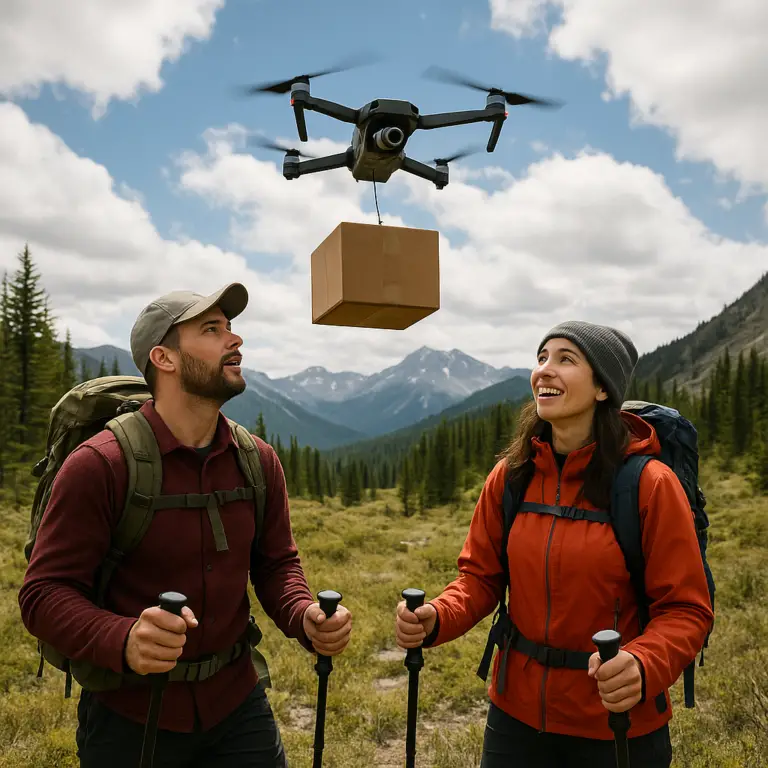
So, you have a brilliant idea. Maybe it’s a drone that cleans solar panels or one that delivers coffee to hikers. How do you make it?
The DIY Route
- Pros: Cheap, customizable, great for learning.
- Cons: Time-consuming, requires soldering and coding skills, less reliable.
- Tools Needed: 3D printer, soldering iron, flight controller (like Betaflight or ArduPilot), and a lot of patience.
- Best For: Protyping, hobbyists, and educational projects.
The Pro Route
- Pros: Reliable, certified, scalable, supported.
- Cons: Expensive, less customizable.
- Tools Needed: Off-the-shelf platforms like DJI Matrice, Autel Robotics, or Skydio.
- Best For: Commercial applications, business ventures, and critical missions.
Steps to Launch
- Define the Problem: What specific problem are you solving?
- Prototype: Build a simple version to test the concept.
- Regulatory Check: Can you legally fly this?
- Scale Up: Move to a professional platform if the idea works.
- Market It: Check out our Drone Business Ideas for inspiration on monetization.
📜 The Patent Landscape: Who Owns the Future of Flight?
Inovation is protected by patents. The patent landscape is a battleground for the future of drones.
- Key Players: DJI holds thousands of patents. Google, Amazon, and Intel are also major players.
- Trends: Patents are shifting from basic flight control to AI navigation, swarm intelligence, and specific applications (like medical delivery).
- China’s Dominance: As noted earlier, China holds a massive share of patents, but the US and Europe are catching up in high-end industrial applications.
Fun Fact: The patent for the quadcopter dates back to 1907, but it wasn’t until the 20s that the technology became viable. Patents often precede commercial reality by decades!
🔮 What’s Next? The Future of Innovative Drone Technology
We’ve covered the present, but where are we heading?
- Full Autonomy: Drones that don’t need a pilot at all. They will make their own decisions based on AI.
- Hybrid Propulsion: Combining electric and hydrogen fuel cells for infinite flight times.
- Shape-Shifting Drones: As seen in the “first video,” drones that can change shape to fit through small spaces or adapt to different tasks.
- Integration with Smart Cities: Drones will be part of the Internet of Things (IoT), communicating with traffic lights, buildings, and other vehicles.
The future is bright, fast, and full of innovative drone ideas we can’t even imagine yet. But one thing is certain: the sky is no longer the limit; it’s just the beginning.
🏆 Conclusion: Soaring Beyond the Horizon

We started this journey with a simple question: What are the most innovative drone ideas out there? We’ve traveled from the early days of the Kettering Bug to the futuristic swarms of autonomous reforestation drones. We’ve seen how drones are saving lives, cleaning our oceans, and even fighting wars.
The Verdict:
The most promising innovative drone ideas are those that solve real-world problems:
- Healthcare: Delivery of life-saving supplies.
- Environment: Reforestation and pollution monitoring.
- Safety: Search and rescue and industrial inspection.
- Efficiency: Last-mile delivery and precision agriculture.
Our Recommendation:
If you are an entrepreneur, look at the regulatory gaps and niche markets (like specialized inspection or environmental monitoring). If you are a hobbyist, explore FPV racing or swarm programming. The technology is accessible, but the vision is what matters.
Closing the Loop:
Remember that question we asked earlier about who is responsible when a drone makes a mistake? As AI takes the wheel, the answer will likely shift from the pilot to the software developer and the regulatory body. We are entering an era where trust in autonomous systems is just as important as the technology itself.
So, what’s your innovative drone idea? Will you be the one to plant the next forest, deliver the next vaccine, or build the next skyscraper? The sky is waiting.
🔗 Recommended Links
Ready to take the next step? Here are some resources to get you started:
- 👉 Shop DJI Drones: Amazon DJI Search | DJI Official Store
- 👉 Shop Autel Robotics: Amazon Autel Search | Autel Official
- 👉 Shop Skydio: Amazon Skydio Search | Skydio Official
- Books on Drone Technology: Drone Technology Books on Amazon
- Drone Business Opportunities: Drone Brands Business Guide
- Beginer Drones: Best Beginner Drones
- Commercial Drones: Top Commercial Drones
❓ FAQ: Your Burning Questions About Innovative Drones Answered

What are creative ways to use drones for travel and adventure blogging?
Drones allow you to capture cinematic aerial shots that were previously impossible without a helicopter. You can film yourself hiking, skiing, or kayaking from unique angles. Use follow-me modes to create dynamic tracking shots. For travel bloggers, a drone like the DJI Mini 4 Pro is perfect because it’s lightweight and fits in a backpack.
How do drones improve safety during outdoor recreational activities?
Drones act as a remote scout. Before you hike into a dangerous area, send a drone to check for hazards like falling rocks, flash floods, or wildlife. In search and rescue, they can locate lost hikers quickly using thermal cameras, reducing the risk to human rescuers.
What innovative drone designs are best for capturing adventure sports?
For high-speed sports like mountain biking or surfing, you need a drone with high-speed tracking and obstacle avoidance. The DJI Air 3 or Autel EVO II Pro are great choices. For extreme close-ups, FPV drones offer a first-person perspective that puts the viewer right in the action.
How can drones enhance the experience of hiking and exploring nature?
Drones can reveal hidden trails, stunning vistas, and wildlife that are invisible from the ground. They can also be used for mapping and navigation in remote areas. However, always respect wildlife and leave no trace principles.
What are the latest trends in drone technology for outdoor adventures?
- Longer Battery Life: New battery technologies are pushing flight times beyond 40 minutes.
- Advanced Obstacle Avoidance: Drones can now navigate through forests and canyons autonomously.
- Thermal Imaging: Becoming more common in consumer drones for night hiking and wildlife spotting.
- Lightweight Designs: Drones that weigh under 250g to avoid registration in many countries.
Read more about “🚁 5 Best FPV Drones for Extreme Sports Adventures (2026)”
How can drones be used for environmental monitoring and conservation?
Drones are used to count wildlife populations, monitor deforestation, and track illegal poaching. They can also collect water and air samples and map glacier retreat. This data is crucial for conservation efforts and policy-making.
Read more about “🚁 7 Ways to Launch a Wildlife Monitoring Drone Business (2026)”
What are some innovative drone ideas for aerial photography?
- 360-degree cameras: For immersive VR experiences.
- Multi-spectral cameras: For analyzing plant health in agriculture.
- Light shows: Replacing fireworks with synchronized drone swarms.
- Underwater drones: Combining aerial and underwater footage for a complete perspective.
Read more about “🚀 15+ Future of Drone Applications Transforming Our World (2026)”
Which upcoming drone innovations will make aerial adventures more accessible for beginners?
- AI-assisted flight: Drones that automatically avoid obstacles and follow subjects.
- Voice control: Controlling the drone with simple voice commands.
- Augmented Reality (AR) interfaces: Visualizing flight paths and obstacles in real-time through AR glasses.
- Subscription services: Renting drones by the hour for short trips.
What are some creative ways drones are being used for environmental monitoring during adventures?
- Tracking invasive species: Identifying and mapping invasive plants.
- Monitoring coral reefs: Using underwater drones to assess reef health.
- Detecting poachers: Using thermal cameras to spot illegal activity in protected areas.
- Measuring carbon sequestration: Estimating the carbon storage of forests.
How can extended drone battery life revolutionize long-distance aerial adventures?
Longer battery life means less downtime for charging and more time capturing footage. It enables BVLOS (Beyond Visual Line of Sight) flights for mapping large areas or delivering supplies to remote locations. It also allows for continuous monitoring of environmental changes.
Read more about “5 Drone Brands with Extended Flight Endurance You Need to Know (2026) 🚁”
Are there new drone designs specifically for extreme sports and adventure tracking?
Yes, FPV drones are designed for high-speed racing and acrobatics. Hybrid VTOL drones are being developed for long-range tracking of extreme sports like paragliding or mountainering. Some drones are even waterproof for surfing and diving adventures.
What innovative drone features are improving safety during remote aerial adventures?
- Return-to-Home (RTH): Automatically brings the drone back if the battery is low or signal is lost.
- Obstacle Sensing: Prevents collisions with trees, rocks, and other obstacles.
- Geofencing: Prevents flying in restricted areas.
- Emergency Parachutes: Deployable parachutes for safe landings in case of failure.
How are drones with advanced AI enhancing aerial adventure photography and videography?
AI allows for automatic framing, subject tracking, and scene recognition. Drones can now identify the best angles, follow moving subjects smoothly, and even edit footage in real-time. This makes it easier for beginners to capture professional-quality content.
Read more about “Mastering Drone No Fly Zones Map: Your Ultimate 2026 Guide 🗺️”
What are the most exciting new drone technologies for outdoor exploration?
- Swarm technology: Multiple drones working together to map large areas.
- Shape-shifting drones: Adapting to different environments.
- Solar-powered drones: For indefinite flight times.
- 5G connectivity: For real-time, high-definition video streaming from remote locations.
Read more about “DJI Drone Mastery: 8 Must-Know Models & Secrets for 2026 🚁”
📚 Reference Links
- Minesoft: Inovative Drone Technologies & Patents
- Atlantic Council: Ukrainian Wartime Innovation
- Tomorrow.city: Eight Innovative Uses for Drones
- DJI: Official Website
- FA: Drone Regulations
- EASA: Drone Rules
- Zipline: Medical Delivery
- Intel: Shooting Star Drones