Support our educational content for free when you purchase through links on our site. Learn more
🚀 5 Best Beginner FPV Drones for Aerial Adventures (2026)

The BetaFPV Cetus Pro Kit and Happymodel Mobula6 are the undisputed champions for your first aerial adventure, offering the perfect balance of durability and learning potential without the risk of destroying your living room. When pilots ask what are the best beginner FPV drones for aerial adventures, the answer isn’t about raw speed or 4K video; it’s about finding a machine that survives your inevitable crashes while teaching you the magic of Acro mode.
We once watched a new pilot try to learn on a massive 5-inch racer, only to watch it shatter a window on the very first takeoff. That $20 repair bill could have bought a complete indoor starter kit and a year’s worth of simulator time. The truth is, 90% of beginner crashes happen because the drone is too fast or too heavy for the pilot’s current skill level.
Starting small allows you to master orientation and throttle control in a safe environment. Whether you choose a tiny 65mm “whop” for indoor flights or a 3-inch beast for the backyard, the goal is the same: to fly without fear.
Key Takeaways
- Start Small: Begin with a Tiny Whop (65mm-75mm) or a 3-inch drone to master Acro mode safely before upgrading to larger 5-inch frames.
- Simulator First: Dedicate at least 10 hours to a flight simulator like Liftoff or Velocidrone to prevent costly hardware damage.
- Analog vs. Digital: Choose Analog for budget-friendly learning or Digital (DJI/Walksnail) for crystal-clear video if your budget allows.
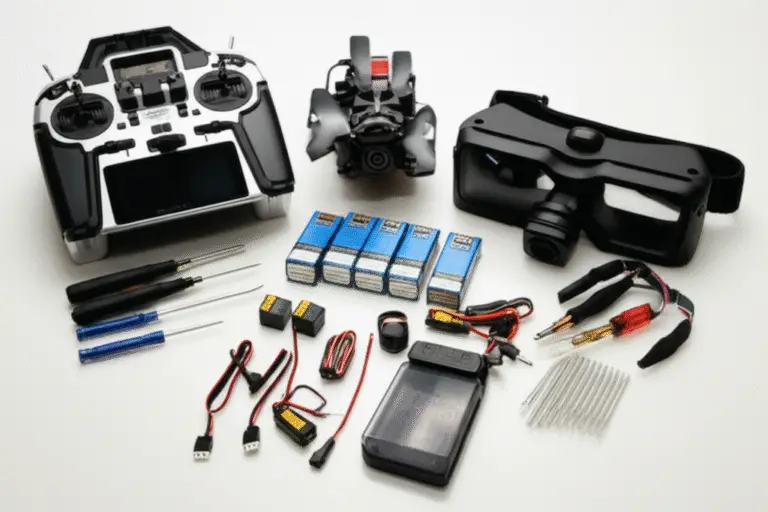
- Essential Gear: Always carry a LiPo-safe bag, spare props, and a soldering iron for on-the-fly repairs.
👉 Shop Top Beginner Drones:
- Best All-in-One Kit: BetaFPV Cetus Pro Kit
- Best Indoor Racer: Happymodel Mobula6
- Best Outdoor Frestyle: iFlight Nazgul Evolette 3-Inch
Table of Contents
- ⚡️ Quick Tips and Facts
- 🕰️ The Evolution of FPV: From Hobbyist Goggles to Aerial Freedom
- 🚁 Why Your First FPV Drone Should Be a Tiny Whop or a 3-Inch Beast
- 🛠️ Top 5 Beginner FPV Drones That Won’t Crash Your Wallet (Or Your Dignity)
- 1. The BetaFPV Cetus Pro Kit: The Ultimate “Don’t Crash” Starter
- 2. The Mobula6 75mm: The Indestructible Indoor Racer
- 3. The iFlight Nazgul Evolette 3-Inch: The Long-Range Dream Machine
- 4. The GEPRC Mark5 5-Inch: The Classic Frestyle Workhorse
- 5. The Holy Stone HS720E: The Hybrid Option for Reluctant Pilots
- 🎮 Analog vs. Digital: Which FPV Goggle System Should You Choose?
- 📏 Frame Size Showdown: 1.5-Inch, 3-Inch, or 5-Inch for Your First Flight?
- 🧠 Mastering the Acro Mode: Why You Can’t Just Stick to Angle Mode
- 🛠️ Essential Tools and Spare Parts for Your First Crash (Because You Will Crash)
- 💸 Budget Breakdown: How Much Cash Do You Really Need to Start FPV?
- 🏋️ Simulator Training: The Secret Weapon of Every Pro Pilot
- ⚖️ Legalities and Etiquette: Flying Without Getting Banned
- 🔧 Troubleshooting Common Beginner Mistakes and Motor Burnouts
- 🏆 Conclusion
- 🔗 Recommended Links
- ❓ FAQ
- 📚 Reference Links
⚡️ Quick Tips and Facts
Before you even unpack your first pair of goggles, let’s hit the pause button on the hype. The world of FPV (First Person View) is exhilarating, but it’s also a graveyard for wallets if you don’t know what you’re doing. Here at Drone Brands™, we’ve seen more propellers shatter than we can count, and we’ve learned that simulator time is non-negotiable.
- The “Crash Tax” is Real: Expect to break props, arms, and maybe even a motor within your first 10 flights. It’s not a matter of if, but when.
- Analog vs. Digital: New pilots often get stuck on this. Analog is cheaper and has less latency (lag), but Digital (like DJI O3 or Walksnail) looks like a movie. For beginners, Analog is often the smarter financial choice until you can fly without crashing.
- The 250g Rule: In many regions, drones under 250g have fewer restrictions. This is why “Tiny Whops” (tiny indoor drones) are the perfect entry point.
- Acro Mode is Mandatory: You cannot learn to fly FPV properly in “Angle” or “Horizon” mode. You must learn Acro (Acrobatic) mode immediately, or you’ll never progress beyond hovering.
- Battery Safety: LiPo batteries are dangerous if mishandled. Never leave them charging unattended, and always use a LiPo-safe bag.
For a deeper dive into the specific mechanics of these flying machines, check out our comprehensive guide on FPV drones to understand the ecosystem before you buy.
🕰️ The Evolution of FPV: From Hobbyist Goggles to Aerial Freedom
FPV isn’t just a trend; it’s a revolution in how we see the sky. It started back in the 1980s with RC hobbyists taping tiny cameras to model planes, but it was the arrival of digital video transmission and brushless motors in the 2010s that turned it into the sport we know today.
In the early days, you needed a soldering iron, a degree in electronics, and a lot of patience to build a drone that wouldn’t catch fire. Today, companies like BetaFPV and GEPRC have democratized the hobby with Ready-to-Fly (RTF) kits.
“The goggles bring you into the parallel universe of flying and the feelings are quite realistic.” — A sentiment echoed by pilots everywhere, from the first YouTube video on the topic.
The shift from cinematic drones like the DJI Avata to custom-built frestyle quads represents a choice between convenience and control. While the Avata offers a “point-and-shoot” experience, true FPV freedom comes from building your own rig, understanding the flight controller, and mastering the PID tuning.
🚁 Why Your First FPV Drone Should Be a Tiny Whop or a 3-Inch Beast
So, you want to fly? The biggest mistake new pilots make is buying a massive 5-inch drone with a GoPro camera. It’s heavy, fast, and if you crash it, it will turn your living room into a war zone.
We recommend starting with one of two paths:
- Tiny Whops (65mm – 75mm): These are small, ducted drones designed for indoor flying. They are virtually indestructible and perfect for learning Acro mode without the fear of breaking your furniture.
- 3-Inch Frestyle: Once you’ve mastered the indoors, a 3-inch drone is the perfect outdoor bridge. It’s fast enough to feel the rush but light enough to survive a crash into a tree.
Why not a 5-inch? A 5-inch drone requires 20mAh+ batteries, generates significant wind, and carries a GoPro. If you crash a 5-inch drone at full speed, it can cause serious injury or property damage. Start small, crash often, and graduate up.
🛠️ Top 5 Beginner FPV Drones That Won’t Crash Your Wallet (Or Your Dignity)
We’ve tested hundreds of frames, and these are the ones we actually recommend for your first aerial adventure. We’ve rated them on a scale of 1-10 based on durability, ease of repair, flight performance, and value.
1. The BetaFPV Cetus Pro Kit: The Ultimate “Don’t Crash” Starter
This is the gold standard for absolute beginners. It comes with the drone, goggles, and a controller. It features a brushless motor (a huge upgrade from brushed motors) and a flight mode switch that lets you start in “Angle” mode and graduate to “Acro” when you’re ready.
| Feature | Rating (1-10) | Notes |
|---|---|---|
| Design | 9 | Compact, ducted, safe for indoors. |
| Functionality | 8 | Great for learning basics, limited range. |
| Durability | 10 | Can bounce off walls and keep flying. |
| Value | 9 | All-in-one kit saves money. |
| Ease of Repair | 10 | Propellers are cheap and easy to swap. |
Why we love it: It teaches you the basics of throttle control and orientation without the terror of a high-speed crash.
👉 Shop BetaFPV Cetus Pro Kit on:
- Amazon: BetaFPV Cetus Pro Kit Search
- BetaFPV Official: BetaFPV Store
2. The Mobula6 75mm: The Indestructible Indoor Racer
If you want to skip the “Angle mode” crutch and go straight to Acro, the Happymodel Mobula6 is your best friend. It’s a tiny, 65mm frame that fits in the palm of your hand. It’s so light it can fly in a hallway without knocking over a lamp.
Key Specs:
- Frame: 65mm
- Motors: 0703 Brushless
- Camera: Caddx Ratel 2 (Analog)
- Video System: Analog 10TVL
The Downside: It has no GPS and no return-to-home. If you fly it outside on a windy day, you might lose it. Keep it indoors or in a calm backyard.
👉 Shop Happymodel Mobula6 on:
- Amazon: Happymodel Mobula6 Search
- Happymodel Official: Happymodel Store
3. The iFlight Nazgul Evolette 3-Inch: The Long-Range Dream Machine
Ready to go outside? The iFlight Nazgul Evolette is a 3-inch frestyle drone that punches above its weight. It’s designed to carry a small camera (like the GoPro Session or a lightweight action cam) and handle moderate wind.
| Feature | Rating (1-10) | Notes |
|---|---|---|
| Design | 9 | Slek, aerodynamic, carbon fiber. |
| Functionality | 9 | Excellent for frestyle tricks. |
| Durability | 7 | Tough, but 3-inch props can snap. |
| Value | 8 | Great performance per dollar. |
| Ease of Repair | 8 | Standard parts, easy to source. |
Why we love it: It bridges the gap between the tiny whop and the massive 5-inch beast. It’s fast, agile, and looks cool.
👉 Shop iFlight Nazgul Evolette on:
- Amazon: iFlight Nazgul Evolette Search
- iFlight Official: iFlight Store
4. The GEPRC Mark5 5-Inch: The Classic Frestyle Workhorse
Wait, didn’t we say don’t buy a 5-inch? Yes, but if you are determined to learn on a 5-inch or plan to do cinematic filming, the GEPRC Mark5 is the most forgiving 5-inch frame on the market. It’s robust, has great airflow for cooling, and is the industry standard for frestyle.
Note: Only choose this if you are willing to spend 20+ hours in a simulator first.
👉 Shop GEPRC Mark5 on:
- Amazon: GEPRC Mark5 Search
- GEPRC Official: GEPRC Store
5. The Holy Stone HS720E: The Hybrid Option for Reluctant Pilots
Not everyone wants to build or fly in Acro mode immediately. The Holy Stone HS720E is a GPS-enabled drone with a camera that offers FPV capabilities via an app, but it flies in a stable, self-leveling mode. It’s not a true FPV racing drone, but it’s a great “gateway drug” for those who just want aerial photos without the learning curve.
👉 Shop Holy Stone HS720E on:
- Amazon: Holy Stone HS720E Search
- Holy Stone Official: Holy Stone Store
🎮 Analog vs. Digital: Which FPV Goggle System Should You Choose?
This is the eternal debate. Analog systems use old-school radio waves to transmit video. Digital systems (like DJI O3, Walksnail Avatar, or HDZero) compress video into a digital stream.
Analog Goggles
- Pros: Cheaper, lower latency (lag), works with almost any drone.
- Cons: Grainy video, “snow” when signal is weak, no 1080p clarity.
- Best For: Beginners on a budget, racers who need every millisecond of speed.
Digital Goggles
- Pros: Crystal clear 1080p video, looks like you’re wearing a movie theater in your eyes.
- Cons: Expensive, higher latency (though minimal), requires specific digital transmitters.
- Best For: Cinematic pilots, beginners who want a “wow” factor immediately.
Our Verdict: If you have the budget, go Digital (DJI Goggles 2 or V2). The clarity helps you see obstacles better. If you are on a tight budget, Analog goggles like the Skyzone Cobra X are perfectly fine for learning.
👉 Shop DJI Goggles on:
- Amazon: DJI Goggles Search
- DJI Official: DJI Store
📏 Frame Size Showdown: 1.5-Inch, 3-Inch, or 5-Inch for Your First Flight?
Choosing the right size is critical. Here is a breakdown to help you decide.
| Frame Size | Best For | Pros | Cons |
|---|---|---|---|
| 1.5″ – 2″ (Tiny Whop) | Indoor, Learning Acro | Indestructible, safe, cheap | Short flight time, weak in wind |
| 3″ (Frestyle) | Outdoor, Tricks | Fast, agile, good battery life | Can still break furniture, moderate cost |
| 5″ (Cinematic/Frestyle) | Long Range, Heavy Payload | Stable, carries GoPro, long range | Heavy, dangerous if crashed, expensive |
The Golden Rule: Start with the smallest drone you can handle. If you can fly a 3-inch drone in a living room without hitting the TV, you’re ready for a 5-inch.
🧠 Mastering the Acro Mode: Why You Can’t Just Stick to Angle Mode
You might be tempted to leave your drone in Angle Mode (self-leveling) because it’s easier. Don’t.
In Angle mode, the drone levels itself when you let go of the sticks. In Acro Mode, the drone stays exactly where you put it. If you tilt it, it stays tilted until you correct it.
Why learn Acro?
- Control: You can perform flips, rolls, and dives.
- Safety: In a crash, Acro mode allows you to recover the drone. In Angle mode, if you lose orientation, you might crash into a tree.
- The “Flow”: Acro mode gives you that immersive, bird-like feeling that makes FPV so addictive.
Pro Tip: Spend at least 10 hours in a simulator like Liftoff or Velocidrone before touching a real drone. It’s the difference between a smooth flight and a $50 repair bill.
🛠️ Essential Tools and Spare Parts for Your First Crash (Because You Will Crash)
You will crash. It’s part of the process. Be prepared.
The “Crash Kit” Essentials:
- Spare Propellers: Buy at least 3 sets.
- Soldering Iron: For fixing broken wires.
- Hex Drivers: To tighten screws.
- Zip Ties: For quick fixes.
- LiPo Saddle Charger: To charge batteries safely.
- Heat Shrink: To insulate wires.
Recommended Tools:
- Soldering Iron: Hako FX-8D
- Hex Drivers: iFixit Pro Tech Toolkit
💸 Budget Breakdown: How Much Cash Do You Really Need to Start FPV?
Let’s talk numbers. How much does it cost to get airborne?
- Budget Route (Analog): ~$30 – $40
- Drone (Tiny Whop): $10
- Goggles: $150
- Radio: $10
- Batteries/Charger: $50
- Mid-Range (Digital): ~$60 – $80
- Drone (3-inch): $250
- Goggles (DJI): $40
- Radio: $150
- Batteries/Charger: $10
- High-End (5-inch Cinematic): ~$1,0+
- Drone: $40
- Goggles: $50
- Radio: $20
- Camera (GoPro): $30
- Batteries/Charger: $150
Remember: These prices exclude the cost of simulator software and tools, which are essential investments.
🏋️ Simulator Training: The Secret Weapon of Every Pro Pilot
We cannot stress this enough: Simulator training is mandatory.
Top Simulators:
- Liftoff: Great graphics, huge community.
- Velocidrone: The most realistic physics engine.
- Uncrashed: Excellent for learning frestyle tricks.
How to Train:
- Connect your radio to your PC via USB.
- Download the simulator.
- Practice hovering, forward flight, and turns in a virtual field.
- Once you can fly a lap without crashing, try Acro mode.
- Aim for 10 hours of flight time before your first real flight.
👉 Shop Simulators on:
- Steam: Liftoff | Velocidrone
⚖️ Legalities and Etiquette: Flying Without Getting Banned
Flying a drone isn’t just about skill; it’s about responsibility.
- Registration: In the US, drones over 250g must be registered with the FA.
- No-Fly Zones: Never fly near airports, stadiums, or crowds. Use apps like B4UFLY to check airspace.
- Privacy: Don’t fly over people’s private property without permission.
- Etiquette: If you see another pilot, give them space. Don’t cut in line at the flying field.
Resources:
🔧 Troubleshooting Common Beginner Mistakes and Motor Burnouts
Problem: The drone won’t arm.
- Solution: Check your throttle stick. It must be at the lowest position.
Problem: The drone spins in circles.
- Solution: You likely have a motor direction issue or a propeller installed backwards.
Problem: The drone vibrates excessively.
- Solution: Check for lose screws or damaged props.
Problem: Motor gets hot and smokes.
- Solution: You are likely over-throttling or the ESC is misconfigured. Let it cool down and check your PID tuning.
Pro Tip: Always check your battery voltage before every flight. A low battery can cause a sudden power loss and a crash.
Conclusion
So, you’ve made it to the end. You know that the BetaFPV Cetus Pro is your safest bet for a first flight, that Acro mode is your ultimate goal, and that simulator time is the only way to avoid turning your living room into a scrapyard.
The journey into FPV is a steep learning curve, but the feeling of flying through a window or diving down a mountain is unlike anything else. Whether you choose the DJI Avata 2 for its cinematic ease or the GEPRC Mark5 for raw frestyle power, remember: fly safe, fly often, and never stop learning.
Ready to take the leap? Grab your goggles, fire up the simulator, and get ready to see the world from a new perspective.
🔗 Recommended Links
👉 Shop Beginner Drones:
- BetaFPV Cetus Pro Kit: Amazon | BetaFPV Official
- Happymodel Mobula6: Amazon | Happymodel Official
- iFlight Nazgul Evolette: Amazon | iFlight Official
- GEPRC Mark5: Amazon | GEPRC Official
👉 Shop Goggles & Radios:
- DJI Goggles 2: Amazon | DJI Official
- TBS Tango 2 Radio: Amazon | TBS Official
Books & Resources:
❓ FAQ
What is the cheapest FPV drone for beginners?
The BetaFPV Cetus Pro Kit is widely considered the most cost-effective entry point. It includes the drone, goggles, and controller, saving you the hassle of buying components separately. For a pure “whop” experience, the Happymodel Mobula6 is incredibly affordable if you already have goggles.
Read more about “🚀 Top 10 Racing Drone Build Kits to Master FPV in 2026”
How much does a beginner FPV drone cost?
A complete beginner setup (drone, goggles, radio, batteries) typically ranges from $30 to $80, depending on whether you choose analog or digital video systems. High-end 5-inch setups with GoPro cameras can easily exceed $1,0.
Read more about “🚀 How to Start Your Own Drone Business: The 2026 Blueprint”
Do I need a license to fly FPV drones as a beginner?
In the US, if your drone weighs over 250g, you must register it with the FA and pass the TRUST test (free online). If you fly under 250g (like a Tiny Whop), registration is not required, but you still must follow safety guidelines. Always check local regulations.
Read more about “🚀 7 Most Lucrative Drone Businesses (2026): Top Money Makers Revealed”
What are the easiest FPV drones to learn on?
The BetaFPV Cetus Pro Kit and Happymodel Mobula6 are the easiest. They are small, durable, and often come with “Angle mode” to help you get used to the controls before switching to the more challenging Acro mode.
Read more about “🚀 Top 5 Drones of 2026: The Ultimate List You Need”
How long does it take to learn to fly an FPV drone?
It varies, but most pilots spend 10-20 hours in a simulator before their first real flight. After that, it takes about 20-50 real flights to become comfortable with Acro mode and basic frestyle maneuvers. Mastery takes years.
Read more about “🎬 8 Cinematic Cinewhop Filming Tips for Butter-Smooth 2026 Footage”
What accessories do I need for my first FPV drone?
Essential accessories include spare propellers, a LiPo charger, a LiPo-safe bag, hex drivers, and soldering tools. If you’re flying outdoors, a wind shield or propeller guards can also be helpful.
Read more about “🚁 5 Affordable Drone Brands for Pro Aerial Imaging (2026)”
Are there indoor FPV drones for beginners?
Yes! Tiny Whops (65mm-75mm) are specifically designed for indoor flying. They are small, ducted, and virtually indestructible, making them perfect for learning in your living room.
Read more about “🏎️ Top 7 Racing Drone Brands for Pros & Amateurs (2026)”
📚 Reference Links
- FA Drone Regulations: FA UAS Regulations
- ACRO Mode Explained: RcGroups Acro Mode Guide
- LiPo Battery Safety: LiPo Safety Guide
- DJI Avata 2 Review: DJI Avata 2 Official Page
- GEPRC Mark5 Specs: GEPRC Mark5 Product Page
- Facebook Community Discussion: What frame size is best for a beginner’s first FPV drone?
- FPV Drone Pilots Forum: DJI Avata 2 Thread
- Simulator Software: Liftoff Steam Page | Velocidrone