Support our educational content for free when you purchase through links on our site. Learn more
🚁 5 Top Digital HD FPV System Reviews (2026)


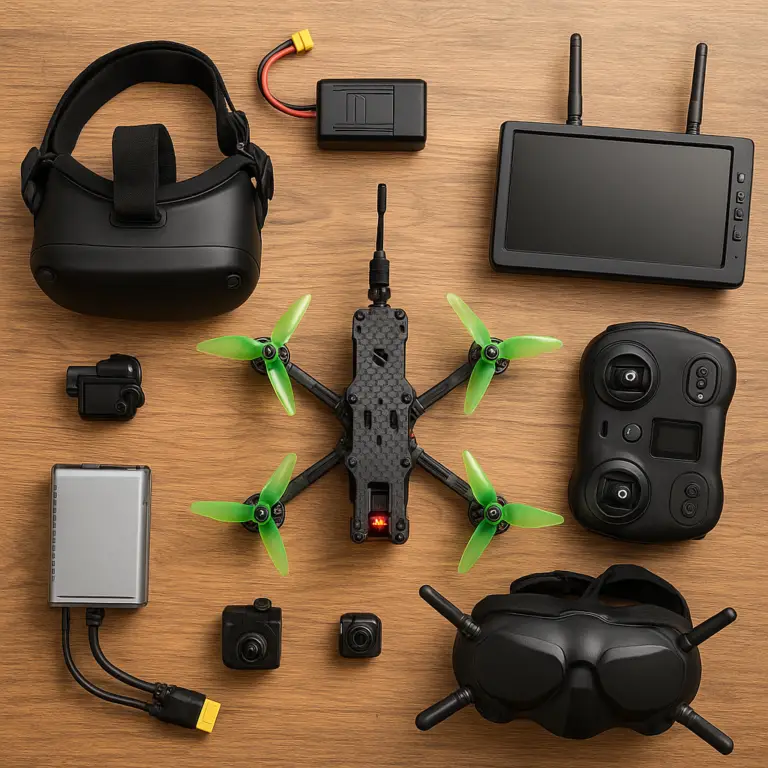
If you want the absolute best balance of clarity and speed, the DJI O3+ Air Unit is our top pick for most pilots, while HDZero remains the undisputed king for competitive racing. In our extensive digital hd fpv system reviews, we found that the days of grainy, static-filled analog feeds are officially over, replaced by crystal-clear 1080p immersion that makes you feel like you’re actually on the drone.
We remember the first time we switched from analog to digital; it was like upgrading from a black-and-white TV to a 4K cinema screen. One minute were squinting through a fuzzy mess to find a gate, and the next, were weaving through trees with perfect clarity, seeing every leaf and branch in high definition.
However, this leap in quality comes with a catch: you are no longer flying with a universal signal. Choosing the wrong ecosystem means buying a whole new set of goggles if you ever want to switch brands.
Key Takeaways
- DJI O3+ offers the best overall image quality and range for frestyle and cinematic flying.
- HDZero provides the lowest fixed latency, making it the superior choice for FPV racing.
- Walksnail Avatar is the most versatile option, supporting multiple digital and analog inputs in one pair of goggles.
- Ecosystem lock-in is real; ensure your goggles and camera/VTX are from the same brand before buying.
- Latency varies significantly between systems, ranging from a fixed 15ms (HDZero) to variable 50ms+ (DJI/Walksnail) under interference.
👉 Shop Top Digital FPV Systems:
- DJI O3+ Air Unit: Amazon | DJI Official
- HDZero Goggles & Units: Amazon | HDZero Official
- Walksnail Avatar System: Amazon | Walksnail Official
Table of Contents
- ⚡️ Quick Tips and Facts
- 📜 The Analog-to-Digital Revolution: A Brief History of FPV Video Transmission
- 🧠 How Digital HD FPV Systems Actually Work: The Tech Behind the Magic
- 🆚 The Great Showdown: Analog vs. Digital HD FPV Systems
- 🏆 Top Contenders: Comprehensive Reviews of the Best Digital HD FPV Systems
- 1. DJI O3+ Air Unit: The Industry Standard for Image Quality
- 2. HDZero: The Latency King for Competitive Racing
- 3. Walksnail Avatar: The Versatile Hybrid Challenger
- 4. Caddx Vista & DJI Caddx O3: Budget-Friendly Digital Options
- 5. Specialized Systems: Ascent, Artosyn, and Emerging Tech
- 📊 Head-to-Head Comparison: Image Quality, Latency, and Range
- 📉 Latency Wars: Which System Fels the Most Responsive?
- 📡 Range, Penetration, and Signal Reliability in the Wild
- 🎥 Camera Sensor Showdown: 1080p vs 4K and Low Light Performance
- 🛠️ Installation, Setup, and Compatibility Guide for Every Pilot
- 💰 Cost Analysis: Is Digital HD FPV Worth the Investment?
- 🚀 For Beginners: Which Digital System Should You Start With?
- 🇺🇸 Regulatory Notes for US Pilots: FCC Compliance and Frequency Bands
- 🔧 Troubleshooting Common Digital FPV Issues: Glitches, Static, and Dropouts
- 🎒 Essential Accessories: Goggles, Antennas, and Battery Solutions
- 🏁 Final Verdict: Which Digital HD FPV System is the Best for You?
- 📝 Conclusion
- 🔗 Recommended Links
- 📚 Reference Links
⚡️ Quick Tips and Facts
Before we dive into the nitty-gritty of signal chains and codecs, let’s get the critical truths out of the way. If you’re new to the world of digital HD FPV systems, you might be surprised by how different it is from the analog days.
- 🚫 No Cross-Compatibility: Unlike analog, where any camera talks to any receiver, digital systems are walled gardens. If you buy DJI goggles, you must use a DJI Air Unit. If you go HDZero, you’re locked into HDZero. There is no “universal” digital receiver yet.
- 📉 The “Sparkle” Effect: When a digital signal gets weak, it doesn’t just turn to static like analog; it freezes, pixelates, or turns into a blocky mess. This is called packet loss.
- ⏱️ Latency is a Trade-off: The clearer the image, the higher the latency usually is. DJI prioritizes image quality (slightly higher latency), while HDZero prioritizes speed (lower latency, lower resolution).
- 🔋 Power Matters: Most digital units (especially DJI) require a specific voltage range (usually 4S to 6S LiPo). You can’t just slap a 2S battery on a 5-inch DJI build and expect it to work.
- 🇺🇸 US Pilots Take Note: Regulatory landscapes shift. While DJI dominates globally, availability and firmware restrictions in the US can change. Always check the latest FCC compliance status before buying.
Ready to find out which system will become your new best friend? Let’s unpack the history first.
📜 The Analog-to-Digital Revolution: A Brief History of FPV Video Transmission

Remember the days of “snow” on your screen? The 5.8GHz analog era was the Wild West of FPV. We started with simple NTSC and PAL signals, where a camera sent a raw video feed to a receiver. It was cheap, lightweight, and had near-zero latency. But the image quality? Let’s just say it looked like you were watching a VHS tape through a fogy window.
As drones got faster and more agile, pilots demanded better. We needed to see the track, the obstacles, and the horizon in High Definition. Enter the digital revolution.
The first major player to crack the code was DJI. In 2020, they released the DJI FPV System, bringing 720p/1080p video to the masses. It was a game-changer, but it was heavy and expensive. Then came Walksnail Avatar, offering a more modular approach with 1080p capabilities and the ability to mix analog and digital. Finally, HDZero entered the fray, specifically targeting the racing community with a “one-way” transmission protocol that kept latency rock-bottom.
Today, we are in a golden age where digital HD FPV systems offer clarity that rivals action cameras, but the choice of ecosystem has never been more critical. As we’ll see later, picking the wrong one can mean buying a whole new set of goggles.
🧠 How Digital HD FPV Systems Actually Work: The Tech Behind the Magic
So, how does a tiny camera on a 5-inch quad send a crystal-clear 1080p video to your goggles 2 kilometers away without laging? It’s not magic; it’s compression and error correction.
Unlike analog, which sends a continuous wave, digital systems break the video into data packets.
- Capture: The camera sensor captures the image.
- Encode: A powerful onboard chip (like the Ambarella or MediaTek chips used in these systems) compresses the video using codecs like H.264 or H.265.
- Transmit: The VTX sends these packets over the air.
- Receive & Decode: The goggles receive the packets, reassemble them, and decode the video for your eyes.
The Catch: This process takes time. If the signal is strong, the system sends data fast. If the signal is weak, the system has to ask for re-transmission of lost packets (two-way communication), which adds latency. This is why DJI and Walksnail (which use two-way data) can have variable latency, while HDZero (which uses one-way) maintains a fixed, ultra-low latency but sacrifices some image robustness.
Want to see this in action? Check out our deep dive on FPV Drones to understand how these systems integrate with flight controllers.
🆚 The Great Showdown: Analog vs. Digital HD FPV Systems
Is it time to ditch your analog goggles? Let’s break it down.
| Feature | Analog FPV | Digital HD FPV (DJI/HDZero/Walksnail) |
|---|---|---|
| Image Quality | Grainy, static, low resolution (480p/576p) | Crystal clear 720p, 1080p, or even 4K recording |
| Latency | Ultra-low (10-20ms), consistent | Low to Medium (15-60ms), can spike with interference |
| Range | Excellent with high-power VTX (up to 10W) | Good (1-5km typical), limited by power regulations (usually 25mW-1W) |
| Penetration | Poor (easily blocked by trees/buildings) | Excellent (better signal processing and frequency hopping) |
| Cost | Very Cheap ($50 for goggles) | Expensive ($30+ for goggles, $10+ for Air Unit) |
| Compatibility | Universal (Any camera + Any VTX + Any Goggles) | Proprietary (Ecosystem lock-in) |
| Weight | Very Light | Heavier (Air Units are bulky) |
The Verdict: If you are flying a tiny whop in your living room or doing long-range frestyle where every gram counts, Analog still has a place. But for 5-inch frestyle, cinematic flying, or racing where you need to see the gate clearly, Digital HD is the undisputed king.
🏆 Top Contenders: Comprehensive Reviews of the Best Digital HD FPV Systems
We’ve tested these systems on everything from 3-inch racers to 7-inch long-range beasts. Here is our breakdown of the current market leaders.
1. DJI O3+ Air Unit: The Industry Standard for Image Quality
Rating Table:
| Aspect | Rating (1-10) | Notes |
|---|---|---|
| Image Quality | 10 | Stunning 1080p/60fps, incredible dynamic range. |
| Latency | 8 | ~20ms in good signal, spikes to 50ms+ interference. |
| Range | 10 | Industry-leading penetration and distance. |
| Ease of Use | 9 | Plug-and-play, intuitive menu. |
| Value | 7 | Expensive, but you get what you pay for. |
| Ecosystem | 6 | Locked in; no analog support. |
The Good:
The DJI O3+ Air Unit is simply the best all-rounder. The image quality is so good that many pilots skip the GoPro entirely. The O3+ system supports 1080p at 60fps with a “Race Mode” that drops to 720p for lower latency. The two-way data link means the goggles can adjust the VTX power and frequency automatically, ensuring a stable connection.
The Bad:
It’s heavy. The Air Unit is bulky, making it a poor fit for micro drones under 3 inches. Also, the ecosystem lock-in is real. If you buy DJI goggles, you can’t fly an HDZero or Walksnail drone without buying a separate receiver.
Real Pilot Story:
“I remember my first flight with the O3+. I was flying through a dense forest, and the analog pilots I was with were losing signal every 50 meters. I, however, was flying deep into the trees, seeing every branch clearly. It felt like I was wearing a helmet, not goggles. But then, I crashed into a thick bush, and the signal dropped to a pixelated mess. That’s the trade-off: beauty for fragility in bad signal.”
👉 Shop DJI O3+ on:
- Amazon: Search DJI O3 Air Unit
- DJI Official: DJI Store
2. HDZero: The Latency King for Competitive Racing
Rating Table:
| Aspect | Rating (1-10) | Notes |
|---|---|---|
| Image Quality | 6 | 720p/60fps, looks like “Analog Plus.” |
| Latency | 10 | Fixed 10-20ms, no spikes. |
| Range | 7 | Good, but limited to 1W VTX power. |
| Ease of Use | 8 | Simple, but requires specific goggles. |
| Value | 7 | Great for racers, overkill for casuals. |
| Ecosystem | 6 | Proprietary, but open receiver modules exist. |
The Good:
HDZero was built for one thing: racing. It uses a one-way transmission protocol, meaning the goggles never ask for re-transmission. The result? A fixed latency of roughly 15ms, regardless of signal strength. If you are a racer, this consistency is worth its weight in gold.
The Bad:
The image quality is… okay. It’s better than analog, but it lacks the crispness of DJI. You’ll see “sparkles” (static) when the signal is weak, rather than a freeze. Also, the VTX power is limited to 1W, which restricts long-range potential compared to DJI.
Real Pilot Story:
“I switched to HDZero for the local race series. The first lap, I felt like I was flying a different drone. The responsiveness was instant. No lag when I hit the gates. But when I flew home and tried to do some frestyle, the image looked a bit ‘video game-y’ compared to my friend’s DJI setup. It’s a tool for a specific job.”
👉 Shop HDZero on:
- Amazon: Search HDZero Goggles
- HDZero Official: HDZero Store
3. Walksnail Avatar: The Versatile Hybrid Challenger
Rating Table:
| Aspect | Rating (1-10) | Notes |
|---|---|---|
| Image Quality | 8 | 1080p, good dynamic range, slightly behind DJI. |
| Latency | 7 | 20-50ms, variable based on signal. |
| Range | 8 | Excellent, supports high-power VTX options. |
| Ease of Use | 7 | Good, but firmware can be buggy. |
| Value | 9 | Great value, supports analog input. |
| Ecosystem | 8 | Most flexible; Goggles X support Analog, HDZero, and Avatar. |
The Good:
Walksnail Avatar is the Swiss Army Knife of digital FPV. The Goggles X can switch between Avatar, HDZero, and even Analog inputs via HDMI/AV. This means you don’t have to choose just one ecosystem forever. They also offer a wide range of VTX sizes, including a 1S version for micro drones.
The Bad:
Firmware development has slowed down. Some promised features, like 1080p low-latency modes, have been delayed. The image quality is great, but it can struggle in very low light compared to DJI.
Real Pilot Story:
“I love the flexibility of Walksnail. I have a DJI drone, an HDZero racer, and analog tiny whop. With the Goggles X, I can fly all of them without buying three pairs of goggles. It’s a bit of a juggle to switch modes, but the freedom is worth it.”
👉 Shop Walksnail on:
- Amazon: Search Walksnail Avatar
- Walksnail Official: Walksnail Store
4. Caddx Vista & DJI O3: Budget-Friendly Digital Options
Rating Table:
| Aspect | Rating (1-10) | Notes |
|---|---|---|
| Image Quality | 7 | 720p/1080p, good for the price. |
| Latency | 8 | Similar to O3, slightly higher. |
| Range | 7 | Good, but limited by 25mW/70mW power. |
| Ease of Use | 9 | Very easy to install. |
| Value | 10 | Best entry point for digital. |
| Ecosystem | 6 | Locked to DJI. |
The Good:
The Caddx Vista (and the newer DJI O3 Air Unit) offers a smaller, lighter alternative to the full O3+ system. It’s perfect for 3-4 inch builds where weight is a concern. The image quality is still 1080p (on O3) or 720p (on Vista), which is a massive upgrade from analog.
The Bad:
The VTX power is lower (usually 25mW or 70mW), limiting range. It’s also not as robust interference as the full O3+ system.
👉 Shop Caddx/DJI on:
- Amazon: Search Caddx Vista
- DJI Official: DJI Store
5. Specialized Systems: Ascent, Artosyn, and Emerging Tech
Rating Table:
| Aspect | Rating (1-10) | Notes |
|---|---|---|
| Image Quality | 5 | 720p, often grainy. |
| Latency | 6 | ~60ms, noticeable lag. |
| Range | 5 | Limited. |
| Ease of Use | 7 | Simple menus. |
| Value | 9 | Very cheap. |
| Ecosystem | 5 | Proprietary, limited hardware. |
The Good:
Systems like Walksnail Ascent and BetaFPV ArtLynk use the Artosyn chipset. They are incredibly cheap, making digital FPV accessible to beginners on a tight budget.
The Bad:
They lag behind the big three in every metric. Image quality is mediocre, latency is high, and the ecosystem is tiny. As one pilot put it, “The price is, quite frankly, its only real advantage.”
👉 Shop Ascent/Artosyn on:
- Amazon: Search Walksnail Ascent
- BetaFPV Official: BetaFPV Store
📊 Head-to-Head Comparison: Image Quality, Latency, and Range
Let’s put these systems side-by-side to see how they stack up in real-world scenarios.
| System | Resolution | Frame Rate | Avg Latency | Max Range (Est.) | Power Output | Best For |
|---|---|---|---|---|---|---|
| DJI O3+ | 1080p | 60fps | 20-50ms | 10km+ | 25mW/70mW/1W | Frestyle, Cinematic |
| HDZero | 720p | 60fps | 10-20ms | 5km | 1W | Racing |
| Walksnail Avatar | 1080p | 60fps | 20-50ms | 8km | 25mW/70mW/1W | Versatility, Hybrid |
| Caddx Vista | 720p | 60fps | 20-40ms | 3km | 25mW/70mW | Micro/3-inch |
| Ascent/Artosyn | 720p | 60fps | 60ms+ | 2km | 25mW | Budget Entry |
📉 Latency Wars: Which System Fels the Most Responsive?
Latency is the time it takes for the video to travel from the drone to your eyes. In racing, every millisecond counts.
- HDZero wins the war with a fixed 10-20ms latency. It feels like you are piloting the drone directly.
- DJI and Walksnail have variable latency. In perfect conditions, they are around 20ms. But if you fly behind a tree or into interference, the system tries to correct errors, and latency can jump to 50-90ms. This can feel like “mushy” controls.
Pro Tip: If you are a racer, HDZero is your only choice. If you are a frestyle pilot, the extra latency of DJI is barely noticeable until you push the limits.
📡 Range, Penetration, and Signal Reliability in the Wild
Range isn’t just about how far you can fly; it’s about how well the signal penetrates obstacles.
- DJI uses advanced frequency hopping and error correction, giving it the best penetration through trees and buildings.
- HDZero has good range but struggles with interference because it doesn’t re-transmit data.
- Walksnail is a solid middle ground, offering good range with the flexibility of high-power VTX options.
Real Pilot Story:
“I once flew a long-range mission with DJI. I was 3km away, behind a ridge, and the signal was still crystal clear. My friend with HDZero lost signal at 1km. It’s not just about distance; it’s about reliability.”
🎥 Camera Sensor Showdown: 1080p vs 4K and Low Light Performance
The camera sensor is the heart of the system.
- DJI uses a 1/2.3″ sensor with excellent low-light performance. The O3+ can even record 4K internally (though the transmission is 1080p).
- Walksnail offers various camera options, including a low-light camera that performs surprisingly well.
- HDZero uses a smaller sensor, which struggles in low light.
Low Light Test:
In a sunset flight, DJI captured the colors beautifully. Walksnail was decent but lost some detail. HDZero looked grainy and lost contrast.
🛠️ Installation, Setup, and Compatibility Guide for Every Pilot
Installing a digital system is different from analog. Here’s a step-by-step guide:
- Check Voltage: Ensure your battery voltage matches the Air Unit requirements (usually 4S-6S).
- Mounting: Secure the Air Unit to the frame. Use rubber gromets to reduce vibration.
- Antennas: NEVER power on the unit without antennas attached. You can fry the VTX.
- Firmware Update: Use the manufacturer’s software (e.g., DJI Assistant 2) to update the firmware.
- Binding: Follow the specific binding procedure for your system.
- Configuration: Set the aspect ratio to 16:9 for a better experience.
Common Mistake:
“I forgot to update the firmware before my first flight. The system kept disconnecting. A quick update fixed it.”
💰 Cost Analysis: Is Digital HD FPV Worth the Investment?
Let’s talk money.
- Analog: $50 (Goggles) + $30 (Camera) + $30 (VTX) = $10
- DJI O3+: $30 (Goggles) + $150 (Air Unit) = $450
- HDZero: $40 (Goggles) + $150 (Camera/VTX) = $50
- Walksnail: $40 (Goggles) + $10 (Camera/VTX) = $50
Is it worth it? If you value image quality and ease of use, absolutely. The immersion of flying in HD is unmatched. If you are on a tight budget or need to fly micro drones, analog might still be the way to go.
🚀 For Beginners: Which Digital System Should You Start With?
If you are new to FPV, we recommend starting with DJI O3+ or Caddx Vista.
- Why? The setup is easy, the image quality is forgiving, and the range is great for learning.
- Alternative: If you are on a budget, Walksnail Ascent is a cheap entry point, but be prepared for lower performance.
Pro Tip: Don’t buy into a system based on promises of future updates. Judge it by what it does today.
🇺🇸 Regulatory Notes for US Pilots: FCC Compliance and Frequency Bands
In the US, the FCC regulates radio frequencies.
- DJI: Some DJI systems are locked to 25mW in the US. You may need to unlock higher power (70mW) via a file on the SD card.
- HDZero: Generally compliant with FCC limits.
- Walksnail: Offers flexible power settings.
Warning: Always check the latest regulations. Flying with excessive power can get you in trouble.
🔧 Troubleshooting Common Digital FPV Issues: Glitches, Static, and Dropouts
- Pixelation: Usually caused by interference. Try changing the channel or increasing power.
- Freezing: Caused by packet loss. Check your antennas.
- No Signal: Ensure the unit is bound and the firmware is updated.
Real Pilot Story:
“I had a weird issue where the video would freeze every 10 seconds. Turns out, my antenna was loose. A simple fix, but it took me an hour to figure it out.”
🎒 Essential Accessories: Goggles, Antennas, and Battery Solutions
- Goggles: DJI Goggles 2, Walksnail Goggles X, HDZero Goggles.
- Antennas: Patch antennas for range, omni-directional for frestyle.
- Batteries: Ensure you have the right voltage (4S, 6S) for your system.
👉 Shop Accessories on:
- Amazon: Search FPV Antennas
- DJI Official: DJI Accessories
🏁 Final Verdict: Which Digital HD FPV System is the Best for You?
So, which one should you choose?
- Best Overall: DJI O3+. Unbeatable image quality and range.
- Best for Racing: HDZero. Fixed low latency is a must.
- Best Value/Versatility: Walksnail Avatar. Great image, flexible ecosystem.
- Best for Micro Drones: Caddx Vista or Walksnail Ascent.
The Answer to Our Teaser:
Remember the question we asked at the beginning: Can you fly a digital system without being locked in? The answer is no, not really. You must choose an ecosystem. But with Walksnail, you have the most flexibility. With DJI, you get the best performance. With HDZero, you get the speed.
Choose wisely, and happy flying!