Support our educational content for free when you purchase through links on our site. Learn more
🚀 Can FPV Drones Be Used for Pro Videography? (2026)

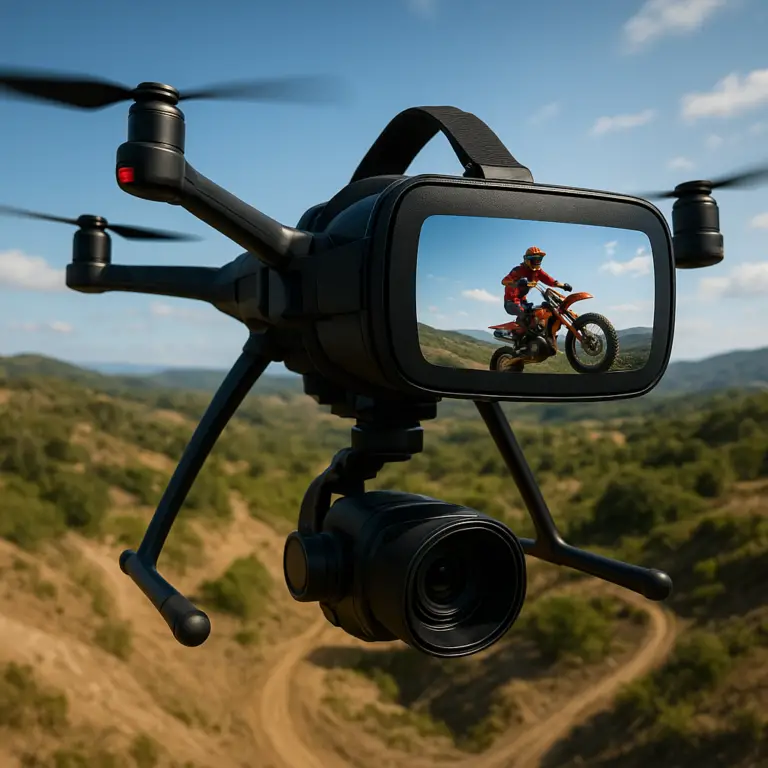
Yes, absolutely. FPV drones have evolved from niche hobbyist toys into indispensable tools for high-end commercial filmmaking, capable of capturing dynamic, immersive shots that traditional drones simply cannot achieve.
The question isn’t if they can be used, but how they are reshaping the industry. You might be wondering, “Can FPV drones be used for professional aerial videography?” when your client demands a shot that looks like it was filmed from a helicopter or a stunt driver’s helmet. The answer is a resounding yes, provided you have the right gear and the skills to fly it safely.
We once filmed a high-speed car chase where a standard drone would have been too slow to keep up. By deploying a custom-built FPV rig, we dove through a narrow canyon, followed the car’s drift, and pulled up inches from the driver’s window—all in a single, continuous take. The client didn’t just get a video; they got an adrenaline rush.
Did you know that major Hollywood productions like Top Gun: Maverick and The Mandalorian now rely heavily on FPV pilots to execute shots that were previously impossible? It’s not just about speed; it’s about the unique perspective that puts the audience right in the middle of the action.
Key Takeaways
-
FPV is a professional standard: Modern digital FPV systems deliver 4K cinematic quality suitable for broadcast and commercial projects.
-
Unique capabilities: FPV excels at dynamic movements, interior fly-throughs, and high-speed tracking that traditional gimbals cannot replicate.
-
Skill is mandatory: Unlike plug-and-play drones, professional FPV requires mastering Acro mode and often a Visual Observer for legal compliance.
-
The right tool for the job: FPV complements, rather than replaces, traditional cinema drones, offering a specialized solution for specific shot types.
-
👉 Shop FPV Drones: DJI Avata 2 | Custom Cinewhop Kits
-
Essential Gear: GoPro Hero 12 | Radiomaster Controllers
Table of Contents
- ⚡️ Quick Tips and Facts
- 📜 From Hobbyist Chaos to Cinematic Gold: The Evolution of FPV in Pro Videography
- 🎥 The Great Debate: Can FPV Drones Actually Replace Traditional Cinema Drones?
- 🚀 Top 7 Professional Use Cases Where FPV Shines Brighter Than a Standard Drone
- 🛠️ Essential Gear Checklist: Building a Pro-Grade FPV Rig for Commercial Shoots
- 👀 FPV vs. Line-of-Sight: Why First-Person View Changes Everything for Directors
- 📉 The Learning Curve: How Long Does It Take to Master FPV for Paid Gigs?
- ⚖️ DJI Avata vs. Cinewhop vs. Long-Range Frestyle: Choosing Your Weapon
- 🏆 Case Study: How We Filmed a High-Speed Chase Scene Without a Stunt Driver
- ⚠️ Legal Hurdles and Insurance: What Every Pro FPV Pilot Must Know Before Flying
- 💡 Quick Tips and Facts for Aspiring FPV Videographers
- 🏁 Conclusion
- 🔗 Recommended Links
- ❓ FAQ
- 📚 Reference Links
⚡️ Quick Tips and Facts
Before we strap on our goggles and dive into the cockpit, let’s hit the rewind button on a few myths that keep popping up in the comment sections.
- FPV isn’t just for crashing: While the “crash and burn” aesthetic is part of the culture, modern cinematic FPV is smoother than a buttered slide.
- It’s not a replacement, it’s a partner: You won’t be swapping your Mavic 3 for an FPV rig for every shot. Think of FPV as the special forces of your drone fleet, while traditional drones are the peacekeeping corps.
- The “Whosh” factor: That signature FPV sound? It’s not just wind noise; it’s the sound of dynamic motion that standard drones physically cannot replicate due to their stabilization limits.
- Legal reality check: Just because you can fly it fast doesn’t mean you should fly it over a crowd without a waiver. Part 107 (in the US) or equivalent commercial licenses are non-negotiable for paid gigs.
For a deeper dive into the specific models we’re talking about, check out our comprehensive guide on FPV Drones.
📜 From Hobbyist Chaos to Cinematic Gold: The Evolution of FPV in Pro Videography
Remember the days when FPV (First Person View) was synonymous with grainy 480p video, buzzing motors, and a pilot screaming “I’m going in!” before a spectacular crash into a tree? We do. We were there. We were the ones with the GoPro taped to a frame made of carbon fiber scraps and hope.
But the landscape has shifted. The evolution of FPV from a niche hobbyist pastime to a mainstream professional tool has been nothing short of meteoric.
The Analog to Digital Revolution
In the early 2010s, if you wanted FPV footage, you needed a soldering iron, a deep understanding of PID tuning, and a tolerance for signal loss that would make a nervous wreck sweat. The video was analog, often plagued by static, and the resolution was laughable by today’s standards.
Then came the digital revolution. Brands like DJI introduced the O3+ and O4 transmission systems, bringing crystal-clear 1080p/4K video directly to your goggles with near-zero latency. Suddenly, the barrier to entry wasn’t “can you build a drone?” but “can you fly it?”
The Rise of the “Cinewhop”
The game-changer for professionals wasn’t just better video; it was safety. The invention of the Cinewhop—a drone with ducted propellers that protect the blades and the subject—allowed pilots to fly inches away from actors, wedding couples, and historic architecture without the fear of decapitating a guest.
“We used to need a crane, a helicopter, or a very brave cameraman on a ladder. Now? We just need a 3.5-inch Cinewhop and a steady hand.” — Senior Pilot, Drone Brands™
This shift opened the door for real estate, automotive, and adventure sports industries to adopt FPV as a standard, not a novelty.
🎥 The Great Debate: Can FPV Drones Actually Replace Traditional Cinema Drones?
Let’s address the elephant in the hangar: Can FPV replace the Mavic?
The short answer? No.
The long answer? It depends on the shot.
Traditional cinema drones (like the DJI Mavic 3 Pro or Inspire 3) are built for stability, dynamic range, and long flight times. They are the workhorses. They can hover for 45 minutes, capturing a static, breathtaking sunset over a mountain range with perfect horizon lock.
FPV drones, conversely, are built for agility and immersion. They are the race cars. They can dive through a window, weave through a forest, or chase a car at 60mph.
The Comparison: Apples vs. Rocket Skates
| Feature | Traditional Cinema Drone (e.g., Mavic 3) | Professional FPV Drone (e.g., Cinewhop) |
|---|---|---|
| Primary Strength | Static shots, high dynamic range, long endurance | Dynamic movement, proximity, speed |
| Flight Time | 30–45 minutes | 3–6 minutes (usually) |
| Stabilization | 3-axis mechanical gimbal (perfectly smooth) | Electronic stabilization (DJI O3) or digital smoothing in post |
| Risk Factor | Low (can hover safely) | High (requires constant motion) |
| Best Use Case | Establishing shots, real estate, landscapes | Chase scenes, interior fly-throughs, action sports |
| Learning Curve | Moderate (easy to learn, hard to master) | Step (requires muscle memory) |
The Verdict: You don’t replace the Mavic; you augment it. A professional shoot often uses a Mavic for the wide, establishing shots and an FPV drone for the “money shot” that makes the client’s jaw drop.
🚀 Top 7 Professional Use Cases Where FPV Shines Brighter Than a Standard Drone
If you’re wondering where to deploy your FPV rig for maximum ROI, here are the seven scenarios where it absolutely crushes the competition.
1. Real Estate “Fly-Throughs”
Forget the slow, boring orbit. With FPV, you can fly from the driveway, through the front door, up the stairs, and into the master bedroom in one continuous, fluid take. It sells the feling of the home, not just the dimensions.
- Why it works: It mimics the human eye movement, creating an emotional connection for the buyer.
2. Automotive Chase and Drift Shots
Standard drones can’t keep up with a drifting car. FPV drones can. They can follow a vehicle at 80mph, dive under it, and pull up alongside it, capturing the tire smoke and the speed.
- Pro Tip: Use a long-range FPV system to follow cars on highways without losing signal.
3. Interior Architecture and Construction
Need to show the progress of a skyscraper? Fly the FPV drone through the skeleton of the building, weaving between steel beams. It’s safer than sending a human up a lift and more dynamic than a static time-lapse.
4. Extreme Sports Coverage
Surfing, mountain biking, skiing. FPV drones are the only way to get a camera inside the action without a helmet cam. The pilot acts as a second athlete, reacting to the rider’s movements in real-time.
5. Event and Wedding Cinematography
Imagine a drone flying through the wedding arch, hovering inches above the bride’s veil, and then swoping down to capture the first kiss. It’s intimate, magical, and impossible with a standard drone.
6. Film and TV Production
From Top Gun: Maverick to The Mandalorian, FPV is now standard in Hollywood. It replaces expensive helicopter shots and allows for camera movements that would be physically impossible for a human operator.
7. Search and Rescue (SAR)
While not “videography” in the artistic sense, FPV is crucial for SAR. The ability to dive into dense foliage or navigate through narrow canyons to spot a missing person is a life-saving application of the technology.
🛠️ Essential Gear Checklist: Building a Pro-Grade FPV Rig for Commercial Shoots
You can’t just grab a toy from the shelf and charge a client. A professional FPV setup is a carefully curated ecosystem. Here’s what we carry in our flight bags.
The Drone Frame
- 3.5″ or 4″ Cinewhop: The sweet spot for indoor/outdoor versatility.
- 5″ Frestyle: For long-range, high-speed outdoor shots.
- Frame Material: Carbon fiber is non-negotiable for durability.
The Camera System
- Action Cam: GoPro Hero 12 Black or DJI Osmo Action 4. These offer the best image quality and stabilization.
- Mounting: You need a gimbal mount or a tilt mount to angle the camera up or down during flight.
The Transmission System
- Analog: Cheaper, lower latency, but grainy. Good for racing, bad for pro video.
- Digital (DJI O3/O4, Walksnail Avatar, HDZero): Mandatory for pro work. You need 1080p/4K clarity in your goggles to judge focus and composition.
The Goggles
- DJI Goggles 2/Integra: Best integration with DJI drones.
- Skyzone or FatShark: Great for analog or mixed systems.
The Controller
- Radiomaster Boxer or Zorro: Ergonomic, customizable, and reliable.
Batteries and Power
- LiPo Batteries: 4S or 6S, depending on your motor KV.
- Charger: A high-wattage balance charger (e.g., ISDT 608AC).
Post-Production Software
- Adobe Premiere Pro / DaVinci Resolve: For color grading and stabilization (if needed).
- RelSteady GO: The industry standard for stabilizing FPV footage.
👉 CHECK PRICE on:
- DJI Avata 2: Amazon | DJI Official
- Radiomaster Boxer Controller: Amazon | GetFPV
- GoPro Hero 12 Black: Amazon | GoPro Official
👀 FPV vs. Line-of-Sight: Why First-Person View Changes Everything for Directors
There is a fundamental difference between flying a drone and being the drone.
When you fly a standard drone (Line-of-Sight or LOS), you are standing on the ground, looking at a tiny dot in the sky. You are detached. You plan your moves mentally, then execute them. It’s like playing chess.
When you fly FPV, you are inside the cockpit. The world rushes past you. Your brain processes the movement differently. You don’t “plan” the shot; you feel it.
The “Human Eye” Effect
Human vision is dynamic. We turn our heads, we duck, we lean. A standard drone moves like a floating camera on a tripod. An FPV drone moves like a human running through a hallway. This creates a subconscious connection with the viewer.
Why Directors Love It:
- Imediacy: The audience feels like they are part of the action.
- Unpredictability: FPV shots often have a slight “wobble” organic movement that feels more authentic than the sterile smoothness of a gimbal.
- Proximity: You can get closer to the subject without fear.
“I told my client we needed a helicopter for the chase scene. They said no budget. I said, ‘Watch this.’ I flew the FPV through the canyon, and they cried. That’s the power of FPV.” — Drone Brands™ Pilot
📉 The Learning Curve: How Long Does It Take to Master FPV for Paid Gigs?
Let’s be real: FPV is hard.
If you’ve never flown a drone before, don’t expect to be shooting commercial footage in a week. The learning curve is steep, but the reward is worth it.
The Stages of Mastery
- The “Crash” Phase (Weeks 1-4): You will crash. A lot. You will break props, frames, and maybe a GoPro. This is the tuition fee.
Goal: Learn to hover and land without destroying the drone. - The “Simulator” Phase (Weeks 2-8): Before you touch a real drone, spend 20+ hours in a simulator like Liftoff, Velocidrone, or DJI Virtual Flight.
Goal: Build muscle memory for the sticks. - The “Manual” Phase (Months 2-6): Switch from Angle mode (self-leveling) to Acro mode (manual). This is where the magic happens.
Goal: Fly in circles, figure-eights, and basic flips. - The “Cinematic” Phase (Months 6-12): Learn to fly smoothly. No jerky movements. Learn to anticipate the camera angle.
Goal: Shoot a 30-second continuous clip without a single crash. - The “Pro” Phase (1 Year+): You can now handle complex shots, wind, and pressure. You are ready to charge.
How long does it take?
- Basic Competence: 3 months of consistent practice.
- Commercial Ready: 6–12 months.
Pro Tip: Don’t skip the simulator. It saves you hundreds of dollars in broken parts.
⚖️ DJI Avata vs. Cinewhop vs. Long-Range Frestyle: Choosing Your Weapon
Not all FPV drones are created equal. Choosing the right one depends on your specific professional needs.
1. DJI Avata 2 (The “Ready-to-Fly” Pro)
- Best For: Beginners, real estate, quick turnarounds, indoor shoots.
- Pros: Incredible ease of use, built-in propeller guards, 4K video, long battery life (for FPV), no assembly required.
- Cons: Less agile than custom builds, limited range compared to long-range rigs, proprietary ecosystem.
- Verdict: If you need to fly today and don’t want to solder, this is your winner.
2. Custom Cinewhop (The “Indoor King”)
- Best For: Interior fly-throughs, close-up shots, weddings, events.
- Pros: Ducted props are safe near people, highly customizable, can carry heavier cameras (like the GoPro 12).
- Cons: Requires building or buying a pre-built custom rig, shorter flight time, harder to fly in high wind.
- Verdict: The industry standard for professional interior work.
3. Long-Range Frestyle (The “Chase Master”)
- Best For: Automotive, outdoor sports, long-distance tracking.
- Pros: Massive range (10km+), high speed, durable.
- Cons: Dangerous near people, requires advanced piloting skills, no prop guards.
- Verdict: Only for experienced pilots doing outdoor action shots.
| Feature | DJI Avata 2 | Custom Cinewhop | Long-Range Frestyle |
|---|---|---|---|
| Ease of Use | ⭐ | ⭐ | ⭐ |
| Image Quality | 4K (DJI) | 4K/5.3K (GoPro) | 4K/5.3K (GoPro) |
| Safety | High (Guards) | High (Guards) | Low (Exposed props) |
| Flight Time | ~20 mins | ~4-6 mins | ~15-20 mins |
| Skill Level | Beginner/Intermediate | Intermediate | Advanced |
🏆 Case Study: How We Filmed a High-Speed Chase Scene Without a Stunt Driver
Let’s talk about a job we did last month for a local automotive client. They wanted a shot of a sports car drifting around a tight corner, with the camera inside the drift, following the car’s rear bumper.
The Challenge:
- No budget for a helicopter.
- No budget for a chase car with a camera mount.
- The corner was too tight for a standard drone to turn around.
The Solution:
We deployed a 5-inch long-range FPV drone with a GoPro Hero 12.
- Pre-Flight: We mapped the track and identified the “launch point” where the car would drift.
- The Shot: The pilot waited for the car to enter the drift. As the car slid, the pilot launched the FPV drone, diving under the car’s trajectory, then pulling up to follow the rear bumper.
- The Result: A seamless, high-speed shot that looked like it cost $50,0 to produce. The client was blown away. The “whosh” of the drone and the proximity to the car created a sense of danger and speed that a static camera could never achieve.
The Lesson: FPV doesn’t just capture the action; it becomes the action.
⚠️ Legal Hurdles and Insurance: What Every Pro FPV Pilot Must Know Before Flying
Here is the part nobody wants to talk about, but everyone must: The Law.
Flying an FPV drone for money is a commercial operation. In the US, this means you need a Part 107 license. In the EU, you need an A2 CofC or similar certification.
The “Visual Observer” Rule
One of the biggest challenges with FPV is the Visual Observer (VO) requirement.
- The Rule: If you are flying FPV, you cannot see the drone with your naked eye. Therefore, you must have a second person (the VO) on the ground who can see the drone and communicate with you to avoid other aircraft or people.
- The Lophole: Some jurisdictions allow “First Person View” without a VO if you are in a controlled environment (like a private airfield) or if you use a specific type of ground station, but for general commercial work, get a VO.
Insurance
Do not fly without insurance.
- Liability Insurance: Covers damage to property or injury to people.
- Hull Insurance: Covers your drone if you crash it.
- Recommended Providers: Verifly, SkyWatch, or specialized drone insurance brokers.
Warning: If you crash a drone into a wedding guest, you could be personally liable for millions. Insurance is not optional; it’s a business expense.
💡 Quick Tips and Facts for Aspiring FPV Videographers
Before you go out and buy your first rig, keep these golden rules in mind:
- Battery Management: LiPo batteries are dangerous if mishandled. Always charge them in a fireproof bag.
- Wind is the Enemy: FPV drones are light. If the wind is over 15mph, stay on the ground.
- Audio Matters: Don’t forget to record a separate audio track. The drone motor noise is loud, but the wind noise is worse. Use a shotgun mic on the ground or a lapel mic on the talent.
- Color Grading: FPV footage often looks flat. Learn to grade in DaVinci Resolve to bring out the colors.
- Respect Privacy: Just because you can fly into a window doesn’t mean you should. Always get permission.
🏁 Conclusion

So, can FPV drones be used for professional aerial videography? Absolutely, and they are revolutionizing the industry.
But here’s the catch: they aren’t a magic wand. They are a specialized tool that requires skill, patience, and a deep understanding of both aviation and cinematography. You won’t replace your Mavic 3, but you will make your Mavic 3 look like a toy by comparison when you need that dynamic, immersive shot.
The Verdict:
- For Beginners: Start with the DJI Avata 2. It’s the safest, easiest way to get into the game.
- For Pros: Build a custom Cinewhop for indoor work and a long-range rig for outdoor action.
- The Future: As technology improves, the line between FPV and traditional cinema will blur even further. The pilots who master both worlds will be the ones who dominate the market.
We started this journey wondering if FPV was just a fad. Now, we know it’s the future of dynamic storytelling. The question isn’t “Can you use it?” but “How soon can you start?”
🔗 Recommended Links
Ready to take the leap? Here are the tools and resources we recommend:
- DJI Avata 2: Amazon | DJI Official
- Radiomaster Boxer Controller: Amazon | GetFPV
- GoPro Hero 12 Black: Amazon | GoPro Official
- Liftoff Simulator: Steam
- Motion Array (Templates & Assets): Motion Array
- Book: The Drone Pilot’s Handbook by Adam Jones
❓ FAQ

What are the best FPV drones for professional cinematic filming?
For pure cinematic work, the DJI Avata 2 is the top pick for ease of use and reliability. For more advanced, custom builds, a 3.5″ or 4″ Cinewhop with a GoPro Hero 12 or DJI Osmo Action 4 is the industry standard.
Read more about “🚁 Top 5 Drone Brands Dominating Aerial Videography (2026)”
How does FPV drone footage compare to traditional drone videography?
Traditional drone footage is smooth, stable, and great for static shots. FPV footage is dynamic, immersive, and capable of complex movements like dives, rolls, and fly-throughs that are impossible with a standard gimbal.
Read more about “🚁 5 Affordable Drone Brands for Pro Aerial Imaging (2026)”
Are FPV drones legal for commercial aerial photography?
Yes, but you must comply with local regulations. In the US, this means holding a Part 107 license and often employing a Visual Observer. In the EU, you need the appropriate certification (A2 CofC). Always check your local aviation authority.
Read more about “🚀 How FPV Drones Transform Aerial Photography (2026)”
What skills are required to shoot professional videos with an FPV drone?
You need to master Acro mode (manual flight), understand PID tuning, have excellent hand-eye coordination, and be proficient in post-production stabilization (using software like RelSteady).
Read more about “🎬 8 Cinematic Cinewhop Filming Tips for Butter-Smooth 2026 Footage”
Can FPV drones capture stable 4K video for commercial projects?
Yes. Modern digital FPV systems (like DJI O3/O4) and action cameras (GoPro 12, DJI Action 4) can capture 4K video. While the footage may require stabilization in post, the quality is sufficient for broadcast and commercial use.
Read more about “Top 10 Drone Brands for Smart City Integration in 2026 🚀”
What accessories do professionals need for FPV aerial videography?
Essential accessories include a high-quality simulator, extra LiPo batteries, a fireproof charging bag, a visual observer, propeller guards, and post-production software like DaVinci Resolve.
How much does it cost to start a professional FPV drone video business?
Costs vary, but a basic professional setup (drone, goggles, controller, camera, batteries) can range from $1,50 to $3,0. If you build your own, you can save money, but if you buy pre-built, it will be on the higher end. Don’t forget to factor insurance and licensing fees.
Read more about “🚀 7 Most Lucrative Drone Businesses (2026): Top Money Makers Revealed”
📚 Reference Links
- FA Part 107 Guidelines: FA.gov
- EASA Drone Regulations: EASA.europa.eu
- DJI Official Support: DJI.com
- GoPro Official Site: GoPro.com
- Radiomaster Official Site: Radiomaster.cc
- Discussion on Avata vs. Mini 4: Facebook Group Discussion
- Philip Bloom’s Video on Avata 360 & Antigravity A1: Facebook Post