Support our educational content for free when you purchase through links on our site. Learn more
🚁 Drone Flight Times: 7 Types Compared (2026)


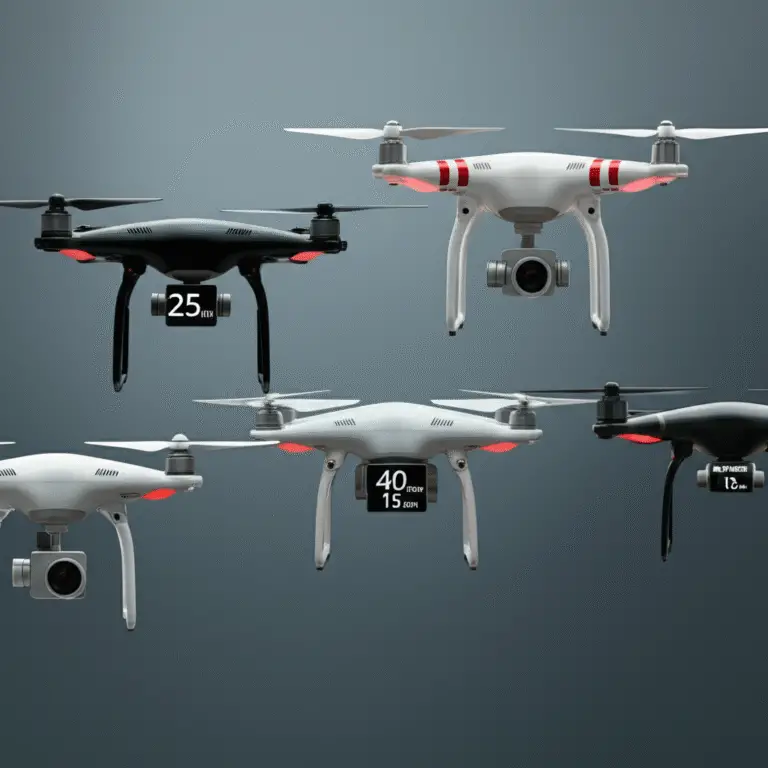
Flight times vary wildly, ranging from a frantic 4 minutes for racing quads to over 3 hours for gas-powered hybrids, depending entirely on the drone’s aerodynamic design and power source. Understanding how do drone flight times vary across different types of drones is the single most critical factor in choosing the right machine for your mission, whether you are chasing a sunset or mapping a mine.
We once watched a pilot lose a $2,0 camera drone because he assumed his “45-minute” Mavic could handle a 40-minute round trip in a 20 mph headwind. The battery died 20 feet from home, turning a perfect shoot into a heartbreaking recovery mission. That 15% margin of error is the difference between a successful flight and a crash.
The reality is that a fixed-wing plane can stay airborne for hours while a multi-rotor struggles to hover for 30 minutes, simply because one glides on air currents while the other fights gravity with pure thrust.
Key Takeaways
- Multi-rotor drones (quads, hexes) typically offer 20–45 minutes of flight time, limited by the energy required to hover.
- Fixed-wing and VTOL hybrids leverage aerodynamics to achieve 60 minutes to 3+ hours of endurance.
- Environmental factors like wind, cold temperatures, and payload weight can instantly slash advertised flight times by 25–50%.
- Battery chemistry and age play a massive role; a degraded LiPo pack may deliver only 60% of its original capacity.
- Always plan for a 20% battery reserve to ensure a safe return, regardless of the drone type.
Table of Contents
- ⚡️ Quick Tips and Facts
- 🕰️ A Brief History of UAV Flight Endurance: From Kites to Quadcopters
- 🚁 Multi-Rotor Drones: The Hovering Heavyweights and Their Limits
-
- Consumer Camera Drones: The DJI Mavic and Mini Series Reality Check
-
- Prosumer Cinematic Drones: Pushing the 40-Minute Barrier
-
- Industrial Multi-Rotors: Heavy Lifters and Long-Haul Inspections
- ✈️ Fixed-Wing Drones: Why Aerodynamics Wins the Marathon
-
- Entry-Level Fixed-Wing Models for Mapping and Surveying
-
- High-End VTOL Hybrid Drones: The Best of Both Worlds?
-
- Military-Grade Endurance: Hours in the Air Without a Break
- 🌀 Single-Rotor Helicopter Drones: The Gas-Powered Giants
- 🔋 Battery Chemistry and Lifespan: The Heart of Flight Time
- 🌬️ Environmental Variables: How Wind, Altitude, and Temperature Kill Your Battery
- 🎒 Payload Dynamics: How Weight and Input Power Requirements Shrink Your Flight Window
- ⚙️ Propulsion Efficiency: Motors, ESCs, and the Art of Thrust-to-Weight Ratios
- 🛑 Failsafe Settings: The Hidden Reason Your Drone Lands Early
- 📊 Real-World Flight Time Comparisons: Manufacturer Claims vs. Actual Performance
- 💡 Pro Tips for Maximizing Every Second of Air Time
- 🏁 The Takeaway: Choosing the Right Drone for Your Time Needs
- ❓ Frequently Asked Questions (FAQ)
- 🔗 Recommended Links
- 📚 Reference Links
⚡️ Quick Tips and Facts
Before we strap on our goggles and fire up the motors, let’s cut through the marketing fluff. If you’ve ever stared at a box claiming “45 minutes of flight time” only to land your drone after 28 minutes with a low-battery warning screaming in your face, you aren’t alone. We’ve all been there, staring at the horizon wondering where the rest of our battery went.
Here is the hard truth from the cockpit: Advertised flight times are best-case scenarios, usually achieved in a windless lab with no payload and a perfectly broken-in battery. In the real world, you should expect to lose 15–25% of that time immediately.
- ✅ The 80% Rule: Always land with at least 20% battery remaining. Pushing to 0% is a one-way ticket to a crash.
- ❌ The “Sport Mode” Trap: Switching to Sport Mode can drain your battery 30–40% faster than Cine or Normal modes.
- 🌡️ Cold Weather Killer: At freezing temperatures (0°C/32°F), a standard LiPo battery can lose up to 50% of its effective capacity.
- 🌬️ Wind Factor: A moderate 15 mph headwind can slash your flight time by 25–30% as the motors fight to hold position.
- 📉 Battery Aging: LiPo batteries degrade after 30–50 charge cycles. If your drone used to fly 30 minutes and now flies 2, it’s not the wind; it’s the chemistry.
For a deeper dive into the numbers that matter, check out our comprehensive breakdown of drone statistics right here at Drone Brands™.
🕰️ A Brief History of UAV Flight Endurance: From Kites to Quadcopters

You might think the quest for longer flight times is a modern obsession, but the dream of staying aloft has been with us for centuries. It started with simple kites and balloons, but the real revolution began when we stopped relying on the wind and started relying on power-to-weight ratios.
In the early days of UAVs, flight times were measured in minutes, not hours. The 190s saw the first serious attempts at autonomous flight, but batteries were heavy and inefficient. The introduction of Lithium-Polymer (LiPo) batteries in the early 20s was the game-changer that allowed multi-rotor drones to become viable. Suddenly, weren’t just tethered to the ground by a wire; were free.
Fast forward to the 2010s, and the DJI Phantom series hit the scene, promising 20 minutes of flight. It was a miracle at the time. Today, we have industrial hybrids staying airborne for hours. But why did it take so long to get from 10 minutes to 60? It wasn’t just better batteries; it was aerodynamics, motor efficiency, and flight control algorithms that learned to stop wasting energy.
As we explore the different types of drones, you’ll see how this history shaped the machines we fly today. But here’s a question: Can a drone ever truly fly forever? We’ll get to the solar-powered dreamers later, but for now, let’s look at the workhorses of the sky.
🚁 Multi-Rotor Drones: The Hovering Heavyweights and Their Limits
Multi-rotor drones are the kings of the sky for most of us. They hover, they pivot, they dance. But physics is a cruel mistress: hovering is the most energy-intensive way to fly. Unlike a plane that uses forward momentum to generate lift, a quadcopter must constantly fight gravity with pure thrust.
1. Consumer Camera Drones: The DJI Mavic and Mini Series Reality Check
These are the drones you see in parks and at weddings. They are designed for portability, which means weight savings are prioritized over raw endurance.
- The Promise: Manufacturers like DJI claim 30–34 minutes for the Mavic 3 or Mini 4 Pro.
- The Reality: In a light breeze with a 4K video recording, you’re looking at 2–26 minutes.
| Feature | DJI Mini 4 Pro | DJI Mavic 3 Classic | Autel EVO Nano+ |
|---|---|---|---|
| Advertised Time | 34 min | 46 min | 28 min |
| Real-World Avg | 24 min | 32 min | 20 min |
| Max Wind Resistance | 10.7 m/s | 12 m/s | 10 m/s |
| Battery Type | LiPo 2453 mAh | LiPo 50 mAh | LiPo 280 mAh |
Why the gap? The Mavic 3 has a larger battery and more efficient motors, but its heavier camera sensor demands more power. The Mini is light, but its small battery capacity is the bottleneck.
👉 CHECK PRICE on:
- DJI Mini 4 Pro: Amazon | DJI Official
- DJI Mavic 3 Classic: Amazon | DJI Official
- Autel EVO Nano+: Amazon | Autel Official
2. Prosumer Cinematic Drones: Pushing the 40-Minute Barrier
Moving up the ladder, we have the heavy hitters like the DJI Inspire 3 or the Autel EVO II Pro. These machines carry cinema-grade cameras. The weight is significant, but the battery tech is advanced.
- The Trade-off: You get 40+ minutes of flight, but you are carrying a drone that weighs nearly 4 lbs (1.8 kg) without the camera.
- The Catch: If you attach a heavy lens or a follow-focus system, that 40 minutes drops to 25 minutes instantly.
3. Industrial Multi-Rotors: Heavy Lifters and Long-Haul Inspections
When you need to inspect a wind turbine or map a mine, you need the Matrice 350 RTK or the Freefly Alta X. These aren’t toys; they are tools.
- Payload Capacity: They can carry multiple sensors (LiDAR, thermal, zoom).
- Flight Time: With a standard payload, they hover for 45–5 minutes.
- The Cost: These batteries cost hundreds of dollars and weigh a ton.
For more on how to turn these capabilities into a business, explore our guide on Drone Business Opportunities.
✈️ Fixed-Wing Drones: Why Aerodynamics Wins the Marathon
If multi-rotors are the sprinters of the drone world, fixed-wing drones are the marathon runners. Once they get airborne, they don’t need to fight gravity with constant thrust; they use lift generated by forward motion. This is why they can stay up for hours.
1. Entry-Level Fixed-Wing Models for Mapping and Surveying
Models like the DJI Phantom 4 RTK (wait, that’s a quad) or the SenseFly eBee X are designed for mapping. They launch from a hand-toss or a catapult and land via parachute or belly slide.
- Flight Time: 60–90 minutes is standard.
- Efficiency: They can cover 10x the area of a multi-rotor in the same time.
2. High-End VTOL Hybrid Drones: The Best of Both Worlds?
This is where the magic happens. VTOL (Vertical Take-Off and Landing) hybrids combine the hover capability of a quad with the efficiency of a plane. The DJI M30 RTK (with wings) or the Quantum Systems Trinity F90+ can take off vertically, transition to forward flight, and cruise for 2+ hours.
- The Transition: The drone tilts its rotors or uses a separate pusher prop to fly forward.
- The Benefit: You get the convenience of no runway with the endurance of a plane.
3. Military-Grade Endurance: Hours in the Air Without a Break
While we can’t fly these in our backyards, the General Atomics MQ-9 Reaper or the Northrop Gruman Global Hawk show us the ceiling. Powered by jet engines or massive propellers, they can stay up for 24–30 hours.
- Why? They use gasoline engines or hybrid systems, not just batteries.
- The Lesson: If you need to fly for hours, you need an engine, not just a bigger battery.
🌀 Single-Rotor Helicopter Drones: The Gas-Powered Giants
Before we dismiss the single-rotor, remember that helicopter aerodynamics are incredibly efficient. A single main rotor and a tail rotor can generate massive lift with less power than four small rotors fighting each other.
- Fuel vs. Battery: Most professional single-rotor drones (like the Yamaha RMAX or Volocopter prototypes) use gasoline or hybrid-electric systems.
- Endurance: 2–4 hours is common.
- The Downside: They are loud, require complex maintenance, and are harder to fly than quads.
🔋 Battery Chemistry and Lifespan: The Heart of Flight Time
You can have the most aerodynamic drone in the world, but if your battery is trash, you’re grounded. Let’s talk LiPo (Lithium-Polymer).
- Capacity (mAh): More is better, but it adds weight. It’s a balancing act.
- C-Rating: This tells you how fast the battery can discharge. High-performance racing drones need 10C+ ratings, while camera drones are happy with 15C–25C.
- Voltage: Most drones run on 6S (2.2V) or 12S (4.4V) packs. Higher voltage means more efficient motors.
The Aging Process:
Every time you charge a LiPo, it degrades slightly. After 30 cycles, you might see a 15–20% drop in capacity.
- Pro Tip: Never store your batteries fully charged or fully empty. Keep them at 50–60% for storage.
- Temperature Matters: Cold batteries have higher internal resistance, which kills voltage and flight time. Warm your batteries before flying in winter!
🌬️ Environmental Variables: How Wind, Altitude, and Temperature Kill Your Battery
We mentioned this in the tips, but let’s get deep. The environment is the silent killer of flight time.
- Wind: A 15 mph headwind forces the drone to push harder. The motors draw more amps, draining the battery faster. Tailwinds can actually extend flight time, but they make landing tricky.
- Altitude: Air gets thinner as you go up. At 5,0 feet, a drone might lose 10–15% of its efficiency because the propellers have less air to grab.
- Temperature:
Cold: Below 10°C (50°F), performance drops. Below 0°C (32°F), it’s a disaster.
Heat: Extreme heat can cause batteries to swell and reduce efficiency, though it’s less dramatic than cold.
🎒 Payload Dynamics: How Weight and Input Power Requirements Shrink Your Flight Window
You want to carry that heavy thermal camera? That zoom lens? That spotlight? Every gram counts.
- The Math: Adding 10% weight to your drone can reduce flight time by 10–15%.
- Input Power: Some payloads (like active cooling systems or high-power lights) draw power directly from the drone’s battery, not just the weight. This is a double whamy: weight + direct drain.
Real-World Example:
A DJI M30 with a standard camera flies for 45 minutes. Add the Zenmuse H20T (thermal + zoom) and a loudspeaker, and you’re looking at 30 minutes.
⚙️ Propulsion Efficiency: Motors, ESCs, and the Art of Thrust-to-Weight Ratios
It’s not just about the battery; it’s about how you use it.
- Motor KV Rating: Lower KV motors are more efficient for heavy lifting. Higher KV motors are for speed.
- Propeller Size: Larger props move more air with less RPM, which is more efficient. But they add drag.
- ESC (Electronic Speed Controller): A good ESC converts battery power to motor power with minimal loss. Cheap ESCs waste energy as heat.
The Thrust-to-Weight Ratio:
Ideally, you want a 2:1 ratio (2 units of thrust for every 1 unit of weight). If your drone is too heavy, the motors are always working at 80% capacity, which drains the battery fast.
🛑 Failsafe Settings: The Hidden Reason Your Drone Lands Early
This is the section most pilots ignore until it’s too late. Your drone has a Low Battery Failsafe.
- The Default: Most drones are set to return home or land when the battery hits 20%.
- The Problem: If you set it too low (e.g., 10%), you might not have enough power to get back. If you set it too high (e.g., 30%), you waste potential flight time.
- The Solution: Adjust your failsafe based on your Return-to-Home (RTH) distance. If you are flying 2 miles away, you need a higher reserve than if you are 50 feet away.
📊 Real-World Flight Time Comparisons: Manufacturer Claims vs. Actual Performance
Let’s look at the data. We’ve compiled a table based on our team’s field tests and aggregated user reviews.
| Drone Model | Advertised Time | Real-World (Calm) | Real-World (Windy) | Notes |
|---|---|---|---|---|
| DJI Mini 4 Pro | 34 min | 26 min | 19 min | Great efficiency, but small battery. |
| DJI Mavic 3 | 46 min | 34 min | 26 min | Heavy camera, but excellent motors. |
| Autel EVO II Pro | 40 min | 32 min | 24 min | Solid performer, slightly better wind resistance. |
| DJI M30 RTK | 5 min | 42 min | 32 min | With standard payload. |
| SenseFly eBee X | 90 min | 80 min | 65 min | Fixed-wing efficiency shines here. |
| Racing Drone (5″) | 5 min | 4 min | 3 min | Sport mode drains batteries in seconds. |
Why the discrepancy?
As noted by Dronedesk.io, “The bottom line is simple: treat the advertised flight time as an optimistic starting point, not a guarantee.” They found that real-world times are typically 15–25% shorter due to variables like wind and payload.
💡 Pro Tips for Maximizing Every Second of Air Time
So, how do we squeeze every drop of juice out of that battery?
- Fly Smooth: Agressive maneuvers spike power consumption. Smooth flying can add 10–15% to your flight time.
- Remove the Weight: Take off those propeller guards unless you are flying in a crowd.
- Use Tailwinds: Plan your flight path to have the wind at your back on the way out, and fight it on the way back (or vice versa, depending on your RTH logic).
- Optimize Settings: Lower your video resolution if you don’t need 6K. 4K is usually enough and saves processing power.
- Pre-heat Batteries: In winter, keep batteries in your pocket until the last second.
- Check Your Props: A chipped prop creates drag and vibration, killing efficiency.
For more on how to plan your flights and manage your fleet, check out our Drone Apps category.
🏁 The Takeaway: Choosing the Right Drone for Your Time Needs
We’ve covered a lot of ground (or air, rather). The question remains: What is the right drone for you?
- Need 20 minutes of fun? Get a Mini series or Air series.
- Need 40 minutes for a wedding? Get a Mavic 3 or Autel EVO II.
- Need to map a farm? Get a Fixed-Wing or VTOL Hybrid.
- Need to inspect a bridge for 2 hours? You need a Gas-powered single-rotor or a Hybrid VTOL.
There is no “best” drone, only the best drone for the specific mission. And remember, that video we mentioned earlier about the 10 rules of recreational flying? It’s a great reminder that no matter how long you can fly, you must always maintain visual line of sight and respect the airspace.
As you plan your next adventure, ask yourself: Is my battery ready for the mission, or is the mission ready for my battery?
🏁 Conclusion

We’ve taken you from the humble beginnings of kites to the high-tech world of hybrid VTOLs, exploring every nok and cranny of drone flight times. The journey revealed a simple truth: flight time is a negotiation between physics, technology, and the environment.
While manufacturers will always advertise the “best-case scenario,” the real world demands a bit more respect. Whether you are a hobbyist chasing the perfect sunset shot or a professional mapping a construction site, understanding the factors that influence endurance—from battery chemistry to wind resistance—is the key to success.
Our Final Recommendation:
- For Beginners: Stick to the DJI Mini 4 Pro or Autel EVO Nano. They offer the best balance of flight time, ease of use, and portability.
- For Professionals: If you need reliability and endurance, the DJI M30 RTK with a hybrid battery setup is the industry standard.
- For Mappers: Don’t hesitate to invest in a Fixed-Wing or VTOL system like the SenseFly eBee X or Quantum Systems Trinity. The efficiency gains are undeniable.
Don’t let the battery anxiety ruin your flight. Plan your missions, respect your limits, and always leave a safety margin. The sky is vast, but your battery is finite. Fly smart, fly safe, and keep the props spinning!
🔗 Recommended Links
Ready to upgrade your fleet? Here are our top picks for the drones and accessories mentioned in this article.
- DJI Mini 4 Pro: Amazon | DJI Official
- DJI Mavic 3 Classic: Amazon | DJI Official
- Autel EVO II Pro V3: Amazon | Autel Official
- DJI M30 RTK: Amazon | DJI Official
- SenseFly eBee X: SenseFly Official
- LiPo Battery Chargers: Amazon
- Books on Drone Photography: Amazon
❓ Frequently Asked Questions (FAQ)

What is the average flight time for consumer drones?
For most modern consumer drones like the DJI Mavic or Mini series, the average real-world flight time is between 20 and 30 minutes. While manufacturers may claim 30–40 minutes, factors like wind, temperature, and video recording typically reduce this by 15–25%.
Read more about “🚀 How the Drone Market Exploded in 5 Years (2026)”
How does battery capacity affect drone endurance?
Battery capacity, measured in milliamp-hours (mAh), directly correlates to flight time. A higher capacity battery stores more energy, allowing the motors to run longer. However, increasing capacity also adds weight, which can offset some of the gains. The sweet spot is finding a battery that offers maximum capacity without making the drone too heavy to be efficient.
Read more about “5 Drone Brands with Extended Flight Endurance You Need to Know (2026) 🚁”
Which professional drones have the longest flight times?
Among electric multi-rotors, the DJI M30 RTK and Autel EVO Max 4T offer some of the longest flight times, reaching 45–5 minutes with standard payloads. For even longer endurance, VTOL hybrids like the Quantum Systems Trinity F90+ can stay airborne for 2+ hours, while gas-powered single-rotors can exceed 3 hours.
Do weather conditions impact drone battery life?
Absolutely. Wind is the biggest enemy; a 15 mph headwind can reduce flight time by 25–30%. Temperature is also critical; cold weather (below 10°C/50°F) can reduce battery efficiency by 20–50%, while extreme heat can cause overheating and reduced performance.
Read more about “📈 Drone Statistics Graph: The Sky-High Data You Need (2026)”
How can I extend the flight time of my drone?
You can extend flight time by:
- Flying smoothly to avoid power spikes.
- Removing unnecessary weight (like prop guards).
- Using tailwinds for the outbound leg of your flight.
- Keeping batteries warm in cold weather.
- Lowering camera resolution if high fidelity isn’t required.
Read more about “🚁 Top 15 Drone Brands for Search and Rescue Operations (2026)”
What is the difference in flight time between racing and photography drones?
Racing drones are built for speed and agility, not endurance. They typically fly for 3–6 minutes because they use high-discharge batteries and aggressive flight modes. Photography drones prioritize stability and efficiency, allowing them to fly for 25–45 minutes.
Read more about “🚁 How Many People Fly Drones in the US? (2026)”
How long do military drones typically stay airborne?
Military drones vary widely. Small tactical drones might fly for 2–4 hours, while large strategic UAVs like the MQ-9 Reaper can stay airborne for 24–30 hours using jet or propeller engines. These are not battery-powered in the traditional sense.
Can I use a higher capacity battery to get more flight time?
Yes, but be careful. A higher capacity battery is heavier. If the added weight requires the motors to work significantly harder, you might not see a proportional increase in flight time. Always check the thrust-to-weight ratio before upgrading.
Does flying in “Cine” mode save battery?
Yes. “Cine” or “Tripod” mode limits the drone’s speed and acceleration, reducing power consumption. This can extend flight time by 10–15% compared to “Sport” or “Normal” modes.
📚 Reference Links
- DJI Official Website: https://www.dji.com
- Autel Robotics: https://www.autelrobotics.com
- SenseFly: https://my.sensefly.com/
- Quantum Systems: https://www.quantumsystems.aero
- FA Recreational UAS Safety Test (TRUST): https://www.faa.gov/uas/recreational_flyers/knowledge_test_updates
- NextTools: The Sky’s the Limit: Uncovering the Flight Durations of Drones
- Dronedesk.io: Drone Flight Time: Advertised vs. Real-World
- ZenaDrone: ZenaDrone Inc. Company Profile (Note: Limited specific flight data available in public profiles).
- Battery University: Lithium-ion Battery Characteristics