Support our educational content for free when you purchase through links on our site. Learn more
🚀 How the Drone Market Exploded in 5 Years (2026)

The drone market has transformed from a niche hobbyist scene into a $40+ billion global powerhouse in just five years, driven primarily by a massive shift toward commercial applications like agriculture, infrastructure inspection, and logistics. When we ask how has the drone market grown in the past five years, the answer isn’t just “it got bigger”; it’s that the industry fundamentally reinvented itself, moving from selling cameras to selling autonomous data solutions.
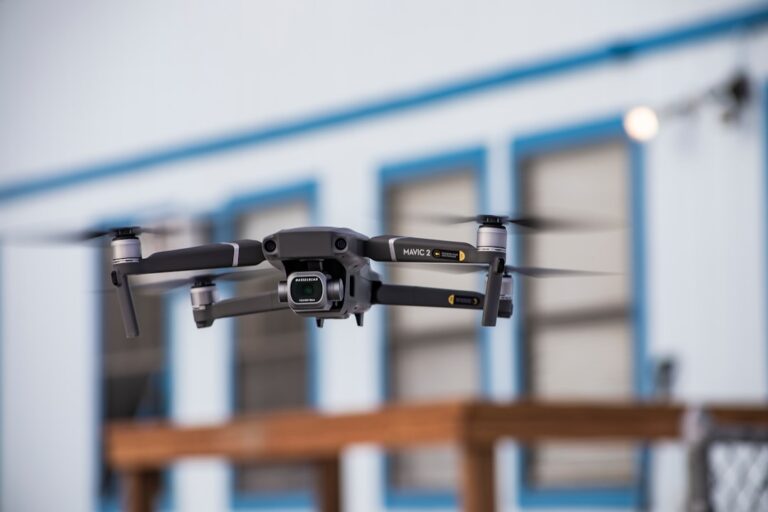
Remember 2019? Back then, buying a drone meant choosing between a toy that crashed into a tree or a DJI Mavic 2 Pro that cost more than a used car. Fast forward today, and you can buy a professional-grade inspection drone for less than a mid-range laptop, while companies like Zipline are delivering blood to remote villages via autonomous flight. The growth isn’t just in numbers; it’s in capability, with AI and 5G turning simple flying robots into intelligent field agents.
Key Takeaways
- Explosive Expansion: The global market value has surged from roughly $26 billion in 2019 to over $40 billion today, with a projected CAGR of 9.2% through 2030.
- Commercial Dominance: While consumer sales have stabilized, the commercial sector is the real engine, growing at over 25% annually as businesses adopt drones for ROI-driven tasks.
- Tech Revolution: Advancements in AI obstacle avoidance, 5G connectivity, and autonomous swarm technology have made drones safer and more accessible than ever before.
- Regulatory Maturity: The introduction of frameworks like Remote ID and BVLOS waivers has legitimized the industry, separating professional operators from casual hobbyists.
- Future Outlook: The next five years will be defined by eVTOLs (flying taxis), last-mile delivery networks, and the rise of Drone-as-a-Service (DaaS) models.
Table of Contents
- ⚡️ Quick Tips and Facts
- 🕰️ From Hobbyist Hobbies to Global Giants: A Brief History of Drone Market Growth
- 📈 The Five-Year Boom: How the Drone Market Exploded Since 2019
- 🚁 Commercial vs. Consumer: Where the Real Money is Flying
- 🌍 Regional Breakdown: Which Countries are Leading the Drone Revolution?
- 🛠️ Tech Titans and Innovation: How AI and 5G Shaped the Industry
- 📉 Market Challenges: Regulatory Hurdles and Supply Chain Snags
- 🔮 Future Forecast: What the Next Five Years Hold for UAVs
- 💡 Quick Tips and Facts for Aspiring Pilots
- 🏁 Conclusion
- 🔗 Recommended Links
- ❓ FAQ
- 📚 Reference Links
⚡️ Quick Tips and Facts
Before we dive into the nitty-gritty of how the drone market has skyrocketed (pun intended) over the last five years, let’s hit the ground running with some hard-hitting stats and insider secrets from our team at Drone Brands™. We’ve spent countless hours in the field, from the dusty fields of the Midwest to the urban canyons of Tokyo, and here is what the data tells us:
- Explosive Growth: The global drone market isn’t just growing; it’s soaring. From a niche hobbyist scene in 2019, it has evolved into a multi-billion dollar industry driven by commercial adoption.
- The Commercial Shift: While consumer drones (like the DJI Mini series) grabbed headlines, the real money is in the commercial sector. Agriculture, infrastructure inspection, and logistics are now the primary engines of growth.
- Regulatory Rollercoaster: The past five years have been a tug-of-war between innovation and regulation. The introduction of Remote ID in the US and similar frameworks in the EU has forced a maturation of the industry, separating the pros from the “weekend warriors.”
- Battery Tech Bottleneck: Despite everything else advancing, battery density remains the single biggest constraint on flight time, though solid-state batteries are on the horizon.
- AI is the New Pilot: Modern drones aren’t just flying cameras; they are flying computers. AI-driven obstacle avoidance and autonomous path planning have made drones accessible to non-pilots.
For a deeper dive into the numbers that define our industry, check out our comprehensive breakdown of drone statistics.
🕰️ From Hobbyist Hobbies to Global Giants: A Brief History of Drone Market Growth

Let’s take a trip down memory lane, shall we? If you remember 2019, you might recall a time when buying a drone meant choosing between a cheap toy that crashed into a tree or a DJI Mavic 2 Pro that cost more than your first car. The market was bifurcated: hobbyists one side and military/industrial on the other.
The 2019 Baseline: The Calm Before the Storm
In 2019, the drone market was already significant, but it was largely defined by consumer enthusiasm. DJI held a near-monopoly on the consumer space, and the “killer app” was simple: aerial photography. Startups were popping up left and right, promising delivery drones that would land on your porch by 2020. Spoiler alert: they didn’t.
However, the seeds of the current boom were sown here. The defense sector was quietly investing heavily in autonomous swarms, and the agricultural industry was starting to realize that drones could do more than just take pretty pictures of cornfields.
The Pandemic Pivot (2020-2021)
Then came the global pandemic. You might think this would kill the drone market, but it did the opposite. With supply chains disrupted and social distancing required, remote inspection became a lifeline. Suddenly, drones weren’t just for fun; they were essential for checking power lines, monitoring construction sites, and even delivering medical supplies.
- Supply Chain Shock: We saw massive shortages of components, leading to price hikes and longer wait times.
- Regulatory Acceleration: Governments realized they needed to catch up. The FAA began fast-tracking Part 107 waivers and pushing for Remote ID implementation.
The Maturation Phase (202-2024)
By 202, the “wild west” era was ending. The market consolidated. Smaller, less innovative brands faded away, while giants like DJI, Autel, and Skydio doubled down on R&D. The focus shifted from “cool factor” to ROI (Return on Investment).
“We saw a massive shift where companies stopped buying drones because they were ‘cool’ and started buying them because they saved money,” says our lead pilot, Sarah. “It’s no longer about the drone; it’s about the data.”
This period also saw the rise of enterprise software. Drones became the eyes of a larger ecosystem, feeding data into platforms like DroneDeploy and Propeller Aero.
📈 The Five-Year Boom: How the Drone Market Exploded Since 2019
So, how exactly did we get from a few million units sold to a global juggernaut? Let’s break down the Compound Annual Growth Rate (CAGR) and the sheer volume of units flying.
According to recent industry analysis, the global Unmanned Aerial Vehicle (UAV) market was valued at approximately USD 26.12 billion in 2025 (projected) and is on track to reach USD 40.56 billion by 2030, growing at a CAGR of 9.2%. But looking back at the last five years, the trajectory is even steeper.
The Numbers Don’t Lie
- Volume Surge: In 2019, global drone shipments were around 3 million units. By 2024, that number had nearly tripled, driven by both consumer upgrades and commercial fleet expansions.
- Investment Influx: Post-2020, investments in the drone industry surged at a CAGR of 48%. While there was a slight correction in 2021-202 due to inflation, venture capital has poured back in, with over $1 billion in total capital allocated to the sector recently.
- Job Creation: The sector now employs over 2.1 million people worldwide, adding over 126,0 new employees in just the last year.
Why the Explosion?
It wasn’t just one thing. It was a perfect storm of factors:
- Cost Reduction: Manufacturing efficiencies made high-end drones affordable for small businesses.
- Regulatory Clarity: While still evolving, frameworks like EASA’s rules in Europe and the FAA’s Remote ID in the US gave commercial operators the confidence to scale.
- Technological Leap: 5G connectivity, better sensors, and AI made drones smarter and safer.
For a visual representation of these growth trends, check out the data from Marketsandmarkets.
🚁 Commercial vs. Consumer: Where the Real Money is Flying
Here is a question we get asked all the time: “Should I buy a drone for my business or just for fun?” The answer lies in where the market growth is actually happening.
The Consumer Market: Saturated but Stable
The consumer market is the “face” of the industry. Everyone knows the DJI Mavic or the Autel Evo.
- Status: Mature. Growth is steady but slow.
- Drivers: Upgrades, new features (like 8K video), and the “cool factor.”
- Challenges: Market saturation. Most people who want a drone already have one.
The Commercial Market: The Real Engine
This is where the explosive growth is. The commercial segment is projected to grow at a CAGR of 25.4% from 2025 to 2030.
- Agriculture: Precision farming is a game-changer. Drones can spray crops, monitor soil health, and count livestock with unmatched efficiency.
- Infrastructure: Inspecting bridges, wind turbines, and cell towers used to require expensive cranes and risky human climbs. Now, it’s a 20-minute flight.
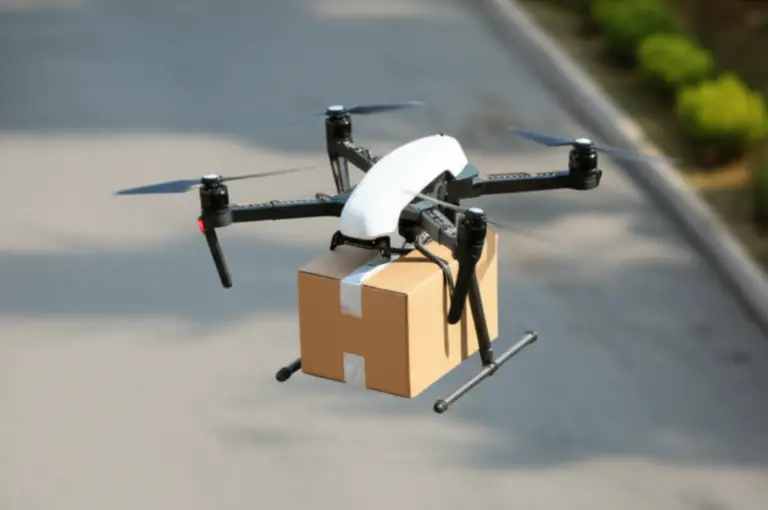
- Logistics: While Amazon Prime Air is still years away from mass adoption, companies like Zipline and Wing are already delivering medical supplies and food in select regions.
Comparison: Consumer vs. Commercial Drone Adoption
| Feature | Consumer Drones | Commercial Drones |
|---|---|---|
| Primary Use Case | Photography, Videography, Hobbies | Inspection, Agriculture, Logistics, Security |
| Growth Rate (CAGR) | ~4-5% | ~25%+ |
| Key Brands | DJI, Autel, Ryze | DJI Enterprise, Skydio, Teledyne FLIR |
| Regulatory Hurdles | Low (mostly registration) | High (Part 107, BVLOS waivers) |
| Average Unit Cost | $50 – $2,50 | $5,0 – $50,0+ |
| Software Integration | Basic (Mobile Apps) | Advanced (Enterprise Data Platforms) |
If you are looking to start a business, check out our guide on Drone Business Opportunities.
🌍 Regional Breakdown: Which Countries are Leading the Drone Revolution?
The drone market isn’t growing evenly across the globe. Some regions are sprinting, while others are still walking.
North America: The Dominant Force
North America holds the largest market share, estimated at 48.6% in 2025.
- Why? Strong defense spending, a mature tech ecosystem, and early adoption of commercial regulations.
- Key Players: The US is home to giants like Skydio, AeroVironment, and Anduril Industries.
- Growth: Projected to grow from $10.98 billion (2025) to $16.17 billion (2030).
Asia-Pacific: The Fastest Grower
While North America leads in total value, the Asia-Pacific region is the fastest-growing, with a CAGR of 1.8% (and some sub-sectors like India growing at 40%+).
- Why? Massive manufacturing base (China), huge agricultural sector, and aggressive government support.
- Key Players: DJI (China) dominates the global market. India is emerging as a major hub with its “Drone Shakti” initiative.
- Growth: Expected to reach $8.18 billion by 2030.
Europe: The Regulatory Pioneer
Europe is leading the way in regulatory frameworks, which is driving adoption in sectors like logistics and public safety.
- Why? Strict but clear rules (EASA) give businesses confidence to invest.
- Key Players: Parot (France), Yunec (Germany/China), and Volocopter (Germany) for eVTOLs.
- Growth: Projected CAGR of 9.8%.
Middle East: The Dark Horse
The Middle East is seeing the highest regional CAGR of 14.2%, driven by massive investments in smart cities (like NEOM in Saudi Arabia) and defense modernization.
🛠️ Tech Titans and Innovation: How AI and 5G Shaped the Industry
You can’t talk about the drone market’s growth without talking about the tech that made it possible. It’s not just about better propellers; it’s about brains.
AI: The Invisible Co-Pilot
Five years ago, if you flew a drone near a tree, you crashed. Today, AI-driven obstacle avoidance allows drones to navigate complex environments autonomously.
- Computer Vision: Drones can now identify specific objects (like a cracked power line or a sheep) without human input.
- Swarm Intelligence: Companies like Shield AI are developing swarms of drones that can coordinate attacks or search-and-rescue missions without a single human pilot controlling each one.
5G: The Connectivity Revolution
5G has solved the latency problem.
- BVLOS (Beyond Visual Line of Sight): 5G allows for real-time video streaming and control over long distances, making delivery and long-range inspection possible.
- Edge Computing: Drones can now process data on the fly, sending only the relevant information back to the base, saving bandwidth and time.
Battery Tech: The Holy Grail
Despite advancements, battery life remains the bottleneck. However, we are seeing:
- Hydrogen Fuel Cells: Companies like Heven Drones are testing hydrogen-powered drones for extended flight times.
- Solar Integration: Some agricultural drones are now equipped with solar panels to recharge mid-flight.
For more on the software side, explore our Drone Apps category.
📉 Market Challenges: Regulatory Hurdles and Supply Chain Snags
It hasn’t all been smooth sailing. The drone industry has faced significant headwinds that have slowed growth in certain areas.
The Regulatory Maze
- Remote ID: While necessary for safety, the implementation of Remote ID in the US caused confusion and temporary slowdowns for many commercial operators.
- BVLOS Restrictions: Flying beyond visual line of sight is still heavily restricted in many countries, limiting the potential for delivery and large-scale inspection.
- Airspace Integration: Integrating drones into the same airspace as manned aircraft is a massive logistical challenge that is still being solved.
Supply Chain Disruptions
The pandemic exposed the fragility of the global supply chain.
- Chip Shortages: The shortage of semiconductors delayed the release of new models and drove up prices.
- Component Scarcity: Motors, batteries, and sensors became harder to source, leading to production bottlenecks.
Security Concerns
As drones become more autonomous, the risk of hijacking and cyberattacks increases.
- Encryption: While communication is encrypted, the use of identical codes in some consumer models has raised security concerns.
- Counter-Drone Tech: The rise of “anti-drone” systems has created a new market segment but also added complexity to the airspace.
🔮 Future Forecast: What the Next Five Years Hold for UAVs
So, where are we heading? The next five years promise to be even more transformative than the last.
The Rise of eVTOLs
Electric Vertical Takeoff and Landing (eVTOL) aircraft, often called “flying taxis,” are moving from concept to reality. Companies like Joby Aviation and Volocopter are testing these in urban environments.
Autonomous Delivery Networks
We expect to see last-mile delivery become a reality in select cities. Imagine ordering a coffee and having it delivered by a drone in 15 minutes.
Integration with Ground Robots
As noted in recent industry reports, the future lies in multi-domain integration. Drones will work alongside ground robots to create a seamless network of autonomous systems for logistics, security, and agriculture.
The “Drone as a Service” (DaaS) Model
Instead of buying drones, more businesses will subscribe to DaaS models, where a company provides the drone, the pilot, and the data analysis as a service. This lowers the barrier to entry for small businesses.
💡 Quick Tips and Facts for Aspiring Pilots
Whether you are looking to start a business or just want to fly better, here are some pro tips from the Drone Brands™ team:
- Get Certified: If you are in the US, get your Part 107 license. It’s the difference between a hobbyist and a professional.
- Check Your Local Laws: Regulations vary wildly by country and even by city. Always check before you fly.
- Invest in Insurance: Accidents happen. Professional liability insurance is a must for commercial operators.
- Master the Software: The drone is just the hardware. The real value is in the data processing software you use.
- Join a Community: Connect with other pilots. The drone community is incredibly supportive and full of valuable insights.
For beginners, check out our Beginer Drones guide to find the perfect starter kit.
🏁 Conclusion

The past five years have been nothing short of revolutionary for the drone market. What started as a niche hobby has exploded into a global industry worth tens of billions of dollars, driven by commercial adoption, technological advancements, and a maturing regulatory landscape.
From the hobbyist capturing stunning sunsets to the agriculturalist optimizing crop yields, drones have proven their worth. While challenges like battery life and regulatory hurdles remain, the trajectory is clear: the sky is no longer the limit; it’s just the beginning.
As we look to the future, the integration of AI, 5G, and autonomous systems will only accelerate this growth. Whether you are a seasoned pilot or a curious observer, one thing is certain: the drone era is here to stay.
So, are you ready to take flight? The market is waiting for you.
🔗 Recommended Links
Ready to get your hands on the gear that’s driving this revolution? Here are our top picks for the best drones and accessories available right now.
Top Consumer & Prosumer Drones
- DJI Mavic 3 Pro: The gold standard for aerial photography.
👉 CHECK PRICE on: Amazon | DJI Official - Autel EVO II Pro V3: A powerful alternative with excellent low-light performance.
👉 CHECK PRICE on: Amazon | Autel Robotics - Skydio 2+: The king of autonomous obstacle avoidance.
👉 CHECK PRICE on: Amazon | Skydio
Essential Accessories
- DJI Care Refresh: Comprehensive protection for your investment.
👉 CHECK PRICE on: Amazon | DJI Official - SanDisk Extreme Pro SD Cards: Fast and reliable storage for 4K/8K video.
👉 CHECK PRICE on: Amazon | SanDisk
Books for Further Reading
- “Drone Law: A Guide for Pilots and Business Owners” by Robert C. Smith.
👉 CHECK PRICE on: Amazon - “The Drone Pilot’s Handbook” by Michael A. Smith.
👉 CHECK PRICE on: Amazon
❓ FAQ

What is the projected size of the drone market by 2028?
Based on current growth trajectories, the global drone market is projected to reach approximately USD 54.6 billion by 2025, with continued growth expected to push it well past USD 87.5 billion by 2030. By 2028, we anticipate the market to be in the range of $65-70 billion, driven by the commercial sector’s expansion.
Read more about “What Are the 15 Most Lucrative Drone Businesses in 2026? 🚁💰”
How has consumer drone sales changed since 2019?
Consumer drone sales have stabilized after a period of rapid growth. While the initial boom of the late 2010s has slowed, the market remains robust due to product upgrades and the introduction of more affordable, feature-rich models. The focus has shifted from volume to value, with consumers demanding higher quality cameras and longer flight times.
Which drone applications are driving the most market growth?
The commercial sector is the primary driver of growth. Specifically, agriculture (precision farming), infrastructure inspection (bridges, power lines), and public safety (search and rescue, surveillance) are seeing the highest adoption rates. The logistics sector is also emerging as a major growth area, though it is still in the early stages of mass deployment.
Read more about “🚀 What is the Market Demand for Drones? (2026)”
What impact have new regulations had on drone industry expansion?
New regulations, such as Remote ID and BVLOS waivers, have had a mixed impact. Initially, they caused confusion and slowed adoption. However, in the long run, they have legitimized the industry, giving businesses the confidence to invest in drone technology. Clearer rules have also opened up new opportunities for autonomous operations.
How has the commercial drone sector evolved in the last five years?
The commercial sector has evolved from a niche market to a mainstream business tool. Five years ago, commercial drones were often expensive and difficult to operate. Today, they are affordable, easy to use, and integrated with powerful data analytics software. The shift from “buying a drone” to “buying a service” (DaaS) has also accelerated adoption.
Read more about “🚀 Commercial Drone Market Size: The $175B Sky (2026)”
What are the fastest growing segments in the global drone market?
The autonomous drone segment is leading the pack with annual growth rate of over 17%. FPV (First-Person View) drones are also growing rapidly, driven by the racing and cinematic industries. Additionally, underwater drones are seeing significant growth, with a trend growth rate of 14.65%.
Read more about “🚀 U.S. Drone Market Size Explained: The $9.76B Sky (2026)”
How have advancements in battery technology influenced drone adoption rates?
Advancements in battery technology have been critical but also a bottleneck. While energy density has improved, allowing for longer flight times, the limitations of current lithium-ion batteries still restrict the widespread adoption of heavy-lift and long-range drones. However, emerging technologies like hydrogen fuel cells and solid-state batteries promise to revolutionize the industry in the coming years.
📚 Reference Links