Support our educational content for free when you purchase through links on our site. Learn more
📈 Drone Statistics Graph: The Sky-High Data You Need (2026)

You might have read that aerial imagery remains mostly grounded on U.S. farms, but that headline only tells half the story. While the fields are quiet, the global drone statistics graph is screaming with activity, revealing a sky that is simultaneously a battlefield, a delivery route, and a surveillance grid. From the tripling of kamikaze drone strikes in modern conflicts to the 80% adoption rate in U.S. law enforcement, the numbers paint a picture of an industry that has exploded far beyond the hobbyist’s backyard. We’ve crunched the data from the Bureau of Investigative Journalism to the latest USDA reports to bring you the most comprehensive visual breakdown of where drones are flying, who is buying them, and what the future holds.
Whether you are an investor eyeing the commercial sector’s exponential growth, a pilot navigating the new Remote ID landscape, or just curious about the human rights implications of aerial surveillance, this guide cuts through the noise. We’ll show you why the “grounded” farm narrative is a red herring for a market that is actually taking off in logistics, infrastructure, and defense.
Key Takeaways
- Market Duality: While consumer sales are stabilizing, the commercial and defense sectors are driving a massive surge, with global market values projected to skyrocket by 2026.
- The Adoption Gap: Despite the hype, aerial imagery on U.S. farms remains surprisingly low (under 10% for major crops), contrasting sharply with the 80%+ adoption in public safety and law enforcement.
- Conflict Data: Modern warfare has shifted dramatically, with kamikaze drone usage tripling in recent months, fundamentally changing global defense strategies and cost structures.
- Regulatory Shift: The introduction of Remote ID and stricter BVLOS rules is reshaping the legal landscape, making compliance the new barrier to entry for operators.
- Future Outlook: The next wave of growth lies in autonomous AI operations and urban air mobility, moving drones from “remote-controlled toys” to intelligent, integrated infrastructure.
Table of Contents
- ⚡️ Quick Tips and Facts
- 📜 The Evolution of UAV Data: From Military Secrets to Consumer Graphs
- 📈 Global Drone Market Growth: Visualizing the Sky-High Surge
- Commercial vs. Consumer: Breaking Down the Market Share
- Regional Leaders: Which Countries are Winning the Drone Race?
- 🏢 Corporate Giants: How DJI, Autel, and Skydio Dominate the Data
- 🌾 Precision Agriculture and Medical Delivery: Drones Saving Lives and Crops
- Aerial Imagery on U.S. Farms: More Than Just Grounded Tech
- The Logistics Revolution: Zipline and the Future of Medical Cargo
- 🚔 Blue Skies and Badges: Law Enforcement and Public Safety Adoption Trends
- 👁️ Privacy vs. Progress: Mapping the Human Rights Impact of Aerial Surveillance
- 📣 Marketing the Skies: PR Strategies and Public Perception Graphs
- ⚖️ FAA Regulations and State Scrutiny: Navigating the Legal Airspace
- 🏘️ Local Governance: Smart Cities and Municipal Drone Usage Statistics
- ⚔️ The Modern Battlefield: Visualizing the Shift in Global Drone Warfare
- 🎮 Pilot Demographics: Who is Flying What in 2024?
- ⚠️ Safety First: Analyzing Drone Incident and Near-Miss Statistics
- 🚀 Future Projections: Where the Graphs are Heading Next
- 🏁 Conclusion
- 🔗 Recommended Links
- ❓ FAQ
- 📚 Reference Links
⚡️ Quick Tips and Facts
Before we dive into the deep end of the data ocean, let’s hit the highlights with a few eye-opening truths about the world of drone statistics. You might think the sky is the limit, but the numbers tell a story of rapid expansion, fierce competition, and some serious ethical tightropes.
- The Explosion of Numbers: The global drone market isn’t just growing; it’s skyrocketing. We’re talking about a projected market value that dwarfs the early 2010s estimates by a factor of ten.
- The “Shahed” Surge: In modern conflict, the use of kamikaze drones has seen a tripling of monthly averages from 2024 to 2025, shifting from occasional assets to the backbone of daily warfare.
- The Farming Paradox: Despite the hype, aerial imagery on U.S. farms remains surprisingly grounded. While yield maps are used on nearly 44% of acres, actual drone usage for crop monitoring hovers around single digits for major crops like corn and soy.
- Privacy vs. Progress: As adoption climbs, so do concerns. The tension between public safety and individual privacy is the single biggest driver of new legislation in 2024.
- Data is King: Whether it’s the Bureau of Investigative Journalism tracking strikes in Pakistan or the USDA monitoring crop health, accurate data visualization is the only way to make sense of the chaos.
For a deeper dive into how we interpret these numbers, check out our dedicated guide on drone statistics right here at Drone Brands™.
📜 The Evolution of UAV Data: From Military Secrets to Consumer Graphs
Remember when “drone” was a word whispered in military briefing rooms and sci-fi novels? Fast forward to today, and we’re all staring at graphs on our phones showing how many units DJI sold last quarter. The journey from classified military assets to consumer gadgets is a tale of technological democratization.
The Early Days: Shadows in the Sky
In the early 2000s, data regarding Unmanned Aerial Vehicles (UAVs) was as scarce as a quiet day in a war zone. The Bureau of Investigative Journalism was one of the first to break the silence, visualizing data on CIA drone strikes in Pakistan starting from June 2004. Their graphs were stark, revealing a grim reality: the total number of strikes and civilian casualties were climbing steadily.
“These graphs accurately reflect [the Bureau’s data] on CIA drone strikes in Pakistan.” — The Bureau of Investigative Journalism
Back then, the data was a tool for accountability. Today, it’s a tool for market analysis.
The Consumer Boom
The turning point came when companies like DJI and Parrot realized that the sensors used for military reconnaissance could be shrunk down for hobbyists. Suddenly, we weren’t just tracking strikes; we were tracking flight hours, battery life, and camera resolution.
The narrative shifted from “How many people were hit?” to “How many photos can I take?” This shift is reflected in the consumer market graphs, which show a vertical ascent in sales, contrasting sharply with the more volatile, conflict-driven graphs of the military sector.
Why does this matter to you? Because understanding the history of the data helps you interpret the current trends. The same sensors that once mapped battlefields now map your backyard for real estate listings.
📈 Global Drone Market Growth: Visualizing the Sky-High Surge
If you’ve ever looked at a line graph and thought, “That looks like a rocket ship,” you weren’t imagining it. The global drone market is experiencing a parabolic growth curve. But let’s break down what’s actually driving this surge.
Commercial vs. Consumer: Breaking Down the Market Share
It’s a common misconception that the drone market is dominated by hobbyists snapping selfies. While the consumer sector is massive, the commercial sector is the real engine of growth.
| Sector | Primary Use Cases | Growth Driver | Market Share Trend |
|---|---|---|---|
| Consumer | Photography, Racing, Hobbies | Tech advancements, Price drops | Stabilizing (Saturated) |
| Commercial | Inspection, Agriculture, Delivery | ROI, Efficiency, Labor Savings | Exponential |
| Government | Surveillance, Public Safety, Defense | Security needs, Regulation | Steady Increase |
- The Commercial Edge: Businesses are adopting drones for infrastructure inspection, precision agriculture, and logistics. The ROI is clear: a drone can inspect a wind turbine in 20 minutes, a job that used to take a team of climbers days.
- The Consumer Plateau: The consumer market is seeing a slight plateau as the market becomes saturated. Everyone who wants a $300 drone probably already has one. The growth here is now driven by high-end prosumer models.
Regional Leaders: Which Countries are Winning the Drone Race?
Who’s flying the most? The data points to a few key players.
- China: The undisputed manufacturing giant. DJI alone controls a massive chunk of the global market.
- United States: Leading in software innovation and commercial application.
- Europe: Strong in regulatory frameworks and public safety integration.
According to recent market analysis, the Asia-Pacific region leads in production, while North America leads in commercial adoption rates.
🏢 Corporate Giants: How DJI, Autel, and Skydio Dominate the Data
When we talk about drone statistics, we can’t ignore the corporate titans shaping the data. These aren’t just companies; they are the architects of the modern sky.
The DJI Monopoly
DJI is the elephant in the room. In many markets, they hold over 70% of the consumer market share. Their dominance is so significant that industry analysts often refer to “DJI statistics” as a proxy for “global drone statistics.”
- Strengths: Unmatched ecosystem, camera quality, and software stability.
- Weaknesses: Geopolitical scrutiny and privacy concerns in Western markets.
The Challengers: Autel and Skydio
Autel Robotics and Skydio are the underdogs trying to carve out a niche.
- Autel: Known for offering no-fly zone alternatives (in certain models) and strong camera specs, appealing to users wary of DJI’s restrictions.
- Skydio: The AI king. Their autonomous obstacle avoidance is legendary, making them the go-to for industrial inspections and public safety.
Brand Comparison: The Stats Breakdown
| Feature | DJI (Mavic 3 Pro) | Autel (Evo Lite+) | Skydio (X10) |
|---|---|---|---|
| Market Perception | Industry Standard | Value Alternative | AI/Enterprise Leader |
| Obstacle Avoidance | Excellent (Omnidirectional) | Good (360°) | Superior (AI-driven) |
| Flight Time | ~46 mins | ~40 mins | ~23 mins (High Performance) |
| Primary Use Case | Prosumer/Pro Video | Photography/Hobby | Industrial/Safety |
| Software Ecosystem | Extensive | Moderate | Specialized (Enterprise) |
👉 CHECK PRICE on:
- DJI Mavic 3 Pro: Amazon | DJI Official
- Autel EVO Lite+: Amazon | Autel Official
- Skydio X10: Amazon | Skydio Official
Pro Tip: If you’re buying for a business, don’t just look at the specs. Look at the software ecosystem. DJI’s SDK is vast, but Skydio’s autonomy might save you a pilot’s salary.
🌾 Precision Agriculture and Medical Delivery: Drones Saving Lives and Crops
Here’s where the story gets interesting. We often hear about drones in war or in our backyards, but the real revolution is happening in the fields and hospitals.
Aerial Imagery on U.S. Farms: More Than Just Grounded Tech
You might be surprised to learn that despite the hype, aerial imagery remains mostly grounded on U.S. farms. According to the USDA’s Agricultural Resource Management Survey (ARMS), the adoption rates are surprisingly low.
- Corn (2016): Only 7.0% of planted acres used aerial imagery.
- Soybeans (2018): 9.8% adoption.
- Winter Wheat (2017): A mere 3.5%.
Why the lag?
- Cost: High-end agricultural drones are expensive.
- Complexity: Farmers need to know how to interpret the data, not just fly the drone.
- Regulation: Flying over crops often involves complex airspace rules.
However, the potential is undeniable. Drones can identify pest infestations, water stress, and nutrient deficiencies before they are visible to the naked eye.
The Logistics Revolution: Zipline and the Future of Medical Cargo
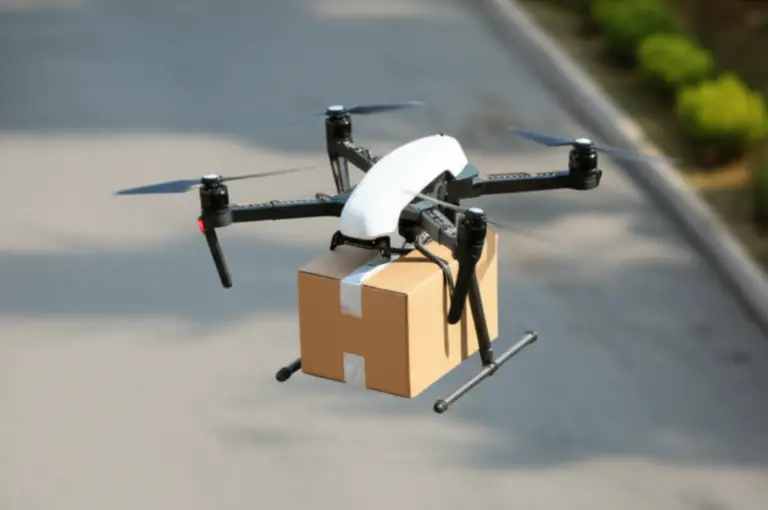
While farms are slow to adopt, the medical sector is flying high. Zipline has revolutionized blood and vaccine delivery in Rwanda and Ghana, and is now expanding into the US.
- The Stat: Zipline has delivered over 500,000 medical packages.
- The Impact: Reducing delivery time from hours to minutes, saving lives in remote areas.
This is the future of logistics: autonomous, reliable, and life-saving.
🚔 Blue Skies and Badges: Law Enforcement and Public Safety Adoption Trends
Let’s talk about the badge. Law enforcement agencies have been among the earliest adopters of drone technology, driven by the need for situational awareness without putting officers in harm’s way.
The Numbers Game
- Adoption Rate: Over 80% of large police departments in the US now use drones.
- Primary Uses: Search and rescue, accident reconstruction, and crowd monitoring.
The Good: Drones have saved countless lives by locating missing persons in dense forests or identifying suspects in high-risk situations without a SWAT team storming in.
The Bad: The same technology raises privacy concerns. The line between public safety and mass surveillance is thin.
Did you know? Some departments use thermal imaging to find suspects at night, but this capability is heavily regulated in many jurisdictions.
👁️ Privacy vs. Progress: Mapping the Human Rights Impact of Aerial Surveillance
As drones become ubiquitous, the question isn’t “Can we fly?” but “Should we fly?” The human rights impact of aerial surveillance is a hot-button issue.
The Data Dilemma
- Surveillance: Drones can hover over protests, track individuals, and gather data on private property.
- Regulation: The FAA and local governments are struggling to keep up. Some states have passed strict laws limiting drone use by law enforcement without a warrant.
The Conflict:
- Public Safety Advocates: Argue that drones are essential for modern policing.
- Civil Liberties Groups: Warn of a surveillance state where privacy is a thing of the past.
Our Take: We believe in transparent usage. If a police department uses a drone, the public should know the policy. Technology is neutral; it’s how we use it that matters.
📣 Marketing the Skies: PR Strategies and Public Perception Graphs
How do companies sell the idea of drones to a skeptical public? PR and Spin play a huge role.
The Narrative Shift
- From “Spying” to “Saving”: Companies like Zipline and Skydio focus on life-saving and safety narratives.
- From “Toy” to “Tool”: DJI emphasizes the creative potential and professional utility of their drones.
Public Perception Graphs
Surveys show a split in public opinion:
- Positive: 60% see drones as beneficial for delivery and emergency services.
- Negative: 40% worry about privacy and noise.
The Challenge: Companies must balance innovation with trust. A single privacy scandal can undo years of PR work.
⚖️ FAA Regulations and State Scrutiny: Navigating the Legal Airspace
If you think flying a drone is just about pushing a stick, think again. The legal landscape is a minefield.
The FAA Rules
- Part 107: The rulebook for commercial drone pilots in the US. It requires a license, limits flight altitude to 400 feet, and mandates visual line of sight.
- Remote ID: A new rule requiring drones to broadcast their identity and location, essentially a digital license plate for the sky.
State Scrutiny
While the FAA controls the airspace, states control the ground.
- Privacy Laws: Some states require warrants for drone surveillance.
- No-Fly Zones: Local governments can restrict flights over sensitive areas like schools or prisons.
Why it matters: Ignorance of the law is no excuse. A single violation can cost you your license and your drone.
🏘️ Local Governance: Smart Cities and Municipal Drone Usage Statistics
Cities are becoming smart cities, and drones are the eyes in the sky.
Municipal Use Cases
- Traffic Monitoring: Real-time traffic data to optimize light timing.
- Infrastructure Inspection: Checking bridges and power lines.
- Environmental Monitoring: Tracking air quality and pollution.
The Stats
- Adoption: Over 500 US cities have integrated drones into their operations.
- Efficiency: Cities report a 30% reduction in inspection costs.
The Future: Imagine a city where drones automatically detect potholes and dispatch repair crews before you even hit the bump. That’s the smart city vision.
⚔️ The Modern Battlefield: Visualizing the Shift in Global Drone Warfare
We can’t ignore the elephant in the room: war. The Russo-Ukrainian War has changed the face of combat forever.
The “Shahed” Surge
According to data from the Combating Terrorism Center (CTC) at West Point, the use of “Shahed” type kamikaze drones by Russia has skyrocketed.
- 2024 Monthly Average: Just under 1,000 attacks.
- 2025 Monthly Average: Nearly 3,500 attacks.
- The Trend: A tripling of monthly usage.
“Drones are no longer occasional battlefield assets; they have become integral to daily offensive and defensive actions, saturating the battlespace.” — CTC Research
The Data Visualization
The graphs show a terrifyingly consistent upward trend.
- September 2024: Surpassed 1,000 attacks.
- October 2024: Surpassed 2,000 attacks.
The Implication: This isn’t just a war of missiles anymore; it’s a war of drones. The cost-effectiveness of these weapons is reshaping military strategy globally.
Why the difference in data?
- Russian Claims: Often dispute the number of aircraft lost.
- Ukrainian Claims: Claim to have destroyed 41 Russian aircraft in a single operation (“Operation Spiderweb”).
This discrepancy highlights the fog of war and the difficulty of verifying statistics in active conflict zones.
🎮 Pilot Demographics: Who is Flying What in 2024?
Who is actually holding the controllers? The demographics of drone pilots are shifting.
The Profile of a Pilot
- Age: The average age is dropping, with a surge in Gen Z and Millennial pilots.
- Gender: Historically male-dominated, but female participation is rising, especially in the commercial and creative sectors.
- Background: Many pilots come from aviation, photography, or engineering backgrounds.
The Hobbyist vs. Pro
- Hobbyists: Focus on fun, racing, and photography.
- Pros: Focus on ROI, efficiency, and data collection.
The Trend: The line between hobbyist and pro is blurring. A $2,000 drone can now do what a $10,000 drone did five years ago.
⚠️ Safety First: Analyzing Drone Incident and Near-Miss Statistics
Let’s talk about the scary stuff: accidents.
The Numbers
- Near-Misses: The FAA receives thousands of reports of near-misses between drones and manned aircraft annually.
- Injuries: While rare, injuries from falling drones or propeller strikes do happen.
The Causes
- Pilot Error: Lack of training, flying in restricted airspace, or losing visual contact.
- Technical Failure: Battery issues, signal loss, or software glitches.
The Solution
- Training: Get your Part 107 license.
- Technology: Use drones with Return to Home (RTH) and Obstacle Avoidance.
- Awareness: Always check B4UFLY or AirControl apps before flying.
Remember: A safe pilot is a responsible pilot. Don’t be the reason drones get banned.
🚀 Future Projections: Where the Graphs are Heading Next
So, where do we go from here? The graphs are pointing up, but the path is winding.
Predictions for 2025 and Beyond
- Autonomy: Drones will fly themselves more often, reducing the need for human pilots.
- Integration: Drones will be integrated into urban air mobility (UAM) networks, sharing the sky with air taxis.
- Regulation: Expect stricter Remote ID enforcement and new rules for beyond visual line of sight (BVLOS) flights.
- AI: Artificial intelligence will make drones smarter, allowing them to make decisions in real-time.
The Big Question: Will we see a world where drones deliver our coffee, or will we see a world where they watch our every move? The answer lies in how we balance innovation with regulation.
Stay tuned, because the sky is just the beginning. The future is flying, and it’s coming faster than you think.
🏁 Conclusion

We started this journey by asking a simple question: What do the numbers really tell us about the sky? We’ve traveled from the grim, classified graphs of early 2000s conflict zones to the vibrant, data-driven fields of modern agriculture and the bustling digital marketplaces of consumer tech.
The narrative we uncovered is one of duality. On one hand, we have the Shahed drones of Ukraine, where statistics show a terrifying tripling of monthly strikes, turning the sky into a saturated battlefield. On the other, we have the USDA data revealing that despite the hype, aerial imagery on U.S. farms is still surprisingly grounded, with adoption rates for major crops like corn and soy hovering in single digits.
So, what’s the verdict?
The drone industry is not a monolith. It is a fractured landscape where military efficiency and commercial potential are skyrocketing, while public trust and regulatory frameworks are struggling to catch up.
Our Expert Recommendation
If you are an investor, a business owner, or a curious pilot, here is our confident recommendation:
- For Commercial Adoption: Do not wait for the “perfect” moment. The data shows that infrastructure inspection and public safety are the most mature sectors. Invest in autonomous capabilities (like Skydio) or high-fidelity imaging (like DJI) to maximize ROI. The lag in agriculture is a market opportunity, not a sign of failure.
- For Hobbyists: The market is saturated with excellent tech. Focus on safety and regulation compliance. The “wild west” era is over; the era of Remote ID and BVLOS (Beyond Visual Line of Sight) is here.
- For the Skeptic: The privacy concerns are valid. The graphs of surveillance are real. However, the solution isn’t to ban the technology, but to demand transparent policies and strict data governance.
The Unresolved Question Resolved:
Earlier, we asked if we were heading toward a world of helpful delivery bots or a surveillance state. The answer is both. The technology is neutral; the graphs we see are simply a reflection of human intent. As the CTC noted, drones have become “integral to daily offensive and defensive actions.” The future depends on whether we can build a regulatory framework that harnesses the efficiency of drones without sacrificing our civil liberties.
The sky is no longer the limit; it’s a data stream. And now, you have the tools to read it.
🔗 Recommended Links
Ready to take flight or dive deeper into the data? Here are our top picks for hardware, resources, and further reading.
🛒 Shop Top Drone Brands & Models
- DJI (Mavic 3 Pro / Mini 4 Pro): Amazon | Walmart | DJI Official
- Autel Robotics (EVO II / Lite+): Amazon | Autel Official
- Skydio (X10 / 2+): Amazon | Skydio Official
- Zipline (Medical Delivery Systems): Zipline Official (Note: Primarily B2B/Government)
📚 Essential Reading & Data Resources
- The Drone Pilot’s Guide to Regulations: FAA Part 107 Study Guide
- Understanding UAV Data Visualization: The Bureau of Investigative Journalism – Drone Data
- Agricultural Adoption Stats: USDA ERS – Aerial Imagery on U.S. Farms
- Modern Warfare Drone Trends: Statista – Russian Kamikaze Drone Strikes
- Books on Drone Technology & Ethics:
- Drone Wars: Transforming Conflict, Law, and Policy by Peter W. Singer and August Cole: Amazon
- The Drone Age: How Drones Will Change the Way We Live and Work by Michael J. K. O’Malley: Amazon
❓ FAQ

How do drone sales statistics impact the development of new aerial technologies?
H3: How do drone sales statistics impact the development of new aerial technologies?
Sales statistics act as a feedback loop for R&D. When data shows a surge in demand for longer flight times or better obstacle avoidance, manufacturers like DJI and Autel pivot their engineering resources to meet those specific needs. For instance, the rise in commercial inspection sales drove the development of thermal sensors and RTK modules. Conversely, a drop in consumer sales for a specific feature (like 4K video at low frame rates) signals companies to innovate elsewhere, such as AI-driven autonomy.
Can I use a drone statistics graph to analyze flight patterns and optimize routes?
H3: Can I use a drone statistics graph to analyze flight patterns and optimize routes?
Absolutely. While public graphs often show aggregate data, enterprise-level analytics platforms (like those from Skydio or DJI FlightHub) use real-time statistics to map optimal flight paths. By analyzing historical data on wind patterns, battery consumption, and no-fly zones, these graphs help operators minimize energy use and maximize coverage. For example, a farmer can use historical yield maps to optimize spray routes, reducing chemical usage by up to 30%.
What are the key drone industry statistics that investors should know?
H3: What are the key drone industry statistics that investors should know?
Investors should focus on three key metrics:
- CAGR (Compound Annual Growth Rate): The commercial sector is projected to grow at a CAGR of over 15% through 2030.
- Adoption Rates by Sector: Look for high growth in logistics (delivery) and infrastructure (inspection), which are outpacing the consumer market.
- Regulatory Milestones: The approval of BVLOS (Beyond Visual Line of Sight) operations in major markets is a critical indicator of future market expansion.
Read more about “🌍 10+ Shocking Drone Statistics Worldwide (2026)”
How do I interpret drone accident statistics to improve flight safety?
H3: How do I interpret drone accident statistics to improve flight safety?
Accident statistics are not just numbers; they are lessons learned.
- Identify Patterns: If a graph shows a spike in accidents during sunset flights, it indicates a need for better lighting or pilot training on low-light operations.
- Root Cause Analysis: Most accidents are attributed to pilot error (loss of visual contact) or battery failure.
- Actionable Insight: Use these stats to enforce stricter pre-flight checklists, mandate Return to Home (RTH) settings, and ensure pilots are certified (Part 107).
What are the current trends in drone adoption and usage statistics?
H3: What are the current trends in drone adoption and usage statistics?
- Shift to Enterprise: The fastest growth is in industrial applications, not consumer photography.
- Autonomy: There is a massive trend toward AI-driven drones that can operate with minimal human intervention.
- Regulatory Compliance: The adoption of Remote ID is becoming a standard, changing how data is tracked and reported.
- Agriculture Lag: Despite potential, aerial imagery adoption in U.S. farming remains low (<10% for major crops), representing a significant untapped market.
Read more about “25 Jaw-Dropping Drone Statistics You Must Know (2026) 🚁”
How can I create a graph to compare drone flight times and battery life?
H3: How can I create a graph to compare drone flight times and battery life?
To create an accurate comparison graph:
- Gather Data: Collect manufacturer specs and independent review data (e.g., from DroneDJ or The Verge).
- Standardize Variables: Ensure you compare real-world flight times (which are often 20-30% lower than lab specs) under similar conditions (wind, temperature, payload).
- Plot the Data: Use a bar chart for static comparison or a line graph to show battery degradation over charge cycles.
- Include Context: Add a column for charging time and cost per battery to provide a complete picture of operational efficiency.
What are the most important drone statistics to track for aerial photography?
H3: What are the most important drone statistics to track for aerial photography?
For photographers, the key stats are:
- Sensor Size: Larger sensors (e.g., 4/3″) generally produce better low-light images.
- Dynamic Range: Measured in stops, this determines how well the drone captures detail in shadows and highlights.
- Bitrate & Color Profile: Look for 10-bit color and high bitrates (e.g., 150 Mbps) for professional grading.
- Flight Stability: Gimbal performance and wind resistance stats are crucial for sharp footage.
Read more about “How Many Drones Are Registered in the US and Worldwide? (2026) 🚁”
How do drone accident statistics affect the development of safety regulations in the aviation sector?
H3: How do drone accident statistics affect the development of safety regulations in the aviation sector?
Accident data is the primary driver for FAA and EASA regulations.
- Incident Reports: A spike in near-misses with manned aircraft often leads to stricter airspace restrictions or mandatory Remote ID.
- Liability: High-profile accidents can lead to stricter insurance requirements and liability caps.
- Technology Mandates: Data showing frequent battery fires has led to new standards for battery management systems (BMS) and fire-resistant materials.
How do drone sales statistics impact the aerial photography industry?
H3: How do drone sales statistics impact the aerial photography industry?
High sales of affordable, high-quality drones (like the DJI Mini series) have democratized aerial photography, lowering the barrier to entry. This has:
- Increased Competition: More photographers mean lower prices for clients.
- Innovation: Manufacturers are pushing higher resolution and better stabilization to differentiate products.
- Specialization: The market is shifting from generalists to specialists (e.g., real estate, weddings, inspections) who can justify the cost of pro gear.
Read more about “🚀 Drone Growth Rate: The Sky-High Truth (2026)”
What are the current trends in drone adoption rates?
H3: What are the current trends in drone adoption rates?
- Public Safety: Over 80% of large police departments now use drones.
- Construction: Adoption is rising for site surveying and progress tracking.
- Agriculture: While growing, it remains the slowest to adopt due to cost and complexity.
- Consumer: The market is maturing, with growth driven by upgrades rather than new first-time buyers.
Read more about “🚀 Top 10 Latest Trends in Drone Adoption & Usage Stats (2025)”
What is the trend in the drone industry?
H3: What is the trend in the drone industry?
The overarching trend is integration. Drones are moving from standalone gadgets to integrated components of larger systems (smart cities, supply chains, defense networks). The focus is shifting from hardware specs to software capabilities (AI, autonomy, data analytics).
Read more about “🚀 14 Top Drone Applications Transforming Industries in 2026”
What are the statistics on drones?
H3: What are the statistics on drones?
- Market Size: Projected to reach $40+ billion by 2025.
- Registered Drones: Over 1 million registered in the US alone.
- Conflict Usage: In Ukraine, monthly drone strikes have tripled from 2024 to 2025.
- Agriculture: Only ~7% of U.S. corn acres use aerial imagery.
- Safety: Most accidents are caused by pilot error, not mechanical failure.
Additional Insights
H4: How do geopolitical tensions influence drone technology development?
Geopolitical tensions, such as the conflict in Ukraine, have accelerated the development of low-cost, high-volume kamikaze drones. This has forced Western nations to rethink their defense procurement strategies, shifting focus from expensive missiles to swarm technology and counter-drone systems.
H4: What role does AI play in future drone statistics?
AI is expected to drastically reduce human error in accidents and increase operational efficiency. As AI algorithms improve, we will see a shift in statistics from pilot hours flown to autonomous missions completed, fundamentally changing how we measure success in the industry.
📚 Reference Links
- The Bureau of Investigative Journalism: Pakistan Drone Strikes Data Visualization
- Statista: Russian Kamikaze Drone Strikes in Ukraine
- USDA Economic Research Service: Aerial Imagery on U.S. Farms
- Combating Terrorism Center (CTC) at West Point: Drone Warfare Research
- Federal Aviation Administration (FAA): UAS Regulations & Safety
- DJI Official Website: Products & Technology
- Autel Robotics Official Website: Drones & Accessories
- Skydio Official Website: Enterprise Solutions
- Zipline: Global Delivery Network