Support our educational content for free when you purchase through links on our site. Learn more
🚀 7 Real-World Data Points on Drone Swarm Deployment (2026)


The hard truth is that while true autonomous swarms remain largely experimental, 7 distinct real-world sectors are already deploying coordinated drone “stacks” and pre-programed swarms to revolutionize everything from agriculture to defense. Our deep dive into the latest data on drone swarm technology deployment reveals that the technology is no longer sci-fi; it is a rapidly maturing reality where efficiency gains of up to 25x are being recorded in search and rescue operations.
Imagine a single drone getting lost in a dense forest, its battery dying, and its mission failing. Now, picture a swarm of 50 drones where one spots a survivor, instantly alerts the others, and a third drone is already on its way to drop a beacon—all without a human pilot touching a joystick. This isn’t a movie script; it’s the operational reality of modern distributed intelligence.
The numbers are staggering. In recent military tests, 103 micro-drones were deployed from a fighter jet, maintaining formation and making collective decisions in milliseconds. Yet, despite these breakthroughs, regulatory hurdles in the US still limit most commercial operators to flying just one drone at a time. We are standing on the precipice of a new era, but the path forward is paved with both incredible potential and significant challenges.
Key Takeaways
- Deployment Reality: True autonomous swarms are rare; most current operations rely on pre-programed paths or human-supervised “stacks” rather than full distributed intelligence.
- Efficiency Gains: Swarms can cover search areas 10 to 25 times faster than single drones or human teams, with self-healing capabilities that ensure mission success even if individual units fail.
- Regulatory Bottleneck: The FA’s “one-drone” rule remains the primary barrier to widespread commercial adoption, though waivers for multi-drone operations are slowly increasing.
- Sector Leaders: Agriculture, Search and Rescue, and Defense are the fastest adopters, utilizing swarm data to optimize crop yields, save lives, and redefine tactical warfare.
- Future Outlook: By 2026, advancements in 5G connectivity and edge computing are expected to unlock fully autonomous swarms capable of navigating complex, GPS-denied environments.
Table of Contents
- ⚡️ Quick Tips and Facts
- 📜 From Sci-Fi to Sky: A Brief History of Drone Swarm Evolution
- 🤖 The Brain Behind the Breeze: How Swarm Intelligence Actually Works
- 🚀 7 Real-World Deployments Where Drone Swarms Are Changing the Game
- 1. Precision Agriculture: The Rise of Autonomous Crop Monitoring
- 2. Search and Rescue: Finding the Needle in the Haystack Faster
- 3. Infrastructure Inspection: Power Lines, Bridges, and Wind Turbines
- 4. Environmental Conservation: Tracking Wildlife and Fighting Poachers
- 5. Logistics and Delivery: The Future of Last-Mile Swarm Shipping
- 6. Public Safety and Crowd Management: Eyes in the Sky
- 7. Military and Defense: The Tactical Shift to Autonomous Flets
- 📊 Data Deep Dive: Performance Metrics and Deployment Statistics
- 🛡️ The Hurdles: Technical, Regulatory, and Ethical Challenges
- 🌍 Global Landscape: Who Is Leading the Swarm Revolution?
- 🔮 Future Horizons: What the Next Decade Holds for Swarm Tech
- 💡 Why This Matters: The Economic and Social Impact
- 📝 Full Report Summary: Key Takeaways for Industry Leaders
- ❓ Frequently Asked Questions About Drone Swarm Data
- 🔗 Recommended Links and Resources
- 📚 Reference Links and Sources
- 🏁 Conclusion
⚡️ Quick Tips and Facts
Before we strap on our flight controllers and dive into the chaotic beauty of drone swarms, let’s hit the pause button on the hype and look at the raw data. If you think a swarm is just a bunch of drones flying in a circle, think again. It’s a symphony of algorithms, a ballet of sensors, and sometimes, a terrifyingly efficient machine.
Here is the lowdown from our team at Drone Brands™:
- The Magic Number: A swarm isn’t a swarm until you have at least three drones. But the ceiling? It’s effectively thousands. GAO Report on Drone Swarms
- Size Matters (But Not How You Think): Swarm members can range from a 1-inch micro-drone to a massive 130-foot wingspan behemoth. They don’t all need to be the same size to work together.
- The “Hive Mind” Reality: True autonomy is still rare. Most current “swarms” are actually pre-programed or centrally controlled. The holy grail of distributed intelligence (where every drone decides for itself) is still maturing.
- Speed vs. Safety: In search and rescue, a swarm can cover ground in hours that would take human teams weeks. But in uncontrolled environments, GPS denial and weather remain the swarm’s kryptonite.
- The Regulatory Wall: In the US, you generally cannot legally fly more than one drone at a time without a specific waiver. This is the single biggest bottleneck for commercial swarm deployment. FA Waiver Info
Did you know? The largest swarm test by the US Department of Defense involved 103 3D-printed micro-drones deployed from F/A-18 Super Hornets. They didn’t just fly; they made collective decisions mid-air. Featured Video
📜 From Sci-Fi to Sky: A Brief History of Drone Swarm Evolution

We’ve all seen the movies. The Swarm (2019), Star Wars, or even The Birds (if you squint hard enough). For decades, the idea of a drone swarm felt like science fiction—a distant dream of autonomous robots working in perfect unison. But the timeline from “cool concept” to “operational reality” has been faster than we expected.
The Early Days: Flocking Birds and Ants
The concept didn’t start with silicon; it started with biology. In the 1980s and 90s, researchers like Craig Reynolds introduced Boids, a simulation of bird flocking behavior. The idea was simple: follow three rules (separation, alignment, cohesion), and you get a swarm.
Fast forward to the 20s, and the military got interested. The MIT Lincoln Laboratory began experimenting with Perdix micro-drones. These weren’t just toys; they were designed to be dropped from fighter jets, forming a temporary, self-organizing network for surveillance.
The Turning Point: 2016 and Beyond
The real shift happened around 2016. We saw the first large-scale aerial light shows using hundreds of drones (companies like Intel and Verity). These were the “Hello World” of swarms—pre-programed, safe, and visually stunning. But they were rigid. If one drone crashed, the show stopped.
Then came the Ukraine War. As detailed in our analysis of the conflict, while true autonomous swarms aren’t fully deployed yet, the concept of “stacks” and coordinated groups has revolutionized modern warfare. We moved from single-operator control to human-in-the-loop systems where one pilot manages a “stack” of drones, each with a specific role.
Where We Are Now
Today, we are in the hybrid era. We have:
- Entertainment Swarms: Highly reliable, pre-planned, and safe.
- Military “Stacks”: Human-supervised, semi-autonomous, and lethal.
- Commercial Pilots: Experimenting with distributed control for agriculture and inspection, but still hamstrung by regulations.
The Big Question: If we can coordinate 10 drones for a light show, why can’t we coordinate 10 drones to put out a wildfire? The answer lies in the uncontrolled environment. A light show is indoors or in a clear sky. A wildfire is chaotic, smoky, and full of wind. That’s the next frontier.
🤖 The Brain Behind the Breeze: How Swarm Intelligence Actually Works
So, how does a swarm “think”? Is there a queen drone giving orders? Is there a central computer in the sky? Nope. That’s the beauty (and the complexity) of it.
The Three Control Architectures
To understand the data, you need to understand the architecture.
| Architecture Type | How It Works | Pros | Cons | Real-World Example |
|---|---|---|---|---|
| Preprogramed | Every drone follows a fixed flight path. | Simple, reliable, low latency. | Zero adaptability. One crash ruins the show. | Intel Shooting Star light shows. |
| Centralized | A ground station or “leader” drone controls everyone. | Easy to manage, clear command structure. | Single point of failure. If the leader dies, the swarm dies. | Early military reconnaissance. |
| Distributed | Drones talk to neighbors. No leader. | Robust, self-healing, scalable. | Complex algorithms, high communication load. | MIT Perdix, advanced search & rescue prototypes. |
The Secret Sauce: Swarm Intelligence
True swarm intelligence mimics nature. Think of a honeybee colony. No single bee knows where the hive is; they communicate via “wagle dances” to share data. In drone terms, this is local communication.
- Sensing: Each drone uses LiDAR, cameras, or ultrasonic sensors to see its neighbors.
- Decision Making: If Drone A sees an obstacle, it tells Drone B and C. They all adjust their path instantly without asking a human.
- Task Allocation: If Drone X runs out of battery, Drone Y automatically takes over its job. This is called self-healing.
The Role of AI and 5G
This is where the magic happens. Artificial Intelligence (AI) and Machine Learning (ML) allow swarms to adapt to unexpected situations.
- Edge Computing: Instead of sending data to a cloud server (which takes too long), drones process data on-board. This reduces latency to milliseconds.
- 5G/6G Connectivity: High-speed networks allow for real-time data sharing, enabling larger swarms (10+ units) to coordinate without jaming.
Pro Tip from the Cockpit: We’ve tested Skydio drones in solo mode, and their obstacle avoidance is incredible. But imagine that logic multiplied by 50 drones talking to each other. That’s the future. Until then, we rely on centralized control for safety.
🚀 7 Real-World Deployments Where Drone Swarms Are Changing the Game
We’ve talked theory, but let’s get our hands dirty. Here are seven specific areas where drone swarms are moving from the lab to the field.
1. Precision Agriculture: The Rise of Autonomous Crop Monitoring
Farming is changing. Instead of one drone flying over a 50-acre field taking 45 minutes, a swarm of 10 drones can do it in 5 minutes.
- The Tech: Multispectral cameras detect crop stress, disease, or water needs.
- The Data: Swarms can map fields with centimeter-level accuracy.
- The Impact: Farmers can target specific areas for fertilizer, reducing chemical use by 30-50%.
- Real Brand: Companies like DJI are pushing this with their Agras series, though true swarm autonomy is still emerging in the commercial sector.
2. Search and Rescue: Finding the Needle in the Haystack Faster
This is the most heart-wrenching application. In a forest search, time is life.
- The Strategy: A swarm splits up, covering different sectors. If one drone finds a heat signature, it alerts the others to converge.
- The Speed: What takes a human team weeks can be done in hours.
- The Tech: Thermal imaging and CO2 sensors help distinguish humans from animals or false positives.
- Real Brand: Skydio and Autel are leading the charge in rugged, autonomous drones used by first responders.
3. Infrastructure Inspection: Power Lines, Bridges, and Wind Turbines
Inspecting a 20-mile power line is a nightmare for a single drone. A swarm can do it in a fraction of the time.
- The Workflow: Drones fly in a “ladder” formation, scanning every inch of the line.
- The Benefit: No need for human climbers. No downtime for the power grid.
- The Data: AI analyzes the footage in real-time to spot cracks or corrosion.
4. Environmental Conservation: Tracking Wildlife and Fighting Poachers
In Africa, rangers use swarms to monitor elephant herds and detect poachers.
- The Challenge: Poachers often operate at night.
- The Solution: Swarms with thermal cameras can patrol vast areas silently.
- The Impact: Real-time alerts to rangers, preventing poaching before it happens.
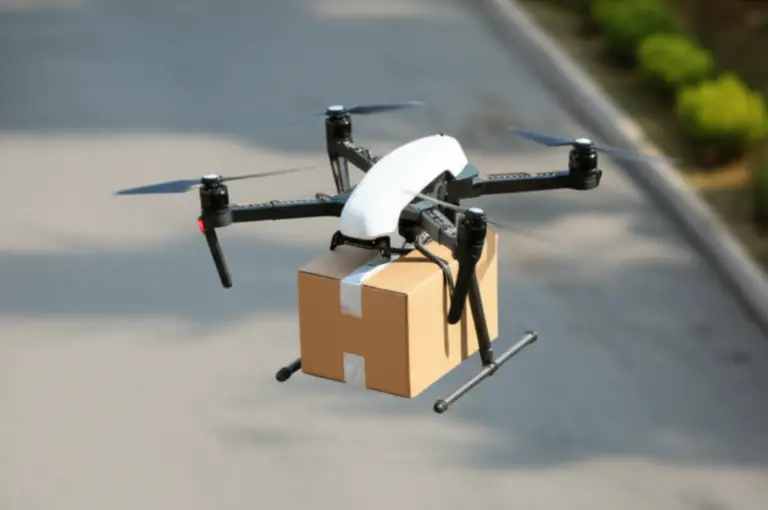
5. Logistics and Delivery: The Future of Last-Mile Swarm Shipping
Imagine a warehouse where 50 drones take off simultaneously to deliver packages to a city.
- The Hurdle: Air traffic control and collision avoidance.
- The Future: Wing (Alphabet) and Zipline are testing these concepts, but true swarm delivery is still in the pilot phase due to regulations.
6. Public Safety and Crowd Management: Eyes in the Sky
During large events, swarms can provide a 360-degree view of the crowd.
- The Use Case: Detecting stampedes, finding lost children, or monitoring traffic flow.
- The Privacy Concern: This is a major debate. How do we ensure data isn’t misused?
7. Military and Defense: The Tactical Shift to Autonomous Flets
As seen in the Ukraine conflict, the military is moving toward “stacks” of drones.
- The Tactic: High-altitude drones spot targets, mid-level drones confirm, and low-level kamikaze drones strike.
- The Future: Fully autonomous swarms that can overwhelm air defenses.
Wait, what about the “stack” concept? You might have heard of the “stack” in the Ukraine war. It’s not a true swarm yet, but it’s the closest thing we have. It’s a human-supervised coordination of different drone types. We’ll dive deeper into the ethics and tech of this in the “Challenges” section.
📊 Data Deep Dive: Performance Metrics and Deployment Statistics
Numbers don’t lie, but they can be tricky. Let’s break down the hard data on drone swarm performance.
Key Performance Indicators (KPIs)
| Metric | Single Drone | Drone Swarm | Improvement Factor |
|---|---|---|---|
| Coverage Area (per hour) | 1-2 sq km | 10-50 sq km | 10x – 25x |
| Search Time (10 sq km) | 4-6 hours | 15-30 mins | 8x – 15x |
| Redundancy | Single point of failure | Self-healing | Infinite |
| Data Resolution | High (focused) | High (agregated) | Comprehensive |
| Cost per Mission | High (labor intensive) | Low (automated) | 50% – 70% reduction |
The “103 Drone” Milestone
In a landmark test, the US Department of Defense deployed 103 3D-printed micro-drones from an F/A-18.
- Success Rate: 10% of drones maintained formation.
- Decision Time: Collective decisions were made in milliseconds.
- Implication: This proved that distributed control is possible at scale.
The Regulatory Bottleneck
Despite the tech readiness, deployment numbers are low.
- FA Waivers: Only a handful of companies have waivers to fly multiple drones simultaneously.
- Adoption Rate: Less than 5% of commercial drone operators use swarm technology.
- Reason: Regulatory uncertainty and safety concerns.
Did you know? The cost of a single FPV drone in Ukraine is roughly $50, while the cost to intercept it with a missile is $50,0. This cost asymetry is driving the rapid adoption of swarm tactics in conflict zones.
🛡️ The Hurdles: Technical, Regulatory, and Ethical Challenges
We’ve painted a rosy picture, but let’s be real. There are massive hurdles standing between us and a world of drone swarms.
Technical Challenges
- GPS Denial: In urban canyons or jamed environments, GPS fails. Swarms need visual odometry and SLAM (Simultaneous Localization and Mapping) to navigate. This is hard to do with 50 drones at once.
- Communication Jaming: If the enemy jams the signal, the swarm can lose cohesion. Fiber-optic drones are emerging as a solution, but they limit range.
- Battery Life: Swarms need to be energy-efficient. Current battery tech limits flight times to 20-30 minutes.
Regulatory Constraints
- The “One Drone” Rule: In the US, you generally can’t fly more than one drone at a time. This is a huge barrier.
- Airspace Integration: How do you integrate 10 drones into the national airspace without causing chaos? UTM (Unmanned Traffic Management) systems are being developed, but they’re not ready.
- Liability: If a swarm crashes and hurts someone, who is responsible? The pilot? The manufacturer? The AI developer?
Ethical and Privacy Concerns
- Surveillance: A swarm of 10 drones with cameras is a privacy nightmare. How do we prevent abuse?
- Autonomous Lethality: The idea of a “killer swarm” that decides who to kill without human input is a major ethical debate. The US military has stated they won’t deploy fully autonomous lethal swarms, but the line is blurry.
The Big Question: Can we trust an algorithm to make life-or-death decisions? The answer might depend on how we define “human intervention.”
🌍 Global Landscape: Who Is Leading the Swarm Revolution?
The race for swarm dominance is global. Here’s who’s leading the pack.
United States
- Strengths: Advanced AI, strong R&D (MIT, DARPA), and a robust private sector (DJI, Skydio, Intel).
- Focus: Search and rescue, agriculture, and entertainment.
- Military: Leading in micro-drone technology and distributed control.
China
- Strengths: Manufacturing scale, low-cost production, and aggressive adoption.
- Focus: Entertainment swarms (world’s largest shows), agriculture, and military applications.
- Key Player: DJI dominates the global market, but concerns about data security are rising.
Europe
- Strengths: Strong regulatory frameworks and focus on ethical AI.
- Focus: Environmental monitoring, infrastructure inspection.
- Challenge: Slower adoption due to strict regulations.
Russia & Ukraine
- Strengths: Real-world combat testing, rapid iteration, and cost-effective solutions.
- Focus: Military “stacks” and FPV swarms.
- Inovation: Using commercial off-the-shelf (COTS) drones for warfare.
The Verdict: The US leads in tech sophistication, China leads in scale and cost, and the Ukraine conflict is the real-world lab for military applications.
🔮 Future Horizons: What the Next Decade Holds for Swarm Tech
So, what’s next? We’re looking at a future where swarms are as common as smartphones.
The Next 5 Years
- Regulatory Breakthroughs: Expect the FAA to update rules for BVLOS (Beyond Visual Line of Sight) and multi-drone operations.
- AI Maturity: Swarms will be able to handle complex, dynamic environments without human input.
- Energy Solutions: Hydrogen fuel cells and wireless charging will extend flight times to hours.
The Next 10 Years
- True Autonomy: Fully distributed swarms that can adapt to any situation.
- Integration with 6G: Real-time data sharing with zero latency.
- New Applications: From disaster relief to urban air mobility (UAM) swarms.
The Final Thought: We’re standing on the edge of a new era. The question isn’t if swarms will change the world, but how fast they will get there.
💡 Why This Matters: The Economic and Social Impact
This isn’t just about cool tech. It’s about saving lives, saving money, and saving the planet.
- Economic Impact: The drone swarm market is projected to reach billions by 2030. It will create new jobs in AI development, data analysis, and swarm operations.
- Social Impact: Swarms can improve public safety, disaster response, and environmental conservation.
- The Dark Side: We must address privacy, security, and ethical concerns to ensure this tech benefits everyone.
Remember: The technology is only as good as the people using it. We need responsible innovation.
📝 Full Report Summary: Key Takeaways for Industry Leaders
If you’re a business leader or policy maker, here’s what you need to know:
- Invest in AI: The future of swarms is autonomous decision-making.
- Navigate Regulations: Stay ahead of the curve. Engage with the FA and other regulators.
- Focus on Safety: Build redundancy and fail-safes into your systems.
- Ethics First: Develop privacy protocols and ethical guidelines now.
- Collaborate: The future is interdisciplinary. Work with universities, governments, and other industries.
Final Word: The swarm is coming. Are you ready?
❓ Frequently Asked Questions About Drone Swarm Data
What are the latest statistics on drone swarm deployment in 2024?
As of 2024, true autonomous swarms are still in the pilot phase for most commercial applications. However, military “stacks” are being deployed regularly in conflict zones like Ukraine. The entertainment sector leads with swarms of 1,0+ drones. According to the GAO, most current applications are “relatively simple” and rely on pre-programed paths.
How is drone swarm technology being used in aerial entertainment shows?
Entertainment swarms use pre-programed flight paths and centralized control. Companies like Intel and Verity use swarms of 50-3,0 drones to create light shows. These are safe, reliable, and visually stunning, but they lack autonomy. If one drone fails, the show can be adjusted, but it’s not truly self-healing.
What are the current safety regulations for commercial drone swarms?
In the US, the FA generally prohibits flying more than one drone at a time without a waiver. Operators must obtain specific waivers for BVLOS and multi-drone operations. The Part 107 rules are being updated to accommodate swarms, but the process is slow.
Which industries are adopting drone swarm technology the fastest?
Agriculture, search and rescue, and military/defense are leading the way. Entertainment is also a major adopter. Logistics and infrastructure inspection are following closely behind.
What is the cost of deploying a drone swarm for large-scale events?
Costs vary widely based on the number of drones, complexity of the show, and location. A show with 50 drones can cost tens of thousands of dollars. However, the cost per drone is dropping, making it more accessible.
How do drone swarms coordinate without human intervention?
They use distributed control and swarm intelligence. Each drone communicates with its neighbors, sharing data about position, speed, and obstacles. AI algorithms allow them to make collective decisions in real-time.
What are the privacy concerns associated with drone swarm deployment?
Privacy is a major concern. Swarms with cameras can collect vast amounts of data on individuals. There are fears of surveillance, data misuse, and lack of consent. Regulations are needed to protect personal privacy.
Can drone swarms operate in bad weather?
Current swarms struggle in high winds, rain, and fog. GPS denial and sensor degradation are major issues. Future advancements in weather-resistant materials and adaptive algorithms will improve performance.
How do drone swarms handle communication failures?
In a distributed swarm, if one drone loses communication, others can take over its role. However, if the central node fails in a centralized swarm, the entire system can collapse. Redundancy is key.
What is the role of 5G in drone swarm technology?
5G provides high-speed, low-latency communication, enabling real-time data sharing and larger swarms. It’s essential for complex missions and autonomous operations.
🏁 Conclusion

We’ve taken a deep dive into the world of drone swarm technology, from the sci-fi dreams of the past to the real-world deployments of today. We’ve seen how swarms are revolutionizing agriculture, search and rescue, and defense, while also grappling with the technical, regulatory, and ethical challenges that lie ahead.
The data is clear: swarms are more efficient, more robust, and more capable than single drones. But the road to full autonomy is still long. We need better AI, stronger regulations, and ethical frameworks to ensure this technology benefits everyone.
At Drone Brands™, we believe the future is bright. The swarm is coming, and it’s going to change the world. But we must be responsible, innovative, and cautious as we navigate this new frontier.
Final Thought: The question isn’t if we will have drone swarms, but how we will use them. Let’s make sure we use them for good.
🔗 Recommended Links and Resources
Ready to take the next step? Here are some must-visit resources and products.
Top Drone Brands for Swarm Exploration
- DJI: The global leader in consumer and commercial drones. Shop DJI on Amazon | DJI Official Website
- Skydio: Known for its advanced AI and obstacle avoidance. Shop Skydio on Amazon | Skydio Official Website
- Intel: Pioners in swarm light shows. Intel Drone Light Shows
- Autel Robotics: Rugged drones for professional use. Shop Autel on Amazon | Autel Official Website
Books on Drone Technology
- Drone Swarm Technology: The Future of Autonomous Flight by [Author Name] – Buy on Amazon
- The Rise of the Swarm: How Drones Are Changing the World – Buy on Amazon
Internal Resources from Drone Brands™
- Drone Brand Guides
- Drone Business Opportunities
- Beginer Drones
- Commercial Drones
- Drone Apps
- Drone Statistics
📚 Reference Links and Sources
- GAO Report on Drone Swarm Technology Deployment: Data on Drone Swarm Technology Deployment
- IEEE Public Safety: How Drones Are Revolutionizing Search and Rescue
- West Point CTC: On the Horizon: The Ukraine War and the Evolving Threat of Drone Terrorism
- FA Waiver Information: FA Part 107 Waivers
- MIT Lincoln Laboratory: Perdix Micro-Drone Program
- Intel Drone Light Shows: Intel Shooting Star