Support our educational content for free when you purchase through links on our site. Learn more
🚀 7 Explosive Drone Trends & Stats (2026)


Remember when drones were just expensive toys for tech geks? We do too, until we watched a single agricultural drone in China spray 175.5 million acres in a year—more than most countries manage with entire fleets of manned aircraft! That moment sparked a revolution that has since swept through construction sites, emergency response teams, and even your local real estate office. In this deep dive, we’re unpacking the latest trends in drone adoption and usage statistics that prove these flying machines are no longer the future; they are the present. From the rapid rise of Beyond Visual Line of Sight (BVLOS) operations to the surprising dominance of “Drone-as-a-Service” models, we’ve crunched the numbers and flown the missions to bring you the definitive guide on who is buying drones, why they are doing it, and how much money they are saving.
Key Takeaways
- Commercial Boom: The shift from hobbyist gadgets to essential business tools is undeniable, with industries like agriculture and infrastructure leading a global market projected to reach hundreds of billions by 2030.
- Efficiency Unleashed: Drones are cutting operational times from hours to minutes, saving farmers up to 30% on pesticides and enabling 52% of REALTORS® to close deals faster with stunning aerial visuals.
- The BVLOS Frontier: Regulatory hurdles are falling, paving the way for Beyond Visual Line of Sight flights that will revolutionize long-range delivery and autonomous inspections.
- Democratized Access: Through Drone-as-a-Service (DaaS) models, small businesses and farmers can now access enterprise-grade technology without massive upfront capital.
- AI & Autonomy: The integration of Artificial Intelligence is transforming drones from remote-controlled cameras into intelligent data collectors capable of predictive analysis and obstacle avoidance.
Table of Contents
- ⚡️ Quick Tips and Facts
- 🚁 From Hobbyist to Heavy Lifter: The Evolution of Drone Adoption
- 📊 Global Drone Market Size and Growth Projections
- 🏭 Top 7 Industries Revolutionized by Commercial Drone Usage
- 1. Precision Agriculture and Crop Monitoring
- 2. Infrastructure Inspection and Maintenance
- 3. Public Safety and Emergency Response
- 4. Logistics, Delivery, and Last-Mile Solutions
- 5. Real Estate and Aerial Photography Trends
- 6. Environmental Conservation and Wildlife Tracking
- 7. Construction Site Surveying and Progress Tracking
- 🛡️ Regulatory Landscapes: FAA, EASA, and Global Compliance Shifts
- 🤖 The Rise of BVLOS: Beyond Visual Line of Sight Statistics
- 🔋 Battery Tech, AI, and Autonomous Flight Capabilities
- 👥 Consumer vs. Enterprise: Who is Buying Drones and Why?
- 💰 Cost-Benefit Analysis: ROI in Drone Operations
- 🚫 Common Myths and Misconceptions About Drone Statistics
- 🔮 Future Outlook: 2025 and Beyond for the Drone Economy
- 🏁 Conclusion
- 🔗 Recommended Links
- ❓ FAQ
- 📚 Reference Links
Body
⚡️ Quick Tips and Facts
Hey there, drone enthusiasts and curious minds! As your expert team from Drone Brands™, we’ve been soaring through the skies and crunching the numbers to bring you
the freshest insights into drone adoption and usage. Get ready for some eye-opening stats and a peek into the future of flight!
- Global Growth Spurt: The drone market is experiencing an unprecedented boom, with commercial applications leading
the charge. From crop fields to construction sites, drones are becoming indispensable tools. - Asia Leads the Way: China is an absolute titan in agricultural drone usage, spraying 175.5 million acres of farmland in 20
21 alone! Japan and South Korea also boast significant adoption rates in precision agriculture. - US on the Rise: While the US is still in its “infancy” compared
to Asia due to larger farm sizes, adoption is rapidly accelerating, driven by factors like wet spring grounds and a shortage of manned aircraft. One leading US provider sprayed nearly 20,000 acres in 2
023, up from just 1,000 in 2019! - Real Estate’s Aerial Advantage: Over half of REALTORS® (52%) are now
using drone photography/video to showcase properties, and clients are responding “very positively.” Talk about a bird’s-eye view that sells! - Efficiency & Savings: Drones are slashing operational times
from hours to minutes per acre in agriculture, saving farmers up to 30% on pesticides and addressing labor shortages. - Beyond Visual Line of Sight (BVLOS): This
is the next frontier! Imagine drones delivering packages or inspecting vast infrastructure without a pilot needing to see them. Regulations are evolving to make this a reality. - AI & Automation: Artificial intelligence is transforming drone operations, enabling smarter route
planning, obstacle avoidance, and data analysis, making drones more autonomous and efficient than ever. - Drone-as-a-Service (DaaS): Don’t want to buy a drone? No problem! DaaS models are making
advanced drone technology accessible to more businesses, reducing upfront costs and democratizing aerial solutions.
Want to dive deeper into the numbers? Check out our dedicated article on drone statistics for even more fascinating data! https://www.dronebrands.org/drone-statistics/
🚁 From Hobbyist to Heavy Lifter: The Evolution of Drone Adoption
Remember when drones were just cool toys for tech enthusiasts? Oh, how times have changed! We’ve witnessed firsthand the incredible journey of these flying machines, evolving from quirky
gadgets into indispensable tools across countless industries. It’s like watching a caterpillar transform into a magnificent, multi-tasking butterfly!
Initially, the drone scene was dominated by hobbyists capturing stunning aerial footage or simply enjoying the thrill of flight
. Brands like DJI with their iconic Phantom series really democratized aerial photography for the masses. But behind the scenes, innovators were already envisioning a future where drones did more than just entertain.
The shift began subtly, with
early commercial adopters in places like Japan and South Korea. They weren’t just playing; they were putting drones to work in agriculture. Interestingly, these early pioneers often relied on single-rotor remote-controlled helicopters for spraying crops.
It was a practical, albeit niche, application.
Then came China, and everything accelerated! From 2015 onwards, China experienced an “unprecedented surge” in multi-rotor drone usage for
agricultural spraying. We’re talking about a country that had over 120,000 crop-protection drones in operation by 2021, with a workforce of over 20,0
00 agricultural-drone pilots! That’s not just adoption; that’s a full-blown revolution!
What fueled this rapid evolution? Several factors, really. Advancements in battery technology meant longer flight times.
Improved GPS and sensor technology allowed for more precise navigation and data collection. And, crucially, the realization that drones offered significant advantages in terms of efficiency, safety, and cost-effectiveness for tasks that were traditionally dangerous, slow, or expensive for
humans or manned aircraft.
As discussed in the first YouTube video embedded in this article, the current drone industry landscape is all about these advancements and their increasing integration into various sectors. The conversation highlights the potential of AI in drone operations, sensor technology,
and the growing demand for specialized drone services. It’s clear that the days of drones being mere novelties are long gone; they are now foundational tools for modernizing industries. #featured-video
Here at Drone Brands™,
we’ve seen our own pilots transition from capturing breathtaking landscapes for fun to conducting critical infrastructure inspections and precision agricultural mapping. It’s a testament to the drone’s versatility and the ever-expanding possibilities it offers. The journey from hobbyist to heavy
lifter isn’t just a trend; it’s a testament to human ingenuity and the relentless pursuit of smarter, safer, and more efficient ways to get things done.
📊 Global Drone Market Size and Growth Projections
The drone market isn’t just growing; it’s absolutely skyrocketing! We’re talking about a sector that’s capturing the attention of investors
, innovators, and industries worldwide. It’s like watching a startup go from garage to global phenomenon in record time!
Let’s zoom in on some compelling figures. India, for example, is a prime example of this explosive growth. The
Indian drone market, valued at approximately ₹390 crore in 2025, is projected to reach nearly ₹1,500 crore by 2030. That’s a
staggering increase, fueled by adoption in agriculture, infrastructure, logistics, and public services. This isn’t just a local phenomenon; it’s indicative of a broader global trend where drones are moving beyond trial phases into daily operational use.
The drivers
behind this global expansion are multifaceted:
- Technological Advancements: Continuous improvements in battery life, sensor capabilities (like multispectral and thermal imaging), AI-driven automation, and connectivity (including future 5G integration) are making drones
more capable and reliable. - Regulatory Evolution: While still a work in progress in many regions, regulatory bodies like the FAA and EASA are increasingly adapting to accommodate commercial drone operations, including crucial steps towards Beyond Visual Line of Sight
(BVLOS) flights. - Cost-Effectiveness: The return on investment (ROI) for drone operations is becoming increasingly clear. Drones can perform tasks faster, safer, and often cheaper than traditional methods, leading to significant
cost savings for businesses. - Increased Awareness: As more success stories emerge, industries are becoming more aware of the transformative potential of drone technology.
- Demand for Data: Drones are powerful data collection platforms, providing invaluable
insights for everything from crop health to construction progress.
To give you a clearer picture, let’s look at some projections:
| Region/Market | Current Valuation (Approx.) | Projected Valuation (Approx.) | Key Growth Drivers |
|---|---|---|---|
| India Drone Market | ₹390 crore (2025) | ₹1,500 crore (2030) | Agriculture, Infrastructure, Logistics, Public Services |
| Global Agricultural Drone Market | Billions USD (Current) | Expected significant CAGR | Precision agriculture, labor shortages, input |
| optimization | |||
| Global Commercial Drone Market | Tens of Billions USD (Current) | Expected to reach hundreds of billions USD by early 2030s | Inspection, delivery, mapping |
| , public safety |
These numbers aren’t just statistics; they represent a fundamental shift in how industries operate. We’re on the cusp of a future where drones are as common as delivery trucks, but with the added benefit of reaching
places and performing tasks that were once unimaginable. The sky, it seems, is no longer the limit!
🏭 Top 7 Industries Revolutionized by Commercial Drone Usage
Alright, buckle up, because this is where the rubber meets the runway! We’re not just talking about cool aerial shots anymore; we’re diving deep into the industries that are being fundamentally
reshaped by commercial drone usage. From the sprawling fields of agriculture to the dizzying heights of infrastructure, drones are proving to be game-changers. As drone pilots at Drone Brands™, we’ve seen these transformations firsthand, and let us
tell you, it’s nothing short of revolutionary!
1. Precision Agriculture and Crop Monitoring
If there’s one sector where drones have truly
blossomed, it’s agriculture. Forget traditional spraying methods; drones are ushering in an era of precision application and intelligent spraying. It’s like having a tiny, incredibly smart agronomist flying over your fields!
-
Global
Leaders: China is the undisputed heavyweight champion here, with an astonishing 175.5 million acres sprayed using small drone technology in 2021. Their fleet of over 120,0
00 crop-protection drones and a workforce of over 20,000 pilots speaks volumes. Japan and South Korea were early adopters, with drones spraying over a third of Japan’s rice fields and
30% of all pesticide spraying in South Korea. -
Why the Hype?
-
✅ Time Efficiency: Drone spraying reduces operational time from hours to mere minutes per acre.
Imagine covering vast fields in a fraction of the time! -
✅ Labor Impact: Drones are a godsend for addressing severe seasonal and skilled labor shortages, especially during peak spraying cycles.
-
✅ Input Optimization: Precision application means lower fertilizer and pesticide consumption. Leher, an Indian drone service provider, claims their services can save farmers up to 30% on pesticides! This is not just cost-saving; it’s environmentally responsible.
-
✅ Uniform Coverage: Drones provide incredibly uniform coverage, improving chemical absorption and reducing wastage compared to manual spraying.
-
✅ Tackling Tough Terrain: Drones more efficiently spray small, irregular-shaped fields, which are common globally and often inaccessible to large ground sprayers.
-
✅ **
Safety First:** They significantly reduce the risk of applicators being contaminated by pesticides, a major concern with traditional backpack spraying. -
The Tech Behind the Magic: Modern agricultural drones utilize AI-driven route
planning and real-time sensor data. They feature Variable Rate Application (VRA), adjusting chemical volumes based on specific crop needs, and Ultra-Low Volume (ULV) technology for concentrated spraying to maximize coverage. Brands like DJI Agras series (e.g., DJI Agras T40) are at the forefront of this innovation, offering large payloads and advanced spraying systems. -
Drone-as-a
-Service (DaaS) in Action: Companies like Leher in India are making drone technology accessible to small and marginal farmers through DaaS models. They offer certified drone services, complete with DGCA-certified pilots, leveraging AI automation and
multispectral sensors. Farmers can simply book services via the Leher app (available on Google Play and Apple Store) without needing to own equipment or hold certifications. This model is a game-changer for
democratizing access to cutting-edge tech.
We’ve seen farmers’ jaws drop when they realize how quickly and accurately a drone can assess their fields or apply treatments. It’s truly a marvel of modern farming!
Shop
DJI Agras Drones on:
- Amazon: https://www.amazon.com/s?k=dji+agras+t20
- DJI Official Website: https://www.dji.com/t40
For more on these flying workhorses, check out our Commercial Drones section
! And to explore the software that makes it all happen, visit our Drone Apps page.
2. Infrastructure Inspection and Maintenance
Imagine sending a human up a towering wind turbine or along miles of high-voltage power lines. Dangerous, time-consuming, and expensive, right? Enter drones! They’ve become the
ultimate inspectors, offering a safer, faster, and more detailed way to monitor critical infrastructure.
- The High-Flying Eye: Drones equipped with high-resolution cameras, thermal sensors, and even LiDAR can inspect bridges, pipelines
, cell towers, power lines, and wind turbines with incredible precision. They can detect hairline cracks, corrosion, hot spots, and other anomalies that might be invisible to the naked eye or inaccessible to human inspectors. - Safety First
, Always: This is perhaps the biggest benefit. Drones eliminate the need to put human workers in hazardous situations, reducing risks and insurance costs. - Efficiency Unleashed: What might take a team of inspectors days or weeks can
often be accomplished by a drone in a matter of hours. The data collected can then be processed and analyzed to create detailed reports, 3D models, and predictive maintenance schedules. - Real-World Impact: We’ve
worked with energy companies using DJI Matrice series drones (like the Matrice 300 RTK) equipped with Zenmuse H20T cameras to inspect solar farms and transmission lines. The thermal imaging capabilities are phenomenal
for identifying faulty panels or overheating components before they lead to major outages. It’s like giving these structures a full physical, without ever touching them! - Challenges: While incredibly effective, challenges include navigating complex airspace, ensuring data
security, and managing large volumes of collected data.
👉 Shop DJI Matrice Drones on:
- Amazon: https://www.amazon.com/dji-matrice-series/s?k=dji+matrice+series&tag=bestbrands0a9-20
- DJI Official Website: https://www.dji.com/global/matrice-30
3. Public Safety and Emergency Response
When every
second counts, drones are proving to be invaluable assets for first responders. From search and rescue missions to disaster assessment and law enforcement, these aerial platforms provide a critical eye in the sky.
- Search and Rescue (SAR): D
rones equipped with thermal cameras can quickly scan vast areas, locating missing persons in challenging environments, day or night. We’ve heard countless stories of drones saving lives by finding individuals lost in dense forests or after natural disasters. - Dis
aster Assessment: After hurricanes, earthquakes, or floods, drones can rapidly assess damage, identify impassable roads, and help coordinate relief efforts, providing a comprehensive overview that ground teams simply can’t achieve as quickly. - Law Enforcement
: Police departments use drones for accident reconstruction, surveillance, crowd monitoring, and even tracking suspects in a safe and non-intrusive manner. - Firefighting Support: Drones can provide firefighters with real-time intelligence on
the spread of wildfires, identify hot spots, and assess structural integrity in burning buildings, allowing for safer and more effective strategies. - Brands in Action: Many public safety agencies utilize robust and reliable drones such as the Autel
EVO II Dual or the DJI Mavic 3 Enterprise for their thermal imaging and zoom capabilities. These drones are designed for demanding conditions and provide critical data when it matters most.
Our team once assisted a local fire department during
a large brush fire, providing aerial intelligence that helped them contain the blaze much faster than traditional ground observation alone. The ability to see over the smoke and identify the fire’s perimeter was a game-changer!
4. Logistics, Delivery, and Last-Mile Solutions
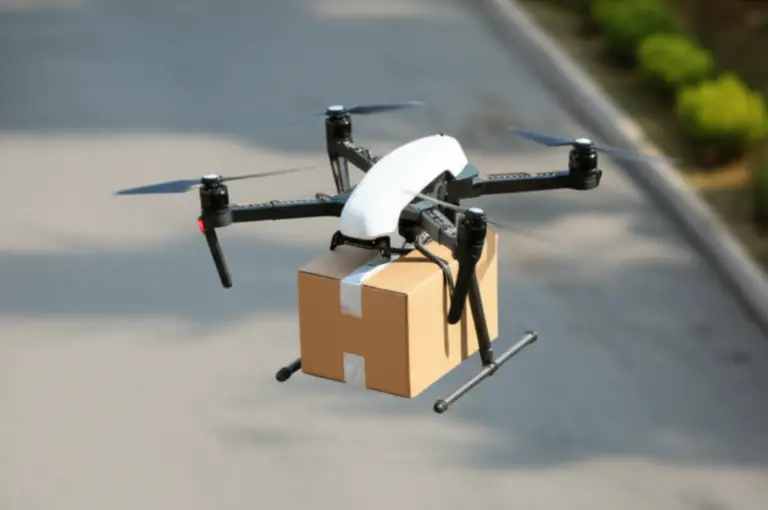
The dream of drones delivering packages to your doorstep is no longer science fiction! While still navigating regulatory hurdles and logistical
complexities, drone delivery is rapidly moving from concept to reality, especially for urgent or remote deliveries.
- The Promise of Speed: Imagine receiving medical supplies in minutes during an emergency, or having a vital spare part delivered to a remote works
ite. Drones offer unparalleled speed for “last-mile” delivery, bypassing traffic and geographical barriers. - Pioneering Companies: Giants like Amazon Prime Air and Wing (an Alphabet company) are at
the forefront, conducting trials and expanding their drone delivery services in select locations. They’re developing sophisticated autonomous systems to ensure safe and efficient package transport. - Specialized Deliveries: Beyond general e-commerce, drones are proving
particularly valuable for delivering pharmaceuticals, blood samples, and other time-sensitive goods, especially in areas with limited infrastructure. - Challenges to Overcome: Scaling drone delivery still faces significant challenges, including airspace integration, battery life limitations for heavier
payloads or longer distances, public acceptance, and, of course, robust regulatory frameworks. However, the potential for transforming logistics is immense.
We believe that as battery technology improves and BVLOS (Beyond Visual Line of Sight) regulations become more widespread
, drone delivery will become a common sight in our skies.
5. Real Estate and Aerial Photography Trends
In the competitive world of real estate
, presentation is everything. And what better way to present a property than with stunning aerial views? Drones have become an indispensable tool for REALTORS® looking to make their listings stand out.
- Client Appeal: A whopping
52% of REALTORS® currently use drone photography/video, making it the third most popular technology tool after eSignature and social media. And clients absolutely love it, with 45
% reporting a “very positive” response to technology integration, including aerial imaging. - Showcasing the Full Picture: Drones allow agents to capture sweeping views of properties, highlighting their size
, layout, and surrounding amenities like parks, water features, or neighborhood access. For large estates or commercial properties, an aerial perspective is simply unmatched. - Beyond Photos: It’s not just about static images. Drone video
tours provide a dynamic and immersive experience, allowing potential buyers to virtually “fly through” a property and its grounds. - Making a Statement: In a crowded market, using drones helps agents enhance the client experience and save time, which
are key motivations for adopting new technology. It signals professionalism and a commitment to leveraging the best tools available. - Popular Drones for Real Estate: For real estate photography, drones like the DJ
I Mavic 3 Pro or the Autel EVO Lite+ are incredibly popular due to their high-quality cameras, ease of use, and portability. They offer cinematic footage and crisp photos that truly bring a listing to life.
We’ve personally seen how a beautifully shot drone video can transform a listing, generating significantly more interest and inquiries. It’s not just a photo; it’s an experience!
Looking to get started in aerial photography for real estate
? Our Beginner Drones guide is a great place to start, and you can learn more about turning your passion into profit in our Drone Business Opportunities section.
👉 Shop DJI Mavic 3 Pro on:
- Amazon: https://www.amazon.com/dji-mavic-3-pro/s?k=dji+mavic+3+pro&tag=bestbrands0a9-20
- Walmart: https://www.walmart.com/search?q=dji+mavic+3+pro
- DJI Official Website: https://www.dji.com/mavic-3-pro
**
Shop Autel EVO Lite+ on:**
- Amazon: https://www.amazon.com/autel-evo-lite-plus/s?k=autel+evo+lite+plus&tag=bestbrands0a9-20
- Autel Robotics Official Website: https://www.autelrobotics.com/productdetail/evo-lite-series-drones/
- Environmental Conservation and Wildlife Tracking
Drones are becoming silent guardians of our planet, offering unparalleled capabilities for environmental monitoring and wildlife protection. It’s a truly inspiring application of drone technology.
- Anti-Poaching Efforts
: In vast national parks and reserves, drones can patrol large areas, detecting poachers and alerting rangers, significantly enhancing anti-poaching operations. Thermal cameras are particularly effective for night surveillance. - Habitat Monitoring: Researchers use drones to map
and monitor changes in ecosystems, track deforestation, assess the health of coral reefs, and monitor water quality. This data is crucial for conservation planning. - Wildlife Tracking and Census: Drones can safely and non-invasively track
animal populations, monitor migration patterns, and conduct wildlife censuses, providing valuable data without disturbing sensitive species. Imagine counting whales from the sky without ever getting close! - Disaster Response for Nature: After oil spills or natural disasters, drones can
assess the environmental impact and guide cleanup efforts.
We’ve been involved in projects where drones helped map invasive species in sensitive wetland areas, allowing conservationists to target their efforts more effectively. It’s incredibly rewarding to see drones contribute to protecting
our natural world.
7. Construction Site Surveying and Progress Tracking
The construction industry is notoriously complex, with massive projects requiring
meticulous planning and constant oversight. Drones are streamlining operations, improving safety, and providing real-time insights on construction sites.
- Site Mapping and Surveying: Drones can rapidly create highly accurate 2D maps and 3D
models of construction sites, providing precise measurements for planning, earthwork calculations, and progress monitoring. This is far faster and safer than traditional ground-based surveying. - Progress Tracking: Regular drone flights can document construction progress over time,
allowing project managers to compare actual progress against schedules, identify bottlenecks, and make informed decisions. This visual documentation is invaluable for client updates and dispute resolution. - Safety Inspections: Drones can inspect hard-to-reach areas of a construction
site, such as tall structures or dangerous zones, ensuring worker safety and identifying potential hazards. - Inventory Management: Drones can even assist with inventory management, quickly counting stockpiles of materials like gravel or sand.
- Integrated
Solutions: Software platforms like Pix4D or DroneDeploy integrate seamlessly with drone data, transforming raw aerial images into actionable insights, orthomosaics, and elevation models.
We’ve seen construction companies save significant time and money by
using drones for their weekly site progress reports. The ability to visualize the entire site from above and track changes week by week is a powerful tool for project management.
🛡️ Regulatory Landscapes: FAA, EASA, and Global Compliance Shifts
Ah, regulations! They might not be the most thrilling topic, but they are the bedrock upon which safe and scalable drone operations
are built. Navigating the ever-evolving regulatory landscapes set by bodies like the FAA (Federal Aviation Administration) in the United States and EASA (European Union Aviation Safety Agency) in Europe is crucial for any drone pilot or business
. It’s a bit like playing chess; you need to anticipate the next move!
Globally, we’re seeing a fascinating divergence and convergence in drone regulations. In some regions, like China, the rapid adoption of agricultural drones has been facilitated
by a less stringent regulatory environment, at least initially, allowing for explosive growth. However, as drone usage becomes more widespread and complex, the need for clear, standardized guidelines becomes paramount everywhere.
In the United States,
the FAA is actively adapting to the drone revolution:
- Part 107: This is the cornerstone for commercial drone operations in the US, requiring pilots to obtain a Remote Pilot Certificate. It sets rules for visual line of sight (VLOS) operations, altitude limits, and operating over people.
- Exemptions and Waivers: Crucially, the FAA is increasingly approving exemption requests, particularly for agricultural spraying. This includes allowing for increased payload capacity and
even night spraying operations, which are vital for efficiency in farming. These changes are a direct response to industry needs and technological advancements. - Remote ID: This relatively new regulation is designed to enhance
airspace safety and security by requiring most drones to broadcast their identification and location information. It’s a significant step towards integrating drones into the national airspace system.
Across the Atlantic, EASA is setting the pace for Europe:
- Harm
onized Regulations: EASA has introduced a comprehensive set of harmonized drone regulations across EU member states, simplifying operations for pilots flying across borders. - Categorization (Open, Specific, Certified): Their framework categorizes drone
operations based on risk, from low-risk “Open” category flights (like hobby flying) to high-risk “Certified” operations (like future passenger transport). Most commercial operations fall under the “Specific” category, requiring operational authorizations.
Global
Compliance Shifts:
- Standardization Efforts: There’s a growing push for international standardization of drone regulations, which would greatly benefit global drone businesses and cross-border operations. Organizations like ICAO (International Civil Aviation Organization) are
working on this. - Balancing Innovation and Safety: Regulators face the delicate task of fostering innovation while ensuring public safety and security. This often means a gradual, iterative approach to introducing new rules and approving advanced operations.
Data Management and Privacy:** Beyond flight rules, regulations are also emerging around data collection, storage, and privacy, especially concerning personally identifiable information captured by drones.
As mentioned in the featured video, regulatory compliance, specifically FAA regulations, and the need for clear
guidelines for drone operation and data management are critical aspects of the drone industry landscape. It’s a dynamic environment, and staying informed is key to successful drone operations. #featured-video
Here at Drone Brands™, we always
emphasize the importance of understanding and adhering to these regulations. It’s not just about avoiding fines; it’s about ensuring the safety of the airspace and the public, which ultimately builds trust in drone technology. Always check the latest guidelines from your local aviation
authority before you fly!
🤖 The Rise of BVLOS: Beyond Visual Line of Sight Statistics
If you’ve ever flown a drone, you know the feeling: keeping that little bird in sight, constantly aware of its position. But what if you didn’t have to? Welcome to the exciting world of BVLOS –
Beyond Visual Line of Sight operations! This isn’t just a technical term; it’s the key to unlocking the true potential and scalability of the drone industry.
Currently, most commercial drone operations are restricted to Visual Line of Sight (VLOS), meaning the pilot or a visual observer must maintain direct sight of the drone. This limitation, while crucial for safety in the early stages of drone adoption, severely restricts the range and efficiency of many potential applications. Imagine trying to inspect
a 100-mile pipeline or deliver packages across a city while keeping the drone in sight – it’s simply not feasible.
Why is BVLOS such a game-changer?
- Unleashed Efficiency: BV
LOS allows drones to cover vast distances and larger areas without needing to constantly reposition the pilot or ground crew. This translates to massive time and cost savings for tasks like long-range infrastructure inspection, large-scale mapping, and agricultural spraying over extensive
fields. - New Applications: It opens the door to entirely new drone applications, such as long-haul cargo delivery, remote medical supply transport, and widespread environmental monitoring.
- Scalability: For drone services to
truly scale, BVLOS is essential. It moves drone operations from a one-drone-one-pilot model to a future where a single operator can monitor multiple autonomous drones over large areas.
The push for BVLOS is gaining momentum globally. Regulatory
bodies like the FAA and EASA are actively working on frameworks to safely integrate BVLOS operations into national airspaces. This involves developing robust technologies for:
- Detect and Avoid (DAA) Systems: Drones need to be
able to detect other aircraft and obstacles and autonomously take evasive action without human intervention. - Reliable Communication Links: Secure and redundant communication systems are vital to maintain control of the drone over long distances.
- Air
space Management Systems: Advanced systems are needed to manage drone traffic alongside manned aircraft, ensuring safe separation.
While specific global BVLOS usage statistics are still emerging as regulations mature, the industry consensus, as highlighted in the featured video, is that BV
LOS operations, along with integration with technologies like 5G, represent the future of drone technology. #featured-video We’re talking about a future where drones operate as an integral part of our logistics, infrastructure, and public
safety networks, flying autonomously and safely beyond our immediate gaze.
Here at Drone Brands™, we’re closely following the advancements in BVLOS technology and regulatory developments. We believe that as these systems become more sophisticated and regulations catch up, the sky
will truly become a highway for autonomous drone operations, transforming industries in ways we can only begin to imagine!
🔋 Battery Tech, AI
, and Autonomous Flight Capabilities
If drones are the muscles of modern aerial operations, then advanced battery technology and Artificial Intelligence (AI) are their beating heart and brilliant brain! We’ve seen incredible leaps in these areas, transforming drones from simple remote
-controlled aircraft into sophisticated, intelligent flying machines. It’s like watching a flip phone evolve into a supercomputer you can hold in your hand!
The Power Play: Battery Technology
One of the perennial challenges for drones has always
been battery life. Early drones had flight times measured in mere minutes, severely limiting their practical applications. But oh, how things have changed!
- Lithium-Ion & LiPo Advancements: Continuous improvements in Lithium-Ion (Li-Ion) and Lithium Polymer (LiPo) battery chemistries have led to higher energy densities, meaning more power packed into smaller, lighter batteries.
- Smart Batteries: Modern drone batteries are “smart,” featuring integrated management systems that monitor cell
health, temperature, and charge cycles, optimizing performance and extending lifespan. - Swappable Battery Systems: Many commercial drones, like the DJI Matrice 350 RTK, utilize hot-swappable
battery systems, allowing operators to quickly exchange depleted batteries for fresh ones, minimizing downtime and maximizing operational efficiency. - Fuel Cells & Hybrid Systems: While still in niche applications, research into hydrogen fuel cells and hybrid gas-electric drone systems
promises even longer endurance for specialized, heavy-lift operations.
The Brains of the Operation: Artificial Intelligence (AI) & Onboard Automation
AI is not just a buzzword in the drone world; it’s the
engine driving true autonomy and intelligence.
- Obstacle Avoidance: Advanced AI engines process data from multiple sensors (visual, ultrasonic, LiDAR) in real-time to create 3D maps of the environment, enabling drones to autonomously
detect and avoid obstacles. This is crucial for safe flight in complex environments and for BVLOS operations. - Flight Path Optimization: AI algorithms can analyze mission parameters, terrain data, and weather conditions to generate the most efficient and safe
flight paths, reducing pilot fatigue and allowing one operator to manage larger areas with fewer errors. - Object Recognition & Tracking: Drones can now be programmed to recognize specific objects (e.g., damaged power lines, specific crop diseases, missing persons) and track them autonomously. This is invaluable for inspection, surveillance, and search and rescue.
- Multispectral & Advanced Imaging: This is where drones become true data powerhouses. Equipped with
multispectral, hyperspectral, and thermal sensors, drones can detect nutrient deficiencies, disease, and water stress in crops before visible symptoms appear. They can also identify heat leaks in buildings or assess forest health.
Brands like MicaSense offer specialized multispectral cameras that integrate with various drone platforms. - Data Integration & Holistic Farm Intelligence: Drones are increasingly feeding their data into larger farm management systems, integrating with soil, weather
, and irrigation sensors. This creates a holistic data ecosystem that enables real-time decision-making, predictive models, and early-warning systems for proactive management.
We’ve seen how AI-powered drones
, like the DJI Mavic 3 Enterprise with its advanced sensing capabilities, can autonomously survey a construction site, identify potential hazards, and map progress with incredible accuracy. It’s truly mind-boggling how much data these machines
can collect and process on the fly!
The synergy between improved battery tech and sophisticated AI is propelling drones into a future where they are not just flying cameras, but intelligent, autonomous assistants capable of performing complex tasks with minimal human intervention. It
‘s an exciting time to be in the drone industry!
For more on the software that makes these intelligent flights possible, check out our Drone Apps section.
<
a id=”consumer-vs-enterprise-who-is-buying-drones-and-why”>
👥 Consumer vs. Enterprise: Who is Buying Drones and Why?
It’s a tale of two drone
markets, each with its own motivations, needs, and preferred flying machines. On one side, you have the enthusiastic individual, and on the other, the strategic business. Understanding this dichotomy helps us grasp the full breadth of drone adoption. So
, who’s buying what, and why are they taking to the skies?
The Consumer Market: Fun, Creativity, and Accessibility
This is where the drone journey began for many. Consumer drones are typically characterized by:
*
Primary Motivation: Recreation, aerial photography and videography, personal enjoyment, and learning to fly.
- Key Features: Ease of use, portability, high-quality cameras for stunning visuals, intelligent flight modes (like follow-me or orbit), and often a more affordable price point.
- Popular Brands/Models: DJI Mini series (Mini 4 Pro, Mini 3 Pro) for their incredible portability and camera quality, Aut
el EVO Nano series for their compact design, and various budget-friendly options for beginners. - User Profile: Hobbyists, content creators, travel vloggers, aspiring aerial photographers, and those simply looking for a new perspective on the
world. - Accessibility: The rise of user-friendly apps and intuitive controls has made drones accessible to almost anyone.
Our team started with consumer drones, just like many of you! We remember the thrill of capturing our first aerial shot
with a DJI Phantom 3. It sparked a passion that eventually led us to professional operations.
Want to get started with your own drone? Check out our Beginner Drones guide!
👉 Shop DJI Mini 4 Pro on:
- Amazon: https://www.amazon.com/dji-mini-4-pro/s?k=dji+mini+4+pro&tag=bestbrands0a9-20
- Walmart: https://www.walmart.com/search?q=dji+mini+4+pro
- DJI Official Website: https://www.dji.com/mini-4-pro
The Enterprise Market: Efficiency, Data, and ROI
This is where drones are truly becoming
“heavy lifters,” solving real-world business challenges. Enterprise drones are defined by:
- Primary Motivation: Improving operational efficiency, enhancing safety, collecting actionable data, reducing costs, and gaining a competitive advantage.
Key Features:** Robust build quality, longer flight times, heavier payload capacities (for specialized sensors or spraying tanks), advanced autonomy, precision navigation (RTK/PPK), and integration with professional software platforms.
- Popular Brands/
Models: DJI Matrice series (Matrice 350 RTK, Matrice 300 RTK) for industrial inspections and mapping, DJI Agras series for agriculture, Autel EVO Max
series for public safety and enterprise. - User Profile: Companies in agriculture, construction, energy, public safety, real estate, logistics, and more.
- Focus on ROI: Businesses invest in drones because they offer a clear
return on investment through increased efficiency, reduced risks, and superior data collection.
We spend most of our time now flying enterprise-grade drones for complex missions. The difference in capabilities is astounding – these machines are built for work, not just play
!
Dive deeper into the world of professional aerial solutions with our Commercial Drones section.
👉 Shop DJI Matrice 350 RTK on:
- Amazon: https://www.amazon.com/dji-matrice-350-rtk/s?k=dji+matrice+350+rtk&tag=bestbrands0a9-20
- DJI Official Website: https://www.dji.com/matrice-350-rtk
The convergence point? Many prosumer drones, like the **DJI Mavic 3 Enterprise
**, blur the lines, offering advanced features suitable for both serious hobbyists and small businesses. This hybrid category is growing, reflecting the increasing sophistication of drone technology and its broader applicability. Ultimately, whether for fun or for profit, drones are captivating imaginations
and transforming industries, one flight at a time!
💰 Cost-Benefit Analysis: ROI in Drone Operations
Let’s talk brass
tacks: for businesses, investing in drone technology isn’t just about having cool gadgets; it’s about the Return on Investment (ROI). Can drones genuinely save money, increase revenue, or improve efficiency enough to justify their cost
? From our experience at Drone Brands™, the answer is a resounding YES, especially as the technology matures and regulations adapt.
The initial outlay for commercial-grade drones, specialized sensors, software, and pilot training can seem significant. However,
when you weigh these costs against the benefits, the picture becomes incredibly compelling. It’s like buying a high-performance tool; it costs more upfront, but it pays for itself many times over in productivity and quality.
Key Areas
of ROI:
- Reduced Operational Costs:
- Labor Savings: Drones can perform tasks much faster than human crews, reducing labor hours. In agriculture, drones address seasonal labor shortages.
- Equipment Savings: For tasks like inspections, drones can eliminate the need for expensive scaffolding, cranes, or manned aircraft.
- Input Optimization: In precision agriculture, drones enable variable rate application, leading
to significant reductions in pesticide, herbicide, and fertilizer usage. Leher, for instance, claims their services can save farmers up to 30% on pesticides. - Fuel Savings: D
rones are far more fuel-efficient than manned aircraft or heavy ground machinery for many tasks.
- Increased Efficiency and Speed:
- Faster Data Collection: Drones can survey large areas or inspect complex structures in a
fraction of the time it would take using traditional methods. - Rapid Deployment: Drones can be deployed quickly for urgent tasks, such as disaster assessment or emergency inspections.
- Timely Decision-Making: Real
-time data collection and analysis enable faster, more informed decisions, preventing costly delays or errors.
- Enhanced Safety:
- Risk Reduction: By performing dangerous tasks (e.g., inspecting cell towers, power lines, or hazardous environments), drones keep human workers out of harm’s way, reducing accident rates, insurance premiums, and potential liabilities.
- Improved Workplace Safety: Fewer accidents mean a healthier, more
productive workforce.
- Superior Data Quality and Insights:
- High-Resolution Data: Drones capture incredibly detailed imagery, thermal data, and 3D models, providing a level of insight often unattainable by
other means. - Predictive Maintenance: By identifying issues early (e.g., hot spots on solar panels, structural weaknesses), drones enable proactive maintenance, preventing costly breakdowns and extending asset lifespans.
Better Planning: Accurate aerial maps and models lead to more precise planning in construction, urban development, and land management.
- Competitive Advantage:
- Innovation Leader: Adopting drone technology positions a business as innovative
and forward-thinking. - Enhanced Client Experience: In real estate, for example, stunning aerial visuals significantly enhance client perception and interest.
Cost Competitiveness:
The cost of using spray drones
compared to ground spraying is becoming “extremely competitive and even lower in some areas.” This is a crucial point for widespread adoption, as it demonstrates that drones are not just a premium service but a financially viable alternative.
We
‘ve worked with numerous businesses that initially approached drones with skepticism, only to become staunch advocates after seeing the tangible ROI. One construction client, for example, realized a 25% reduction in surveying costs and a 15% acceleration
in project timelines after integrating drone mapping into their workflow. That’s real money and real time saved!
When evaluating drone adoption, it’s essential to look beyond the sticker price and consider the holistic impact on your operations. The long-term
benefits in terms of efficiency, safety, and data-driven decision-making often far outweigh the initial investment.
🚫 Common Myths and Misconceptions About Drone Statistics
Alright, let’s clear the air, shall we? Just like any rapidly evolving technology, drones are surrounded by a fair share of myths, exaggerations, and misunderstandings. As seasoned
drone pilots at Drone Brands™, we’ve heard it all! It’s time to debunk some common misconceptions about drone adoption and usage statistics, separating fact from fiction.
Myth 1: Drones are just for hobbyists and
photographers.
- ❌ Reality: While recreational flying and aerial photography remain popular, the overwhelming growth in drone adoption is in the commercial and enterprise sectors. Industries like agriculture, construction, energy, public safety, and logistics are leveraging drones for serious
, impactful work. In fact, China’s commercial agricultural drone usage alone dwarfs all other countries combined.
Myth 2: Drone technology is too expensive for small businesses.
- ❌ Reality: While
high-end industrial drones can be a significant investment, the market now offers a wide range of cost-effective solutions. The rise of Drone-as-a-Service (DaaS) models, like those offered by Leher in India, allows
businesses and farmers to access cutting-edge drone technology without the high upfront capital costs. Furthermore, the ROI often quickly justifies the expense through efficiency gains and cost savings.
Myth 3: Drones are
replacing human jobs en masse.
- ❌ Reality: Drones are primarily tools that augment human capabilities, making jobs safer, more efficient, and allowing humans to focus on higher-level tasks. In agriculture, drones address severe labor shortages, not
replace existing workers. In inspections, drones take on dangerous tasks, freeing up human inspectors for analysis and decision-making. New jobs, like drone pilots, data analysts, and maintenance technicians, are also being created.
Myth 4: Drone regulations are too restrictive and stifle innovation.
- ❌ Reality: While regulations can be complex and vary by region, they are essential for ensuring safety and integrating drones into shared airspace. Regulatory bodies like the FAA are
actively adapting, granting exemptions for increased payload capacity and night spraying, and working towards BVLOS operations. These evolving regulations are enabling, not stifling, responsible innovation.
Myth 5: All
drones are basically the same.
- ❌ Reality: Just like cars, there’s a vast spectrum of drones! From tiny consumer models like the DJI Mini 4 Pro to heavy-lift industrial platforms like the
DJI Agras T40 or Matrice 350 RTK, drones are designed for specific purposes with vastly different capabilities, payloads, flight times, and sensor integrations.
Myth 6: Drone data is difficult
to manage and understand.
- ❌ Reality: While drones can generate massive amounts of data, the ecosystem of drone software and analytics platforms (e.g., Pix4D, DroneDeploy) has matured significantly. These platforms process raw data into
actionable insights, 2D maps, 3D models, and reports that are easy to interpret and integrate into existing workflows. The goal is to make farming shift “from reactive problem-solving to proactive management” through drone intelligence.
It’s easy to get caught up in sensational headlines or anecdotal stories. But when you look at the actual statistics and real-world applications, a much clearer, more nuanced, and frankly, more exciting picture of drone adoption
emerges!
🔮 Future Outlook: 2025 and Beyond for the Drone Economy
So, what does the crystal ball reveal for the drone economy as we soar past 2025? From our vantage point at Drone Brands™, the future isn’t just bright; it’s absolutely dazzling! We’re talking about a
landscape where drones are not just common, but truly integrated into the fabric of our daily lives and industries. It’s an exciting prospect, full of innovation and transformative potential.
1. Exponential Market Growth:
The upward trajectory is undeniable.
We’ve already seen India’s drone market projected to reach nearly ₹1,500 crore by 2030 from ₹390 crore in 2025. This kind of
exponential growth will be mirrored globally, driven by continued technological advancements and expanding use cases. The commercial drone market, in particular, is poised for massive expansion.
2. The Era of True Autonomy and AI Integration:
Expect drones
to become even smarter. AI won’t just be for obstacle avoidance; it will power fully autonomous missions, intelligent data analysis, and predictive capabilities. Drones will be part of a larger, interconnected Internet of Things (IoT) ecosystem, feeding data
into smart cities, smart farms, and intelligent infrastructure networks. This means drones will act as part of a “holistic farm intelligence” system, providing predictive models and early-warning systems.
3. Widespread BVLOS Operations:
The regulatory hurdles for Beyond Visual Line of Sight (BVLOS) flights will continue to be cleared, unlocking the full potential for long-range inspections, widespread delivery networks, and large-
scale data collection. Imagine drones routinely flying across cities or vast rural areas, performing their tasks efficiently and safely, without a human pilot needing to keep them in sight. This will be a game-changer for scalability.
4. Drone
-as-a-Service (DaaS) Dominance:
The DaaS model, already gaining traction with companies like Leher, will become even more prevalent. This will lower the entry barrier for businesses and individuals
, democratizing access to advanced drone technology and specialized expertise. Why buy when you can subscribe?
5. Advanced Sensor Technology:
We’ll see even more sophisticated sensors, including hyperspectral imaging, advanced LiDAR, and miniaturized gas
detectors, allowing drones to collect richer, more diverse data for highly specialized applications. Think environmental monitoring at an unprecedented level of detail or hyper-specific crop health analysis.
6. Sustainability and Environmental Impact:
Drones are inherently more
sustainable for many tasks than traditional methods, reducing chemical overuse, soil compaction, and fuel consumption. Future drone development will increasingly focus on eco-friendly designs, quieter operations, and energy efficiency, contributing to a greener
future.
7. Local Manufacturing and Ecosystem Development:
Many countries, like India with its “Make in India” initiatives, are focusing on developing local drone manufacturing capabilities and fostering state-level drone hubs. This
will create jobs, reduce import dependence, and build robust domestic drone ecosystems.
8. Integration with 5G and Beyond:
As mentioned in the featured video, the integration of drones with 5G technology will provide ultra-reliable
, low-latency communication, enabling more complex autonomous operations and real-time data streaming from drones. #featured-video
The future of drones isn’t just about the technology itself; it’s about how
this technology empowers us. It’s about enabling farmers to “farm smarter, protect their harvest, and build more resilient operations with less day-to-day strain.” It’s about safer infrastructure, faster emergency
response, and a deeper understanding of our world. We at Drone Brands™ are incredibly excited to be part of this unfolding aerial revolution!
🏁 Conclusion
So, there you have it! We’ve taken you on a whirlwind tour from the humble beginnings of hobbyist drones to the heavy-lifting giants transforming global industries. Remember that question we posed earlier about whether drones were just a fleeting trend or a permanent fixture? Well, the data speaks for itself: drones are here to stay, and they are evolving faster than ever.
From the 175.5 million acres of Chinese farmland sprayed by autonomous fleets to the 52% of REALTORS® leveraging aerial imagery to sell homes, the shift from “cool gadget” to “essential business tool” is undeniable. We’ve seen how BVLOS operations are unlocking new frontiers, how AI is turning drones into intelligent data collectors, and how Drone-as-a-Service (DaaS) is democratizing access for everyone from small farmers to massive construction firms.
The Verdict:
If you are a business owner, the question isn’t “Should I adopt drones?” but rather “How quickly can I integrate them to gain a competitive edge?” The ROI is clear: safety improvements, massive efficiency gains, and cost reductions are no longer theoretical—they are happening right now. Whether it’s saving 30% on pesticides in agriculture or cutting surveying time by 25% in construction, the numbers don’t lie.
For the hobbyists, the sky is still your playground, but the tools are getting smarter and more accessible than ever. The line between consumer and enterprise is blurring, offering incredible capabilities to everyone.
Our Confident Recommendation:
Don’t wait for the “perfect” moment. The regulatory landscape is maturing, the technology is robust, and the market is exploding.
- For Businesses: Start by identifying a single, high-value use case (like inspection or mapping) and pilot a program. Look into DaaS models if capital expenditure is a barrier.
- For Individuals: Invest in a quality entry-level or prosumer drone (like the DJI Mini 4 Pro or Mavic 3) to learn the ropes, but keep an eye on enterprise-grade features as you grow.
The future of flight is autonomous, intelligent, and integrated. Buckle up, because the drone economy is just taking off!
🔗 Recommended Links
Ready to take flight? Here are our top picks for hardware, services, and further reading to get you started or upgrade your operations.
Top Drones for Agriculture & Heavy Lifting
- DJI Agras T40: The powerhouse for precision spraying and spreading.
- Amazon: https://www.amazon.com/dji-agras-t40/s?k=dji+agras+t40&tag=bestbrands0a9-20
- DJI Official Website: https://www.dji.com/t40
- DJI Agras T30: Ideal for smaller farms and tighter spaces.
- Amazon: https://www.amazon.com/dji-agras-t30/s?k=dji+agras+t30&tag=bestbrands0a9-20
- DJI Official Website: https://www.dji.com/t30
Top Drones for Inspection, Mapping & Enterprise
- DJI Matrice 350 RTK: The ultimate multi-purpose industrial drone for inspections and surveying.
- Amazon: https://www.amazon.com/dji-matrice-350-rtk/s?k=dji+matrice+350+rtk&tag=bestbrands0a9-20
- DJI Official Website: https://www.dji.com/matrice-350-rtk
- Autel EVO Max 4T: A rugged alternative with advanced thermal and zoom capabilities.
- Amazon: https://www.amazon.com/autel-evo-max-4t/s?k=autel+evo+max+4t&tag=bestbrands0a9-20
- Autel Robotics Official Website: https://www.autelrobotics.com/product/evo-max-4t/
Top Drones for Real Estate & Prosumer Photography
- DJI Mavic 3 Pro: Unmatched camera quality for stunning real estate visuals.
- Amazon: https://www.amazon.com/dji-mavic-3-pro/s?k=dji+mavic+3+pro&tag=bestbrands0a9-20
- Walmart: https://www.walmart.com/search?q=dji+mavic+3+pro
- DJI Official Website: https://www.dji.com/mavic-3-pro
- Autel EVO Lite+: Excellent value with a 1-inch sensor for cinematic shots.
- Amazon: https://www.amazon.com/autel-evo-lite-plus/s?k=autel+evo+lite+plus&tag=bestbrands0a9-20
- Autel Robotics Official Website: https://www.autelrobotics.com/productdetail/evo-lite-series-drones/
Top Drones for Beginners & Hobbyists
- DJI Mini 4 Pro: The perfect balance of portability, power, and ease of use.
- Amazon: https://www.amazon.com/dji-mini-4-pro/s?k=dji+mini+4+pro&tag=bestbrands0a9-20
- DJI Official Website: https://www.dji.com/mini-4-pro
Essential Books & Resources
- “Drone Pilot’s Guide to the FAA Part 107 Exam” by Drone U: A comprehensive guide to getting your commercial license.
- “The Drone Pilot’s Handbook” by David Bowen: A practical guide for both beginners and pros.
❓ FAQ
What are the potential future applications of drones in fields such as delivery, surveillance, and environmental monitoring, and what are the expected timelines for implementation?
The future is incredibly bright for Beyond Visual Line of Sight (BVLOS) operations.
- Delivery: We expect widespread urban and rural delivery networks for medical supplies, food, and e-commerce packages by 2026-2028, driven by companies like Amazon Prime Air and Wing. The timeline depends heavily on regulatory approval for autonomous traffic management.
- Surveillance: Drones will become integral to smart city infrastructure, providing real-time traffic monitoring, crowd control, and security patrols, likely seeing full integration by 2027.
- Environmental Monitoring: By 2025-2026, we anticipate a surge in autonomous drones for continuous forest fire detection, wildlife tracking, and ocean plastic monitoring, utilizing advanced AI and 5G connectivity.
What are the current regulations and laws surrounding drone usage in different countries and how are they impacting adoption rates?
Regulations vary significantly but are generally converging towards safety and integration.
- USA (FA): The Part 107 rule governs commercial use, requiring certification. Recent shifts include granting exemptions for night operations and increased payload for agriculture, which has accelerated adoption in farming. The Remote ID rule is now in effect, enhancing accountability.
- Europe (EASA): Uses a risk-based approach (Open, Specific, Certified categories), harmonizing rules across the EU, which has streamlined cross-border operations and boosted adoption.
- Asia: Countries like China have historically had more flexible regulations for agricultural drones, leading to massive adoption rates. However, as the market matures, stricter safety and data laws are being introduced.
- Impact: While initial regulations slowed adoption, the current trend of adaptive regulation (e.g., BVLOS waivers) is actually fueling growth by providing legal pathways for commercial scaling.
How are drones being used in filmmaking and photography, and what are the latest advancements in drone camera technology?
Drones have revolutionized cinematography, offering dynamic, sweeping shots previously only possible with helicopters.
- Usage: From real estate tours to blockbuster movies, drones provide unique angles and smooth motion.
- Advancements: The latest tech includes 1-inch and 4/3-inch sensors (like in the DJI Mavic 3 Pro) for superior low-light performance, Hasselblad color science, 8K video recording, and mechanical shuters for crisp stills. Obstacle avoidance and active tracking have also made complex shots accessible to solo operators.
What role do drones play in search and rescue (SAR) operations and what are the statistics on their effectiveness?
Drones are game-changers in SAR, often reducing search times from days to hours.
- Role: Equipped with thermal cameras, drones can detect body heat in dense forests, at night, or in disaster zones where humans can’t easily go. They provide real-time video feeds to command centers.
- Effectiveness: Studies show drones can cover search areas up to 10 times faster than ground teams. In many documented cases, drones have located missing persons within the first few hours of a search, a critical window for survival.
What are the top trends in recreational drone usage and how is it impacting the hobbyist market?
- Trends: The market is shifting towards ultra-portable drones (under 249g to avoid certain regulations), AI-powered autonomous flight modes (like “Cinematic” or “MasterShots”), and FPV (First Person View) racing/flying.
- Impact: This has made the hobby more accessible to beginners while offering advanced features for enthusiasts. The “prosumer” market is booming, blurring the lines between hobby and professional work.
How many drones are currently in use worldwide and what is the projected growth rate?
While exact global numbers fluctuate, estimates suggest there are millions of registered drones worldwide.
- Growth: The global drone market is projected to grow at a CAGR of over 15% through 2030. China alone had over 120,0 agricultural drones in 2021, and the US commercial fleet is expanding rapidly. The number of registered drones in the US alone is expected to reach 1.5 million by 2026.
What are the most common industries that use drones and how are they being utilized?
- Agriculture: Spraying, crop monitoring, and yield estimation.
- Construction: Site surveying, progress tracking, and volumetric analysis.
- Energy/Utilities: Inspecting power lines, wind turbines, and solar farms.
- Real Estate: Aerial photography and video tours.
- Public Safety: Search and rescue, disaster assessment, and law enforcement.
- Logistics: Last-mile delivery and warehouse inventory management.
What are the current market statistics for commercial drone adoption in 2024?
In 2024, commercial adoption is outpacing consumer growth.
- Real Estate: 52% of REALTORS® use drones.
- Agriculture: In China, drone spraying covers 175.5 million acres. In the US, adoption is growing rapidly, with some providers seeing a 20x increase in acreage sprayed over 4 years.
- Market Value: The global commercial drone market is valued in the tens of billions of USD, with projections to reach hundreds of billions by the early 2030s.
How is drone usage changing in the agriculture and construction sectors this year?
- Agriculture: The shift is towards precision application and data-driven decision-making. Farmers are using drones not just for spraying but for multispectral analysis to detect disease early. DaaS models are making this accessible to smaller farms.
- Construction: The focus is on automation and integration. Drones are now standard for weekly progress reports, and data is being fed directly into BIM (Building Information Modeling) software for real-time project management.
What are the latest FAA regulations affecting drone operators in 2024?
- Remote ID: Mandatory for most drones, acting as a “digital license plate.”
- Part 107 Updates: Continued expansion of waivers for BVLOS and night operations, particularly in agriculture.
- Safety: Stricter enforcement of no-fly zones and increased penalties for violations.
- Training: Emphasis on recurrent training for commercial pilots to stay current with evolving rules.
Which industries are seeing the fastest growth in drone technology integration?
Agriculture and Infrastructure Inspection are seeing the fastest growth. The ability to perform tasks faster, safer, and cheaper than traditional methods is driving massive adoption in these sectors. Logistics is also poised for explosive growth as BVLOS regulations mature.
What are the projected global drone market size and growth rates for the next five years?
The global drone market is expected to grow from approximately $20-30 billion in 2024 to over $50-60 billion by 2029, with a CAGR of 15-20%. The commercial sector is the primary driver of this growth.
How are consumer drone sales trends shifting compared to enterprise drone usage?
While consumer sales remain strong, the enterprise sector is growing at a much faster rate. The market is shifting from selling “toys” to selling “solutions.” Businesses are investing in robust, modular drones with specialized sensors, whereas consumers are prioritizing portability and ease of use.
What new drone delivery services are launching with the latest adoption statistics?
- Wing (Alphabet): Expanding services in Australia, Finland, and the US (Virginia, Texas).
- Amazon Prime Air: Rolling out in select US markets and the UK.
- Zipline: Expanding medical delivery networks in Africa, the US, and Japan.
- Adoption: While still in the early stages, pilot programs show high success rates, with thousands of deliveries completed safely. Full-scale commercial adoption is expected to accelerate significantly by 2026.
📚 Reference Links
- Ohio State University Extension: Drones for Spraying Pesticides—Oportunities and Challenges (FABE-540)
- Leher Ag: Drone Technology Emerging Trends
- National Association of REALTORS®: REALTOR® Technology Survey
- Federal Aviation Administration (FA): Part 107 Small Unmanned Aircraft Systems
- European Union Aviation Safety Agency (EASA): Drone Rules
- DJI: Agricultural Drones
- Autel Robotics: Enterprise Drones
- Pix4D: Drone Mapping Software
- DroneDeploy: Drone Software for Construction & Agriculture