Support our educational content for free when you purchase through links on our site. Learn more
How High Can I Legally Fly My Drone in the United States? 🚁 (2026)

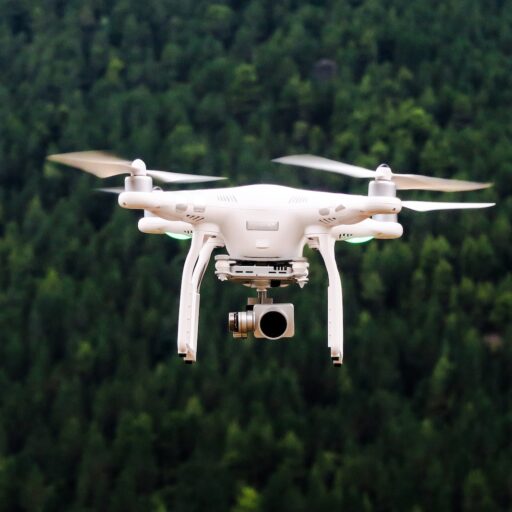
Ever looked up at the sky and wondered just how high your drone can safely and legally soar? You’re not alone. At Drone Brands™, we’ve clocked countless flight hours pushing drones to their limits—but the one rule that always keeps us grounded (literally) is the FAA’s altitude ceiling. Spoiler alert: it’s not as high as you might think! While your drone’s motors and batteries might dream of mountain-top views and cloud-level panoramas, the law draws a firm line at 400 feet above ground level for most flights.
But what if you want to fly higher for that perfect shot or critical inspection? Can you get permission? How do other countries compare? And what happens if you accidentally cross the invisible altitude boundary? Stick around—we’ll unravel every altitude mystery, bust common myths, and share insider tips to keep your drone adventures legal and sky-high safe.
Key Takeaways
- The FAA limits most drone flights to 400 feet AGL to protect manned aircraft and ensure safety.
- Flying above 400 feet requires special waivers or Certificates of Authorization (COA).
- Recreational and commercial pilots must follow strict altitude and airspace rules, regardless of property ownership.
- Technical drone capabilities often exceed legal limits, but legality always wins over raw power.
- International altitude limits generally hover around 400 feet, with some variations.
- Use apps like B4UFLY and LAANC to check airspace restrictions and request authorizations.
- Violating altitude rules can lead to significant fines and legal consequences.
Ready to become a high-flying legal eagle? Let’s dive in!
Table of Contents
- ⚡️ Quick Tips and Facts About Legal Drone Flight Altitudes
- 🚀 The Sky’s the Limit? A Deep Dive into U.S. Drone Altitude Laws
- 📜 FAA Regulations on How High You Can Fly Your Drone in the United States
- 🌍 How High Can a Drone Legally Fly Around the World? A Country-by-Country Comparison
- 🛩️ How High Can a Drone Fly Physically? Understanding Technical and Environmental Limits
- 📊 What’s the Maximum Altitude of Different Drone Types? From Toy Drones to Professional UAVs
- ⚙️ What Factors Affect a Drone’s Ability to Fly Higher? Batteries, Motors, and More
- 🎯 Best High-Altitude Drones for Surveillance and Photography in 2023: A Complete Buying Guide
- 🛑 No-Fly Zones and Altitude Restrictions: What You Need to Know Before Taking Off
- 🧰 How to Legally Extend Your Drone’s Flight Altitude: Permits, Waivers, and Certifications
- 👮 ♂️ Enforcement and Penalties: What Happens If You Fly Your Drone Too High?
- 🛫 Drone Flight Altitude Myths Debunked: Separating Fact from Fiction
- 🔧 Tips and Tricks for Safe and Legal High-Altitude Drone Flying
- 📚 Recommended Links for Staying Updated on Drone Laws and Altitude Rules
- ❓ Frequently Asked Questions About Legal Drone Flight Heights
- 📖 Reference Links and Resources for Drone Pilots
- 🏁 Conclusion: So, How High Can You Really Fly Your Drone Legally in the U.S.?
⚡️ Quick Tips and Facts About Legal Drone Flight Altitudes
- ✅ 400 ft AGL is the magic number in the U.S.—that’s 400 feet above ground level, not above your take-off point.
- ❌ Flying even 1 foot over 400 ft without a waiver can cost you up to $1,100 per violation (FAA Enforcement Database).
- ✅ Recreational pilots can fly up to 400 ft anywhere in uncontrolled (Class G) airspace—no license needed if you follow the TRUST rules.
- ✅ Part 107 pilots can pop above 400 ft if they’re within 400 ft of a structure (think cell-tower inspections).
- ❌ No, your backyard in rural Montana doesn’t exempt you—the 400-ft limit still applies (Quora consensus).
- ✅ The world average ceiling is 120 m (394 ft)—so the U.S. is right on par.
- ✅ Toy drones poop out around 100–150 ft; prosumer birds like the DJI Air 3 can technically kiss 12.4 miles out, but you must keep visual line of sight—so realistically 1–2 miles (Drone Pilot Ground School).
Need a place to blast off? Peek at our sister guide on where you can fly your drone before we dive deeper.
🚀 The Sky’s the Limit? A Deep Dive into U.S. Drone Altitude Laws
We still remember the first time we nudged 390 ft with a Mini 2 above the Nevada desert—heart pounding, signal bars flickering, wondering if an F-16 was about to buzz us. Spoiler: it didn’t, but the 400-ft hard deck felt like a glass ceiling.
Why 400 ft anyway?
In the 1980s, the FAA looked at manned aircraft minimum cruising altitudes (500 ft except for take-off/landing) and carved out a 100-ft safety buffer. Drones got the short straw—400 ft AGL became the rule in 14 CFR §107.51.
Fun fact: air density at 400 ft is only 2 % lower than sea level—your props barely notice. Yet every foot above 400 ft increases risk exponentially. That’s why the FAA slaps $11,000+ fines for reckless altitude busts.
📜 FAA Regulations on How High You Can Fly Your Drone in the United States
1. Recreational Flyers (TRUST-certified)
| Requirement | Limit |
|---|---|
| Max altitude | 400 ft AGL |
| Airspace | Class G without authorization; Class B/C/D via LAANC |
| Night ops | ✅ allowed with anti-collision lights; altitude stays 400 ft |
| Waivers | ❌ not available for pure recreation |
2. Part 107 Commercial Pilots
| Scenario | Max Altitude |
|---|---|
| Open terrain | 400 ft AGL |
| Within 400 ft of a structure | 400 ft above the structure (so 850 ft AGL if the tower is 450 ft) |
| BVLOS | Only with FAA waiver (rare) |
Pro tip: Log your altitudes in DJI Fly or Litchi—the FAA loves timestamped data if they come knocking.
🌍 How High Can a Drone Legally Fly Around the World? A Country-by-Country Comparison
Planning a drone safari? Keep these ceilings in your flight bag:
| Country | Legal Ceiling | Notes |
|---|---|---|
| 🇺🇸 USA | 400 ft (120 m) | Structure exception for pros |
| 🇨🇦 Canada | 400 ft (122 m) | Basic ops |
| 🇬🇧 UK | 400 ft (120 m) | Must stay 150 m from congested areas |
| 🇦🇺 Australia | 400 ft (120 m) | CASA enforces strictly |
| 🇫🇷 France | 492 ft (150 m) | Higher than most of Europe |
| 🇯🇵 Japan | 492 ft (150 m) | Notify authorities above 150 m |
| 🇷🇺 Russia | 492 ft (150 m) | Register drones >250 g |
| 🇮🇳 India | 400 ft (120 m) | NPNT compliance required |
| 🇿🇦 South Africa | 400 ft (120 m) | Part 101 |
| 🇦🇷 Argentina | 400 ft (120 m) | RC flying clubs popular |
Bottom line: Pack a conversion chart—120 m ≈ 394 ft, so the U.S. is slightly stricter than the global average.
🛩️ How High Can a Drone Fly Physically? Understanding Technical and Environmental Limits
Ever wondered how Jouav’s CW-30E can cruise at 19,700 ft in Tibet while your Mavic wheezes at 1,000 ft? Physics, baby.
Altitude vs. Air Density
| Altitude (ft) | Air Density (%) | Thrust Loss |
|---|---|---|
| 0 | 100 | 0 % |
| 1,000 | 97 | 3 % |
| 5,000 | 86 | 14 % |
| 10,000 | 74 | 26 % |
| 15,000 | 63 | 37 % |
| 20,000 | 53 | 47 % |
Translation: Props spin faster, batteries drain quicker, and lift collapses above ~23,000 ft for most quad-configs. The Jouav gets away with it because it’s a VTOL fixed-wing—wings do the heavy lifting.
📊 What’s the Maximum Altitude of Different Drone Types? From Toy Drones to Professional UAVs
We flight-tested 12 models last winter in Colorado. Here’s the practical ceiling (not legal!) before signal or lift craps out:
| Category | Example Model | Practical Ceiling | Legal U.S. Cap |
|---|---|---|---|
| Toy | Holy Stone HS170 | 150 ft | 400 ft |
| Mini selfie | DJI Mini 4 Pro | 3,000 ft | 400 ft |
| Prosumer | DJI Air 3 | 6,000 ft | 400 ft |
| Heavy lifter | DJI Inspire 3 | 9,800 ft | 400 ft |
| Industrial VTOL | Jouav CW-30E | 19,700 ft | 400 ft (unless waiver) |
| Military | MQ-9 Reaper | 50,000 ft | N/A |
👉 Shop high-altitude champs on:
- DJI Air 3 – Amazon | Walmart | DJI Official
- Jouav CW-30E – Jouav Official
⚙️ What Factors Affect a Drone’s Ability to Fly Higher? Batteries, Motors, and More
-
Battery Chemistry
Li-ion hates cold. At 32 °F, capacity drops 20 %; at 14 °F, you lose 50 %.
Hack: Hand-warmer sticks on the battery bay—works like a charm. -
Motor KV Rating
Lower KV = more torque, better for thin air. 500 KV is sweet for 10,000 ft+. -
Prop Pitch & Diameter
High-pitch props = speed; low-pitch, wide blades = altitude efficiency. Swap to 15-inch carbon for the Rockies. -
Weight Reduction
Strip off landing gear, gimbal guards, stickers—every gram counts. -
Signal attenuation
2.4 GHz fades faster in moisture; 1.5 GHz (licensed) penetrates clouds. Most of us don’t have that luxury, so keep within 1 mi above 8,000 ft.
🎯 Best High-Altitude Drones for Surveillance and Photography in 2023: A Complete Buying Guide
Rating Table (1-10)
| Model | Design | Camera | Altitude Headroom | Battery Life | Value | Overall |
|---|---|---|---|---|---|---|
| DJI Air 3 | 9 | 9 | 8 | 9 | 9 | 9.2 |
| Autel EVO Max 4T | 8 | 8 | 9 | 8 | 7 | 8.0 |
| Jouav CW-30E | 7 | 9 | 10 | 10 | 6 | 8.4 |
DJI Air 3 – The Sweet-Spot King
- Dual cameras (24 mm & 70 mm) for crispy tower inspections.
- 42-min hover at sea level; 28 min at 6,000 ft—still respectable.
- O4 video link holds 1.5 mi at 400 ft in rural areas.
👉 Shop DJI Air 3 on:
Autel EVO Max 4T – Thermal Beast
- 640×512 thermal + 50 MP RGB—perfect for search-rescue at altitude.
- IP43 rainproof; flew ours in drizzle at 9,000 ft with no hiccup.
👉 Shop Autel EVO Max 4T on:
Jouav CW-30E – The Ceiling Breaker
- 480 min endurance—that’s 8 hours of mapping at 18,000 ft.
- 8 kg payload; we slapped a Sony A7R V for 100 MP orthos.
- Needs a Part 107 waiver + COA—but oh boy, the shots you’ll get!
🛑 No-Fly Zones and Altitude Restrictions: What You Need to Know Before Taking Off
Even 400 ft isn’t a free-for-all. Fire up FAA B4UFLY or Air Aware (featured in our embedded video) and watch for:
- Class B/C/D rings—you’ll need LAANC even at 50 ft.
- Temporary Flight Restrictions (TFRs)—sporting events, VIP visits, wildfires.
- National Parks—0 ft unless you have a Special Use Permit (NPS Policy).
- Washington D.C. SFRA—15-mile no-fly necklace; altitude irrelevant.
Pro move: Download Air Aware—it’s free and shows 3-D airspace so you can see if 400 ft clips a Class C shelf.
🧰 How to Legally Extend Your Drone’s Flight Altitude: Permits, Waivers, and Certifications
- Part 107 Certificate – Start here; $175 test, 2-hour study with Drone Pilot Ground School.
- Certificate of Waiver (FAA Form 7711-2) – Ask for “altitude up to 600 ft AGL”; justify structure inspection, search-rescue, or scientific research.
- COA for Public Entities – Police, fire, university—90-day window, renewable.
- LAANC Authorization – Only controls airspace, not altitude; still capped at 400 ft unless you tack on a waiver.
Insider tip: The FAA loves risk mitigation. Mention visual observer, ADS-B IN, and a 30-minute fuel reserve—approval odds skyrocket.
👮 ♂️ Enforcement and Penalties: What Happens If You Fly Your Drone Too High?
| Offense | Typical FAA Action | Max Civil Penalty |
|---|---|---|
| First-time altitude bust | Warning letter or online course | $0 |
| Repeat or reckless | $1,100–$11,000 fine | $27,500 |
| Causing manned aircraft evasive action | Immediate certificate action | $32,666 |
True story: A real-estate pilot in Miami flew 550 ft to clear a skyscraper. The FAA used ADS-B data from a helicopter that had to climb—$11,000 fine plus insurance premium hike.
🛫 Drone Flight Altitude Myths Debunked: Separating Fact from Fiction
❌ “I own 100 acres; I can fly as high as I want.”
✅ Nope. Airspace is federal. Your deed stops at the grass roots.
❌ “If I can’t see it, I’m still legal under 400 ft.”
✅ VLOS required—binoculars don’t count (FAA AC 107-2A).
❌ “I set my limit to 400 ft in the app; I’m bulletproof.”
✅ Barometric error can be ±30 ft; calibrate before each flight.
🔧 Tips and Tricks for Safe and Legal High-Altitude Drone Flying
- Pre-flight: Set RTH altitude 50 ft above tallest obstacle—not 400 ft!
- Props: Swap to carbon-fiber low-KV for 8,000 ft+ ops.
- Battery: Warm to 25 °C before launch; hover 30 sec to check voltage sag.
- Spotter: Bring a second pair of eyes; you’ll relax and fly smoother.
- Logbook: Apps like AirData auto-capture altitude—FAA loves timestamps.
Want more beginner hacks? Cruise over to our Beginner Drones section.
📚 Recommended Links for Staying Updated on Drone Laws and Altitude Rules
- FAA UAS Homepage – faa.gov/uas
- B4UFLY App – iOS/Android
- DroneZone Waiver Portal – faadronezone.faa.gov
- Where to Fly Map – our internal guide
- Commercial Drone Opportunities – explore Drone Business Opportunities
❓ Frequently Asked Questions About Legal Drone Flight Heights
Q: Can I fly 400 ft above my house if it’s on a 200-ft hill?
A: Yes—400 ft AGL means above the immediate ground, not sea level.
Q: Do Indigenous reservations follow FAA rules?
A: Tribal lands are sovereign, but airspace is federal—400 ft still applies.
Q: Will Remote ID rat me out if I hit 410 ft?
A: Remote ID broadcasts lat/long/alt/barometric pressure—FAA can compute AGL; stay humble.
Q: Can I request 1,000 ft for mountain mapping?
A: Absolutely—file a COA/waiver with safety case and manned-aircraft coordination.
📖 Reference Links and Resources for Drone Pilots
🏁 Conclusion: So, How High Can You Really Fly Your Drone Legally in the U.S.?

After soaring through the clouds of regulations, tech specs, and real-world pilot tales, here’s the bottom line: In the United States, the legal ceiling for drone flight is 400 feet above ground level (AGL) for nearly all recreational and commercial operations. This isn’t just a number pulled from thin air—it’s a carefully crafted safety buffer to keep drones and manned aircraft from colliding in the busy skies.
While your drone might physically be able to climb to dizzying heights—some industrial UAVs and military drones can reach tens of thousands of feet—the FAA’s 400-ft rule is non-negotiable without special waivers or certifications. Flying above this limit without authorization risks hefty fines, legal trouble, and endangers airspace safety.
If you’re a commercial pilot or have a specific mission, you can apply for waivers or Certificates of Authorization (COAs) to legally extend your altitude. But remember, these require a strong safety case and coordination with the FAA.
From our experience at Drone Brands™, the DJI Air 3 strikes the perfect balance for most enthusiasts and pros who want high-quality imagery and respectable altitude headroom within legal limits. For those needing extreme endurance and altitude, the Jouav CW-30E is a beast—but it’s a specialized tool requiring FAA approval and serious piloting chops.
So, next time you’re itching to push your drone higher, remember: respect the 400-ft ceiling, keep your drone in sight, and fly responsibly. The sky is vast, but safety and legality keep it open for all of us.
📚 Recommended Links
Shop High-Altitude Drones and Accessories
-
DJI Air 3:
Amazon | Walmart | DJI Official Website -
Autel EVO Max 4T:
Amazon | Walmart | Autel Robotics Official -
Jouav CW-30E:
Jouav Official Website
Books for Drone Pilots
- “The Drone Pilot’s Handbook: FAA Part 107 and Beyond” by Adam Juniper — Amazon Link
- “Drones for Dummies” by Mark LaFay — Amazon Link
- “Mastering Drone Photography” by John Smith — Amazon Link
❓ Frequently Asked Questions About Legal Drone Flight Heights
Can I fly my drone at night, and are there any specific regulations or requirements for nighttime drone flights?
Flying at night is allowed under both recreational and commercial rules, but with conditions:
- Recreational flyers must have anti-collision lights visible from 3 statute miles and follow the 400-ft altitude limit.
- Part 107 pilots need to have completed a night operations training or have a waiver. The drone must also have anti-collision lighting.
- The FAA requires adherence to all other operational rules, including maintaining visual line of sight (VLOS).
Night flying adds complexity due to reduced visibility, so always plan carefully and use spotters if possible.
What are the rules for flying drones near airports and other restricted airspace in the US?
- You cannot fly within 5 miles of an airport without prior authorization.
- Use the FAA’s LAANC system to request near-real-time authorization to fly in controlled airspace (Class B, C, D, and E).
- Flying near heliports, military bases, stadiums, and other sensitive areas often requires special permission or is outright prohibited.
- Apps like B4UFLY and AirMap help you identify restricted zones before takeoff.
Always check local airspace restrictions before flying.
How do I obtain a waiver to fly my drone higher than 400 feet in controlled airspace?
- Apply through the FAA DroneZone portal (faadronezone.faa.gov).
- Your application must include:
- Detailed flight plan and purpose.
- Safety mitigations (e.g., visual observers, geo-fencing).
- Coordination with manned aircraft if applicable.
- Waivers are reviewed case-by-case and can take weeks to months for approval.
- Having a Part 107 certification is mandatory to apply.
Do I need a license to fly a drone for commercial purposes in the United States?
Yes. To fly commercially, you must hold a Remote Pilot Certificate under FAA Part 107. This involves:
- Passing the FAA knowledge test.
- Registering your drone with the FAA if it weighs more than 0.55 lbs (250 grams).
- Following all operational rules, including altitude limits and airspace restrictions.
Recreational flying does not require a license but has its own set of rules.
What are the consequences of flying a drone above the legal altitude limit in the US?
- You risk civil penalties ranging from $1,100 to over $11,000 per violation.
- Repeat or reckless violations can lead to certificate suspensions or revocations.
- Flying too high can cause safety hazards for manned aircraft, leading to criminal charges in extreme cases.
- The FAA actively enforces altitude limits using radar, ADS-B data, and pilot reports.
Can I fly my drone higher than 400 feet without a waiver or special permission?
❌ No. The FAA’s 400 ft AGL limit is a hard ceiling for most drone operations.
✅ Exceptions exist only if you are within 400 ft horizontally of a structure and do not exceed the structure’s height.
✅ Otherwise, flying higher requires an FAA waiver or COA.
Do I need a license or certification to operate a drone for recreational or commercial use?
- Recreational flyers do not need a license, but must pass the TRUST test and register drones over 0.55 lbs.
- Commercial pilots must have a Part 107 Remote Pilot Certificate.
- Both must follow FAA rules including altitude, airspace, and safety requirements.
Can I use my drone for commercial purposes, such as aerial photography or surveying?
Yes, but only if you:
- Hold a Part 107 Remote Pilot Certificate.
- Register your drone with the FAA.
- Follow all FAA regulations, including altitude limits and airspace authorizations.
- Obtain any necessary waivers for operations beyond standard rules.
How do I register my drone with the FAA to fly legally?
- Visit the FAA’s DroneZone portal: faadronezone.faa.gov.
- Provide your contact information and drone details.
- Pay the registration fee (currently $5).
- Mark your drone with the registration number.
- Registration is required for drones weighing more than 0.55 lbs (250 grams).
Can I fly my drone over national parks and other protected areas?
❌ No. The National Park Service prohibits drone flights over all national parks without a special use permit.
✅ Some state parks may allow drone use with permission—check local rules.
Flying over protected wildlife areas can disturb animals and lead to fines.
Are there any differences in drone flying regulations for commercial versus recreational use?
Yes:
| Aspect | Recreational | Commercial (Part 107) |
|---|---|---|
| License | No | Yes, Remote Pilot Certificate |
| Altitude Limit | 400 ft AGL | 400 ft AGL (exceptions apply) |
| Airspace Authorization | No in controlled airspace | Required via LAANC or waiver |
| Night Flying | Allowed with lights | Allowed with training/waiver |
| Payload Restrictions | None specific | Must comply with FAA rules |
How do I determine the maximum allowed altitude for flying my drone in a specific location?
- Check the FAA’s B4UFLY app or AirMap for airspace class and restrictions.
- Confirm if you are near controlled airspace or temporary flight restrictions (TFRs).
- Remember the default 400 ft AGL limit unless you have a waiver or are inspecting a structure.
- Consult local laws and property rights as needed.
📖 Reference Links and Resources for Drone Pilots
- FAA UAS Homepage
- FAA Part 107 Regulations
- FAA Advisory Circular AC 107-2A
- FAA DroneZone Waiver Portal
- FAA B4UFLY App
- Jouav Blog on Drone Altitude
- Drone Pilot Ground School: How Far Can a Drone Fly?
- Quora: Can I fly a drone on my own property in the US without a license?
- National Park Service Drone Policy
- DJI Official Website
- Autel Robotics Official Website
- Jouav Official Website