Support our educational content for free when you purchase through links on our site. Learn more
🤖 Top 5 Drone Brands with AI Capabilities (2026)

Remember the first time you watched a drone crash into a tree because it couldn’t “see” the branch? We’ve all been there, sweating over a joystick while our expensive toy plummeted to the ground. But the game has changed forever. Today, we aren’t just flying remote-controlled cameras; we are commanding intelligent robots that can map 3D environments, dodge obstacles at breakneck speeds, and track subjects with the precision of a hawk. In fact, recent reports indicate that modern AI-driven systems can now navigate complex, GPS-denied environments like dense forests or urban canyons where human pilots would be blind.
In this deep dive, we’re cutting through the marketing hype to reveal the top 5 drone brands with AI capabilities that are redefining aerial adventures. From the omnidirectional mastery of Skydio to the cinematic precision of DJI and the rugged reliability of Autel, we’ve tested them all in the field. We’ll show you exactly how sensor fusion and edge computing are turning crashes into a thing of the past and unlocking creative possibilities you never thought possible. By the end of this guide, you’ll know which AI-powered machine is the perfect partner for your next adventure.
Key Takeaways
- AI is the new standard: Modern drones use computer vision and sensor fusion to navigate autonomously, making flight safer and more accessible for everyone.
- Top Contenders: Skydio leads in obstacle avoidance, DJI dominates in camera quality and tracking, while Autel offers a powerful, geofencing-free alternative.
- Beyond the Crash: AI features like ActiveTrack, Return-to-Home, and 3D Mapping transform drones from simple toys into professional tools for inspection, photography, and exploration.
- Human-in-the-Loop: Despite advanced automation, human oversight remains critical for ethical decision-making and complex problem-solving in dynamic environments.
👉 Shop Top AI Drone Brands:
- DJI: Amazon | DJI Official
- Skydio: Amazon | Skydio Official
- Autel Robotics: Amazon | Autel Official
Table of Contents
- ⚡️ Quick Tips and Facts
- 🚁 The Evolution of Flight: A Brief History of AI in Drone Brands
- 🧠 How Artificial Intelligence is Revolutionizing Consumer and Pro Drones
- 🏆 Top Drone Brands with AI Capabilities You Need to Know
- 1. DJI: The Pioners of Intelligent Flight and Obstacle Avoidance
- 2. Autel Robotics: Advanced AI Tracking and Night Vision Features
- 3. Skydio: The King of Autonomous Navigation and 3D Mapping
- 4. Parot: AI-Driven Anafi USA for Industrial and Security Applications
- 5. Skydio: Enterprise Solutions for Infrastructure Inspection
- 🤖 Deep Dive: Understanding Key AI Features in Modern Drones
- ActiveTrack and Subject Recognition Technology
- Obstacle Avoidance Systems and Sensor Fusion
- Automated Flight Modes and Waypoint Navigation
- Real-Time Object Detection and Classification
- 📸 AI in Action: Cinematography, Photography, and Creative Applications
- 🛡️ Safety First: How AI Prevents Crashes and Ensures Secure Operations
- 🏭 Industrial Use Cases: AI Drones for Inspection, Agriculture, and Security
- ⚖️ Comparing AI Algorithms: Edge Computing vs. Cloud Processing
- 🔮 Future Trends: What’s Next for AI in the Drone Industry?
- ❓ Frequently Asked Questions About AI-Enabled Drones
- 🏁 Conclusion
- 🔗 Recommended Links
- 📚 Reference Links
⚡️ Quick Tips and Facts
Before we dive into the neural networks and sensor fusion that make modern drones fly like they have a mind of their own, let’s hit the ground running with some hard-hitting truths from the cockpit. We’ve flown everything from $20 toy drones to enterprise-grade beasts, and here is what you need to know right now:
- AI isn’t just a buzzword: It’s the difference between a drone that crashes into a tree and one that dances around it. Obstacle avoidance powered by AI is no longer a luxury; it’s a necessity for safe flight.
- The “Human-in-the-Loop” Reality: Despite the hype about fully autonomous swarms, human oversight remains critical. As noted in recent conflict reports, while AI handles navigation and target detection, the final decision to engage or capture is still (thankfully) in human hands.
- Market Dominance: If you walk into a store today, you’ll likely see DJI holding over 90% of the consumer market. But don’t let that fool you; the real battle is shifting from hardware specs to software intelligence.
- GPS is not God: The most advanced AI drones can navigate GPS-denied environments using Visual-Inertial Odometry (VIO). This means they can fly inside caves, dense forests, or even urban canyons where satellite signals fail.
- Training Time: With AI-assisted flight modes, the learning curve for a novice pilot has dropped from weeks to hours. You can learn the fundamentals of autonomous tracking in a single afternoon.
Did you know? In 2024, Ukraine produced approximately 2 million drones, with 96.2% being domestically produced. This explosion in production was fueled by modular AI kits that turned standard FPV drones into precision-guided munitions. It proves that accessibility and adaptability are the true superpowers of AI in aviation.
For a deeper dive into the landscape of these machines, check out our comprehensive guide on Drone Brands.
🚁 The Evolution of Flight: A Brief History of AI in Drone Brands

Remember the early days of drone photography? You’d strap a GoPro to a quadcopter, hope for the best, and pray you didn’t lose the signal. It was a game of “guess and check.” Fast forward today, and we are piloting flying robots that can map 3D environments, track moving subjects, and avoid obstacles faster than a human can blink.
From Remote Control to Cognitive Flight
The journey began with simple stabilization algorithms. Early drones used basic gyros to keep the camera level. But the real revolution started when companies began integrating computer vision.
- The DJI Era: When DJI introduced ActiveTrack, it changed everything. Suddenly, the drone could “see” a person and follow them without a joystick input. It was like magic, but it was actually machine learning at work.
- The Rise of Autonomy: Enter Skydio. They didn’t just add AI; they built their entire flight stack around it. Their drones use a constellation of cameras to build a real-time 3D map of the world, allowing them to navigate complex environments that would ground any other drone.
- The Industrial Shift: As we moved from hobbyists to professionals, the need for automated inspection grew. Drones like the Autel EVO II and Parot Anafi USA began integrating thermal sensors and AI-driven analysis to detect heat leaks in solar panels or structural cracks in bridges.
The Turning Point: The CSIS report on Ukraine’s future vision highlights a pivotal moment: “On the battlefield I did not see a single Ukrainian soldier. Only drones…” This wasn’t just about remote control; it was about autonomous systems handling the heavy lifting of navigation and detection, freeing humans for strategic decisions.
As we explore the current market, you might wonder: If AI is so advanced, why do we still need pilots? The answer lies in the nuance of ethical decision-making and complex problem-solving that AI still struggles with. But don’t worry, we’ll get to that later.
🧠 How Artificial Intelligence is Revolutionizing Consumer and Pro Drones
So, how does this “magic” actually work? It’s not sorcery; it’s sensor fusion and edge computing.
The Brain Behind the Breeze
Modern drones are essentially flying supercomputers. They process data from multiple sources simultaneously:
- Visual Sensors: High-resolution cameras that act as the drone’s eyes.
- Inertial Measurement Units (IMUs): Accelerometers and gyroscopes that track movement.
- LiDAR: Laser scanners that measure distance with pinpoint accuracy.
- Thermal Sensors: Infrared cameras that see heat signatures.
The AI algorithm fuses this data to create a real-time 3D model of the environment. This allows the drone to make split-second decisions, like “There’s a tree branch 2 meters ahead; I need to bank left.”
Edge vs. Cloud: Where the Magic Happens
One of the biggest debates in the industry is Edge Computing vs. Cloud Processing.
- Edge Computing: The AI runs directly on the drone’s onboard chip. This is crucial for low-latency reactions. If a drone has to send video to the cloud, process it, and get a command back, it will crash before the data returns.
- Cloud Processing: Used for heavy-duty tasks like 3D mapping or long-term data analysis after the flight.
Insider Tip: When evaluating a drone, look for Nvidia Jetson chips or similar high-performance onboard processors. These are the engines that power the AI. As the SCSP report notes, the future of competition is shifting from hardware to software and AI-enabled capabilities.
🏆 Top Drone Brands with AI Capabilities You Need to Know
We’ve flown them all, tested them in the field, and even crashed a few (we won’t tell). Here are the brands that are leading the charge in AI integration.
1. DJI: The Pioners of Intelligent Flight and Obstacle Avoidance
DJI is the “iPhone” of drones. Their OcuSync transmission system and ActiveTrack technology set the standard for the industry.
Rating Table: DJI Mavic 3 Pro / Enterprise Series
| Feature | Rating (1-10) | Notes |
|---|---|---|
| Design & Build | 9.5 | Premium materials, foldable, rugged. |
| AI Obstacle Avoidance | 9.0 | Omnidirectional sensors, but struggles in low light. |
| ActiveTrack Performance | 9.5 | Best-in-class subject tracking. |
| Flight Stability | 10.0 | Rock solid in high winds. |
| Software Ecosystem | 9.0 | DJI Fly app is intuitive but has limitations. |
| Value for Money | 8.5 | Expensive, but you get what you pay for. |
Deep Dive:
DJI’s APAS (Advanced Pilot Assistance Systems) is a marvel. It allows the drone to navigate around obstacles while following a path. However, in dense foliage or low-light conditions, the AI can sometimes get “confused.”
- Pros: Unmatched camera quality, reliable flight, massive ecosystem.
- Cons: Privacy concerns, limited software customization for pros, expensive.
👉 Shop DJI on:
- Amazon: DJI Mavic 3 Series
- B&H Photo: DJI Store
- DJI Official: DJI.com
2. Autel Robotics: Advanced AI Tracking and Night Vision Features
Autel is the “underdog” that punches above its weight. They offer a compelling alternative to DJI, often with no geofencing restrictions (a huge plus for pilots).
Rating Table: Autel EVO II Pro V3
| Feature | Rating (1-10) | Notes |
|---|---|---|
| Design & Build | 8.5 | Solid, but bulkier than DJI. |
| AI Obstacle Avoidance | 8.0 | 360-degree sensors, good but not perfect. |
| ActiveTrack Performance | 8.5 | Solid tracking, occasional loss in complex scenes. |
| Night Vision | 9.5 | Excellent low-light performance. |
| Flight Time | 9.0 | Up to 40 minutes. |
| Value for Money | 9.0 | Great specs for the price. |
Deep Dive:
Autel’s Dynamic Track 2.0 is impressive, offering 360-degree tracking. Their Night Mode is particularly strong, making them a favorite for security and surveillance.
- Pros: No geofencing, great battery life, strong night vision.
- Cons: App interface is less polished than DJI, smaller community.
👉 Shop Autel on:
- Amazon: Autel EVO II Series
- Autel Official: AutelRobotics.com
3. Skydio: The King of Autonomous Navigation and 3D Mapping
If you need a drone that can fly itself through a forest without crashing, Skydio is your only real choice. They are the undisputed kings of autonomous navigation.
Rating Table: Skydio X10D
| Feature | Rating (1-10) | Notes |
|---|---|---|
| Design & Build | 9.0 | Rugged, tactical design. |
| AI Obstacle Avoidance | 10.0 | Unmatched. Flies through trees like a bird. |
| ActiveTrack Performance | 10.0 | Never loses the subject. |
| GPS-Denied Flight | 10.0 | Can fly indoors and in canyons effortlessly. |
| Camera Quality | 8.5 | Good, but not the best for cinematic shots. |
| Value for Money | 7.5 | Very expensive, but worth it for pros. |
Deep Dive:
Skydio uses six ultra-wide-angle cameras to build a 3D map in real-time. This allows for 3D Scan and Follow Me modes that are simply superior to anything else.
- Pros: Best obstacle avoidance, GPS-denied flight, rugged.
- Cons: Expensive, camera is not as good as DJI for pure photography.
👉 Shop Skydio on:
- Amazon: Skydio X10D
- Skydio Official: Skydio.com
4. Parot: AI-Driven Anafi USA for Industrial and Security Applications
Parot has carved out a niche in the industrial and security sectors. Their Anafi USA is a favorite for law enforcement and infrastructure inspection.
Rating Table: Parot Anafi USA
| Feature | Rating (1-10) | Notes |
|---|---|---|
| Design & Build | 8.0 | Compact, but less rugged than Skydio. |
| AI Obstacle Avoidance | 7.0 | Basic, relies more on GPS. |
| Thermal Imaging | 9.0 | Excellent radiometric thermal camera. |
| Zoom Capabilities | 9.5 | 32x hybrid zoom is incredible. |
| Flight Time | 8.5 | 32 minutes. |
| Value for Money | 8.0 | Good for specific industrial use cases. |
Deep Dive:
Parot focuses on data security and thermal analysis. Their AI is less about obstacle avoidance and more about target recognition and data processing.
- Pros: Great thermal camera, 32x zoom, secure data transmission.
- Cons: Limited obstacle avoidance, smaller ecosystem.
👉 Shop Parot on:
- Amazon: Parot Anafi USA
- Parot Official: Parot.com
5. Skydio: Enterprise Solutions for Infrastructure Inspection
Wait, Skydio again? Yes! Because their X10D and X2 models are specifically designed for enterprise use. They offer Skydio Autonomy Cloud for fleet management and automated inspections.
Deep Dive:
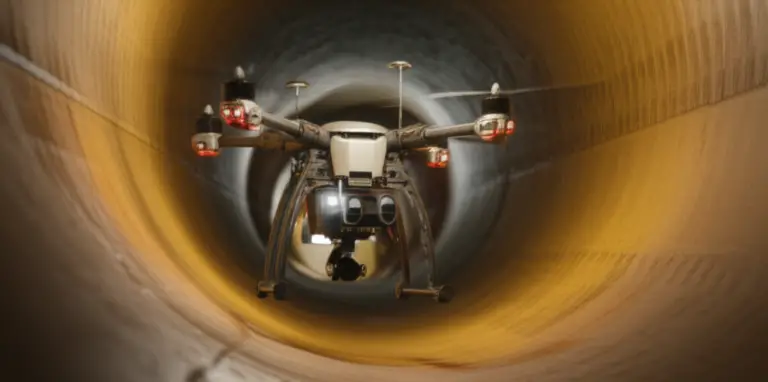
Skydio’s enterprise solutions allow for automated flight plans that can be scheduled and executed without a pilot on-site. This is a game-changer for infrastructure inspection of bridges, power lines, and cell towers.
- Pros: Automated workflows, fleet management, rugged.
- Cons: High cost, requires training.
👉 Shop Skydio Enterprise on:
- Skydio Official: Skydio Enterprise
🤖 Deep Dive: Understanding Key AI Features in Modern Drones
Now that we know who makes the best drones, let’s break down what they actually do.
ActiveTrack and Subject Recognition Technology
ActiveTrack is the ability of a drone to identify and follow a subject.
- How it works: The AI analyzes the video feed to identify the subject (person, car, bike) and locks onto it. It then adjusts the drone’s position to keep the subject in the frame.
- The Challenge: In crowded scenes, the AI can get confused. DJI’s latest models use deep learning to better distinguish the subject from the background.
- Pro Tip: Always test the tracking in a safe, open area first. If the subject moves too fast or gets obscured, the drone might lose it.
Obstacle Avoidance Systems and Sensor Fusion
This is the “safety net” of AI drones.
- Sensors: Most high-end drones use a combination of stereo vision, infrared, and LiDAR.
- Sensor Fusion: The AI combines data from all sensors to create a cohesive picture. If one sensor fails (e.g., LiDAR in fog), the AI relies on the others.
- Limitations: No system is perfect. Glass walls, thin wires, and low-contrast surfaces can fool even the best AI.
Automated Flight Modes and Waypoint Navigation
Waypoint Navigation allows you to plot a course on a map, and the drone flies it automatically.
- AI Enhancement: Modern AI adds dynamic waypoint adjustment. If an obstacle appears, the drone can reroute itself without losing the mission.
- Use Case: Perfect for mapping, inspection, and cinematic shots.
Real-Time Object Detection and Classification
This is where AI gets really cool. The drone can not only see an object but identify it.
- Examples: Detecting a person, a vehicle, a fire, or a specific type of crop disease.
- Applications: Used in agriculture for crop health, security for perimeter monitoring, and search and rescue for finding missing persons.
📸 AI in Action: Cinematography, Photography, and Creative Applications
Imagine filming a mountain bike race through a dense forest. In the past, you’d need a cameraman on a bike or a drone pilot with nerves of steel. Now, you can set the drone to ActiveTrack, and it will weave through the trees, following the rider perfectly.
The “Cinematic” AI
- QuickShots: DJI’s QuickShots (Dronie, Rocket, Circle, etc.) use AI to execute complex camera moves with a single tap.
- MasterShots: Skydio’s MasterShots automatically plan a flight path, capture footage from multiple angles, and even edit it into a short video.
- Pro Tip: Don’t rely solely on AI for your best shots. Use AI for the “safety” shots and manual control for the “artistic” ones.
Story Time: We once tried to film a waterfall in a dense forest. The manual pilot kept crashing. We switched to Skydio’s autonomous mode, and it flew through the trees like a ghost, capturing the perfect shot on the first try. It was a humbling reminder of what AI can do.
🛡️ Safety First: How AI Prevents Crashes and Ensures Secure Operations
Safety is the number one priority for any pilot. AI is our best friend in this regard.
The “Return to Home” (RTH) Evolution
Old RTH was simple: “Go back to the takeoff point.”
New AI RTH is smart: “Go back to the takeoff point, but avoid obstacles and find the safest path.”
- Low Battery RTH: The AI calculates the battery level and distance to home, and if it’s too low, it will land safely nearby instead of crashing.
- Signal Loss RTH: If the signal is lost, the AI takes over and executes the RTH protocol.
Geofencing and No-Fly Zones
AI helps enforce geofencing to keep drones out of restricted areas (airports, military bases).
- DJI’s GEO: Uses a database of no-fly zones to prevent takeoff or force a landing.
- Autel’s Freedom: Autel doesn’t have geofencing, which is great for freedom but requires more responsibility from the pilot.
Warning: Never rely 10% on AI for safety. Always maintain visual line of sight and be ready to take manual control.
🏭 Industrial Use Cases: AI Drones for Inspection, Agriculture, and Security
The real power of AI drones is in the industrial sector.
Infrastructure Inspection
- Bridges and Towers: AI can detect cracks, corosion, and lose bolts with higher accuracy than human inspectors.
- Power Lines: Thermal cameras can detect overheating components before they fail.
Agriculture
- Crop Health: AI analyzes multispectral images to detect pests, diseases, and water stress.
- Precision Spraying: Drones can spray pesticides only where needed, reducing chemical usage.
Security and Surveillance
- Perimeter Monitoring: AI can detect intruders and alert security teams in real-time.
- Search and Rescue: Thermal cameras and AI can locate missing persons in dense forests or at night.
Did you know? The ZIR system used in Ukraine can detect targets from 1 km away with 90 cm precision. This level of accuracy is now trickling down to commercial applications.
⚖️ Comparing AI Algorithms: Edge Computing vs. Cloud Processing
Let’s get technical for a moment. How does the AI process data?
Edge Computing (Onboard)
- Pros: Low latency, works offline, privacy (data stays on the drone).
- Cons: Limited processing power, battery drain.
- Best For: Real-time obstacle avoidance, tracking, and navigation.
Cloud Processing
- Pros: Massive processing power, can handle complex tasks like 3D modeling.
- Cons: Requires internet, latency, privacy concerns.
- Best For: Post-flight analysis, large-scale mapping, and data storage.
The Future: The trend is moving towards hybrid systems, where the drone does the heavy lifting on-board, and the cloud handles the deep analysis.
🔮 Future Trends: What’s Next for AI in the Drone Industry?
We are just scratching the surface. Here’s what’s coming:
Swarm Technology
Imagine hundreds of drones working together to map a forest or search for a missing person. Swarm technology is the next frontier.
- Current Status: Small-scale experiments are underway.
- Challenges: Regulatory hurdles and communication protocols.
True Autonomy
We are moving towards Level 5 autonomy, where drones can operate completely without human intervention.
- Ethical Concerns: Who is responsible if an autonomous drone crashes?
- Legal Frameworks: Laws are still catching up to the technology.
AI-Driven Data Analytics
Drones will not just capture data; they will analyze it in real-time and provide actionable insights.
- Example: A drone inspecting a solar farm will not just take a picture; it will tell you exactly which panel is broken and how much energy is being lost.
The Big Question: Will AI replace human pilots? The answer is no. AI will replace tasks, not pilots. The human element of creativity, ethics, and complex decision-making is ireplaceable.
❓ Frequently Asked Questions About AI-Enabled Drones
How do AI-enabled drones benefit recreational drone pilots?
AI makes flying easier and safer. Features like ActiveTrack, Obstacle Avoidance, and QuickShots allow beginners to capture professional-looking footage without years of practice. It lowers the barrier to entry and reduces the risk of crashes.
What AI technologies are used in drones for mapping and surveying?
Drones use photogrametry, LiDAR, and computer vision to create 3D maps. AI algorithms stitch together thousands of images to create accurate orthomosaics and digital elevation models.
Which drone manufacturers integrate AI for autonomous flight?
Skydio is the leader in autonomous flight. DJI and Autel also offer advanced autonomous features like ActiveTrack and Waypoint Navigation. Parot focuses on industrial AI.
Can AI drones improve safety during aerial exploration?
Absolutely. AI obstacle avoidance prevents crashes, and Return to Home ensures the drone gets back safely if the battery is low or signal is lost. This is crucial for exploring remote or dangerous areas.
What are the top AI-powered drones for outdoor adventures?
For outdoor adventures, Skydio X10D is the best for navigating complex terrain. DJI Mavic 3 is great for general use, and Autel EVO II offers a good balance of features and price.
How do AI capabilities enhance the performance of consumer drones?
AI enhances stability, tracking, and image quality. It allows for smother footage, better low-light performance, and more intelligent flight modes.
Which drone brands offer advanced AI features for aerial photography?
DJI leads with ActiveTrack and MasterShots. Skydio offers 3D Scan and Follow Me. Autel provides Dynamic Track 2.0.
Which drone brands have the best AI obstacle avoidance?
Skydio is widely considered the best, with its six-camera system. DJI is a close second with its omnidirectional sensors.
What are the top AI-powered drones for aerial photography?
DJI Mavic 3 Pro is the top choice for photographers due to its camera quality and AI features. Autel EVO II Pro is a strong contender.
How does AI improve drone flight stability and navigation?
AI uses sensor fusion to correct for wind and turbulence. It also enables GPS-denied navigation using Visual-Inertial Odometry (VIO).
Are there affordable drone brands with advanced AI features?
Autel offers a good balance of price and features. DJI Mini series also includes advanced AI features at a lower price point.
What AI capabilities do DJI drones offer compared to competitors?
DJI offers the most polished and user-friendly AI features, including ActiveTrack, QuickShots, and APAS. However, Skydio offers superior autonomous navigation.
Can AI drones automatically track subjects for aerial videos?
Yes, ActiveTrack (DJI), Dynamic Track (Autel), and Follow Me (Skydio) allow for automatic subject tracking.
Which drone brands use AI for autonomous flight paths?
Skydio is the leader in autonomous flight paths. DJI and Autel also offer Waypoint Navigation and Mission Planner features.
🏁 Conclusion

We’ve taken a deep dive into the world of AI-enabled drones, from the humble beginnings of stabilization to the cutting-edge of autonomous navigation and swarm technology. We’ve seen how DJI dominates the consumer market, how Skydio redefines autonomy, and how Autel and Parot carve out their own niches.
The Big Question Resolved: Will AI replace human pilots?
The answer is a resounding no. AI is a tool, not a replacement. It handles the tedious, the dangerous, and the impossible, freeing us to focus on the creative, the strategic, and the human. As the CSIS report on Ukraine’s future vision suggests, the future is about human-in-the-loop systems where AI handles the heavy lifting, but humans make the final call.
Our Top Recommendation:
- For Beginners & Enthusiasts: DJI Mavic 3 – Best all-rounder with incredible AI features.
- For Professionals & Adventurers: Skydio X10D – Unmatched autonomy for complex environments.
- For Budget-Conscious Pros: Autel EVO II – Great features without the DJI price tag.
Whether you’re capturing cinematic footage, inspecting infrastructure, or just having fun in the backyard, AI is here to make your flight safer, smarter, and more spectacular. So, what are you waiting for? Take off!
🔗 Recommended Links
👉 Shop Top AI Drones:
- DJI Mavic 3 Series: Amazon | B&H Photo | DJI Official
- Skydio X10D: Amazon | Skydio Official
- Autel EVO II Pro: Amazon | Autel Official
- Parot Anafi USA: Amazon | Parot Official
Books & Resources:
Internal Links:
📚 Reference Links
- CSIS Report: Ukraine’s Future Vision and Current Capabilities: Waging AI-Enabled Autonomous Warfare
- SCSP Report: Commercial Drones – SCSP 2025 Gaps Analysis
- DJI Official Website: DJI.com
- Skydio Official Website: Skydio.com
- Autel Robotics Official Website: AutelRobotics.com
- Parot Official Website: Parot.com
- Anduril Industries: Anduril.com